Kleiner Perkins raises $3.5 billion to back AI startups and support its portfolio
Kleiner Perkins has raised $3.5 billion and will put the money into new AI bets. The capital will go both to fresh startups and to companies already in the firm's portfolio. The focus is on autonomous systems, transportation, professional services and space. It is another signal that large-scale venture capital is still ready to fund applied AI on a big scale.
AI-processed from Bloomberg Tech; edited by Hamidun News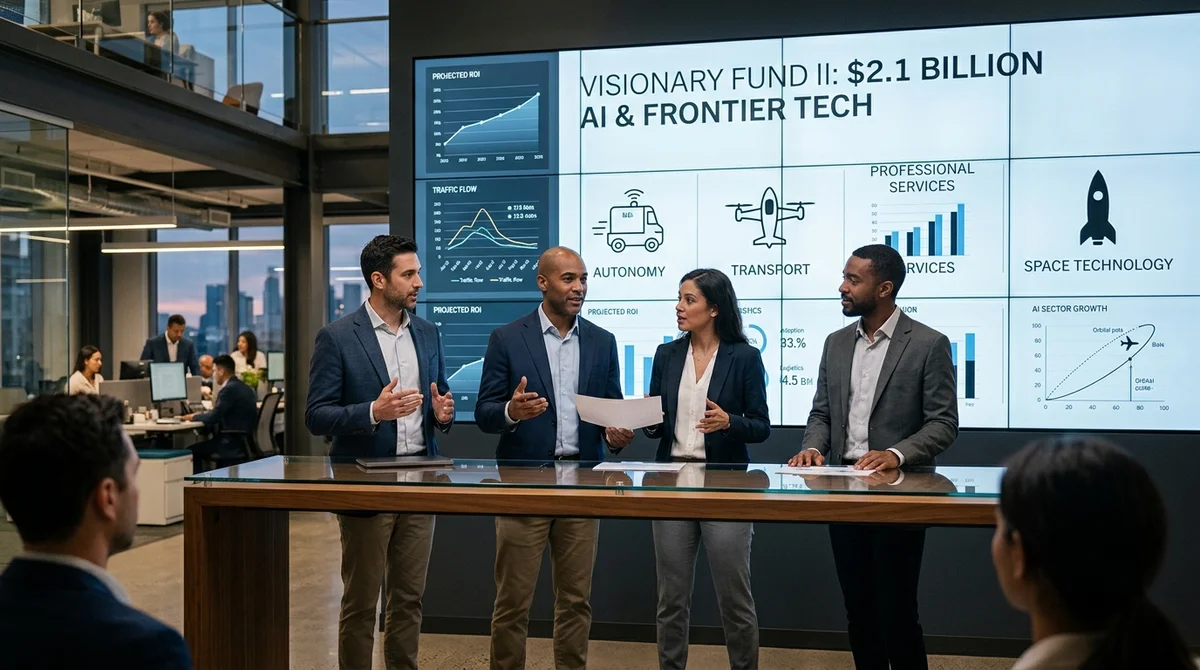
Kleiner Perkins has raised $3.5 billion to expand its investments in AI startups and support companies in its current portfolio. The firm plans to direct the new capital into projects at the intersection of artificial intelligence, autonomy, transportation, professional services and space technology.
New capital
For the venture market, the sum alone already looks like a signal. Kleiner Perkins is not simply opening a new fund around a fashionable theme; it is gathering a large pool of money specifically for long-term work with AI companies at different stages. The plan covers not only finding new teams but also making additional investments in existing assets.
This matters: in AI today, writing the first check is not enough, because strong companies quickly need the next round of capital for compute, hiring and reaching commercial scale. The approach shows that the firm is betting not on one narrow segment but on an entire wave of applied AI. When an investor reserves money for its current portfolio in advance, it is effectively ready to stay with teams longer than usual and not hand the best deals to competitors in later rounds. For startups this is especially valuable at a time when infrastructure costs remain high and the pace of the market forces them to turn research work into a working product and revenue quickly.
Bets by sector
In describing the new capital, Kleiner Perkins lists several areas where it sees potential for the next stage of growth. The list is telling: the firm is looking not only at foundation AI models but also at industries where artificial intelligence can change operational processes, cut costs and automate expensive human labor. This means a shift in attention from general hype to verticals where the practical value of the technology can be proven faster.
- Autonomy — systems that make decisions and act with minimal human involvement
- Transportation — routing, fleet management, safety and logistics optimization
- Professional services — automating tasks in consulting, law and corporate operations
- Space — analytics, management of complex systems and new software tools for the industry
The choice of these areas reflects pragmatic logic. In all of them, AI can be not a decorative feature but the core of the product or a way to sharply raise efficiency. For funds this is a convenient risk profile: if a solution is truly embedded in a client's business process, it has a chance at durable revenue, not just a polished demo. These are the stories the market currently cares about more than yet another round of generic promises about an "AI revolution."
A signal for the market
The news matters not only to companies hoping to get money from Kleiner Perkins. It shows that large venture players retain confidence in the AI cycle even after a period of overheated expectations. When a firm of this size raises billions specifically for this theme, it works as confirmation: the market still believes the next big wave of value will be created not only at the model level but also in the applied products built around them.
Still, the capital will most likely be allocated selectively. The winners will not be just any startups with AI in their pitch deck, but teams that can show a clear deployment scenario, access to data, a technological edge and early signs of demand. For existing portfolio companies this is also good news: they have a better chance of getting follow-on funding from a familiar investor if they demonstrate progress. In the current environment, such support may turn out to matter more than a big-name brand in the first round.
What this means
Kleiner Perkins is in effect confirming that for large funds, AI remains not a short-term trend but an investment platform for several years. For founders, the signal is to prepare not just an AI feature but a product with clear economics, an industry use case and enough resilience to scale fast.
Key Questions Answered
What are the key details on New capital?
For the venture market, the sum alone already looks like a signal. Kleiner Perkins is not simply opening a new fund around a fashionable theme; it is gathering a large pool of money specifically for long-term work with AI companies at different stages. The plan covers not only finding new teams but also making additional investments in existing assets. This matters: in AI today, writing the first check is not enough, because strong companies quickly need the next round of capital for compute, hiring and reaching commercial scale. The approach shows that the firm is betting
What are the key details on Bets by sector?
In describing the new capital, Kleiner Perkins lists several areas where it sees potential for the next stage of growth. The list is telling: the firm is looking not only at foundation AI models but also at industries where artificial intelligence can change operational processes, cut costs and automate expensive human labor. This means a shift in attention from general hype to verticals where the practical value of the technology can be proven faster. Autonomy — systems that make decisions and act with minimal human involvement Transportation — routing, fleet management, s
What are the key details on A signal for the market?
The news matters not only to companies hoping to get money from Kleiner Perkins. It shows that large venture players retain confidence in the AI cycle even after a period of overheated expectations. When a firm of this size raises billions specifically for this theme, it works as confirmation: the market still believes the next big wave of value will be created not only at the model level but also in the applied products built around them. Still, the capital will most likely be allocated selectively. The winners will not be just any startups with AI in their pitch deck, but
Test Frontier LLMs & Autonomous Agents in One Workspace
Run Claude Opus 5.5, GPT-6, Gemini 3.1, and DeepSeek side-by-side in Nomad AI (nomadnet.ai) — unified model routing, deep research, and multimodal workflows under one subscription.
The AI world, distilled — once a week
Seven stories that actually mattered, hand-picked. No noise, no reposts, no press releases.
Done! Check your inbox for a confirmation.