MiniMax replaces Claude API, cutting an AI agent's costs from $200 to $20
The developer of a social media AI agent explained how he cut model costs from $200+ to ~$20 a month, not through prompt engineering but by changing models. After moving from the Claude API to MiniMax M2.5, with Kimi K2.5 as a backup, the bulk of the workload is now covered by a subscription. The write-up also includes three simple routing rules for anyone paying per token.
AI-processed from Habr AI; edited by Hamidun News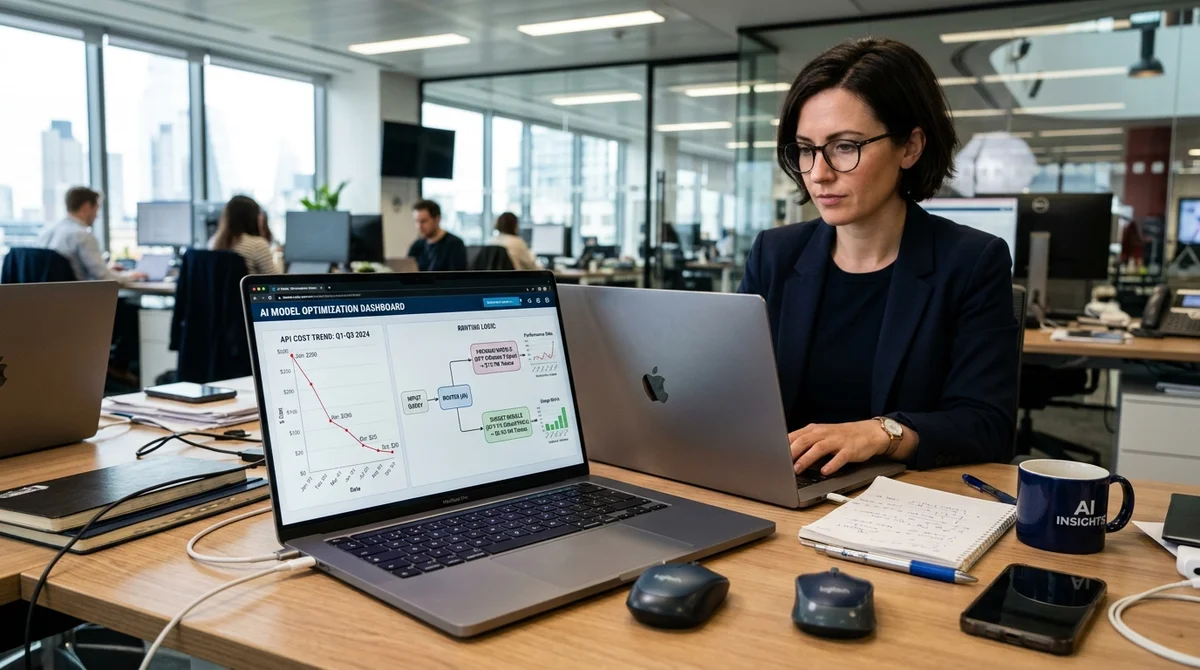
The developer of a social media AI agent showed that the most effective way to cut model costs is not to squeeze every last cent out of prompts, but to rethink the choice of model itself. In his case, switching from the Claude API to cheaper alternatives dropped the model bill from $200+ to about $20 a month with no noticeable loss in quality.
From subscription to API
The agent originally ran on a Claude Max subscription. To the author this looked almost free: he was already paying about $100 a month for Claude access for everyday development, and the agent's extra load needed no separate budget. The system handled typical content chores: reading feeds, collecting topics, doing research, writing drafts, editing them and preparing posts for social networks.
Things changed after Anthropic updated its rules. Using a subscription for AI agents and automated systems was no longer allowed, so the project had to move to per-token API billing. On paper the rates looked tolerable, but in practice the model proved too hungry for this use case. A single morning research session could burn up to 250 thousand tokens before any finished text appeared, and failed calls and repeated requests quickly inflated the bill. The first full month on the API cost more than $200.
The main problem was not only the size of the sum but its unpredictability: on ordinary days costs were moderate, but any edge case with a long reasoning chain multiplied them. For a solo developer and a side project this is no longer a "fee for convenience" but a separate expense line that has to be controlled as tightly as servers or external APIs.
Looking for a cheaper model
Next came a trial of alternatives. The criteria were practical: the model had to write long texts, handle complex instructions reliably, keep a stable tone and cost noticeably less than Claude.
The first workable option was Kimi K2.5 via OpenRouter at about $0.45 per million tokens. By the author's estimate, it delivered roughly 80% of Claude's quality for a small fraction of the cost and coped well with post drafts, research summaries and article outlines. The switch to Kimi already helped noticeably: monthly spending fell to the $40–60 range. But the unpredictability problem did not go away, because billing was still per token.
The turning point came with the move to MiniMax M2.5, offered on a subscription for about $20 a month. For a content agent this mattered more than chasing top benchmark quality: a fixed payment simplified budget planning and removed the fear of load spikes.
In the current setup the author uses MiniMax as the main model and keeps Kimi as a backup. According to him, the fallback is rarely needed, because MiniMax handles more than 95% of requests. The overall economics look like this:
- MiniMax M2.5 subscription: about $20 a month
- Kimi K2.5 as a reserve: about $1–2
- TwitterAPI.io for feed collection: $5
- Contabo VPS: $6.36
The total cost of the production agent comes to about $33 a month including infrastructure, whereas the model alone on the Claude API used to eat $200–400+.
Simple routing rules
The author stresses that a subscription does not suit everyone. If the load exceeds the limits, if you need the unique capabilities of a specific model, or if your company is already deep in its own cloud infrastructure, you will have to live with per-token billing. In that case the main savings lever is model routing. The idea is simple: don't send every request to the most expensive engine, but choose the model by task complexity.
The article lists several approaches. Cascade routing first tries the cheapest model and escalates the request only if the result is weak. FrugalGPT, which the author cites, showed savings of up to 98% while keeping GPT-4-level accuracy, though the price is extra latency. RouteLLM from LMSYS demonstrated up to 85% cost reduction on MT Bench while retaining 95% of GPT-4 performance. AWS Bedrock offers Intelligent Prompt Routing as a managed service and claims average savings of 30%, and up to 63% on RAG workloads.
For small teams and solo developers the author recommends an even more down-to-earth option, a three-line rule set:
- send short requests under 500 tokens for formatting or data extraction to the cheapest model
- send coding, complex analysis and deep reasoning tasks to the flagship model
- route everything in between to a mid-tier model
"Do you really need an expensive model?" is the key question the
author suggests asking before setting up any complex routing.
What it means
The story shows how fast the economics of AI models are changing. In many cases a team overpays not because of bad prompts but because it defaults to a frontier model for every task. The practical takeaway is simple: first run your real workload through cheap or subscription models, and keep the expensive ones only where quality genuinely drops without them.
- Nov 1, 2026Local models lose to Opus and Codex: 0.21 on a MacBook versus 1.00 for Codex
- Nov 1, 2026Kimi scores 96.2% on a 1C database analytics test and emerges as a fallback if Claude access is blocked
- Nov 1, 2026OpenAI Rewrites GPT Behavior Rules: Five Values and a Chain of Command
- Nov 1, 2026Google admits AI Mode cuts search revenue, shares fall 15%
Key Questions Answered
What are the key details on From subscription to API?
The agent originally ran on a Claude Max subscription. To the author this looked almost free: he was already paying about $100 a month for Claude access for everyday development, and the agent's extra load needed no separate budget. The system handled typical content chores: reading feeds, collecting topics, doing research, writing drafts, editing them and preparing posts for social networks. Things changed after Anthropic updated its rules. Using a subscription for AI agents and automated systems was no longer allowed, so the project had to move to per-token API billing. O
What are the key details on Looking for a cheaper model?
Next came a trial of alternatives. The criteria were practical: the model had to write long texts, handle complex instructions reliably, keep a stable tone and cost noticeably less than Claude. The first workable option was Kimi K2.5 via OpenRouter at about $0.45 per million tokens. By the author's estimate, it delivered roughly 80% of Claude's quality for a small fraction of the cost and coped well with post drafts, research summaries and article outlines. The switch to Kimi already helped noticeably: monthly spending fell to the $40–60 range. But the unpredictability prob
What are the key details on Simple routing rules?
The author stresses that a subscription does not suit everyone. If the load exceeds the limits, if you need the unique capabilities of a specific model, or if your company is already deep in its own cloud infrastructure, you will have to live with per-token billing. In that case the main savings lever is model routing. The idea is simple: don't send every request to the most expensive engine, but choose the model by task complexity. The article lists several approaches. Cascade routing first tries the cheapest model and escalates the request only if the result is weak. Frug
Test Frontier LLMs & Autonomous Agents in One Workspace
Run Claude Opus 5.5, GPT-6, Gemini 3.1, and DeepSeek side-by-side in Nomad AI (nomadnet.ai) — unified model routing, deep research, and multimodal workflows under one subscription.
The AI world, distilled — once a week
Seven stories that actually mattered, hand-picked. No noise, no reposts, no press releases.
Done! Check your inbox for a confirmation.