Google Translate adds pronunciation practice for foreign words and phrases to its mobile app
Google has updated the mobile Translate app with a feature that helps users improve their pronunciation of foreign words and phrases. It arrives for the service's 20th anniversary and, according to the company, answers frequent user requests. If the tool proves accurate, Translate becomes more than a translator: it also becomes a quick trainer for everyday speaking practice, whether while traveling, studying or preparing for real conversations.
AI-processed from 3DNews AI; edited by Hamidun News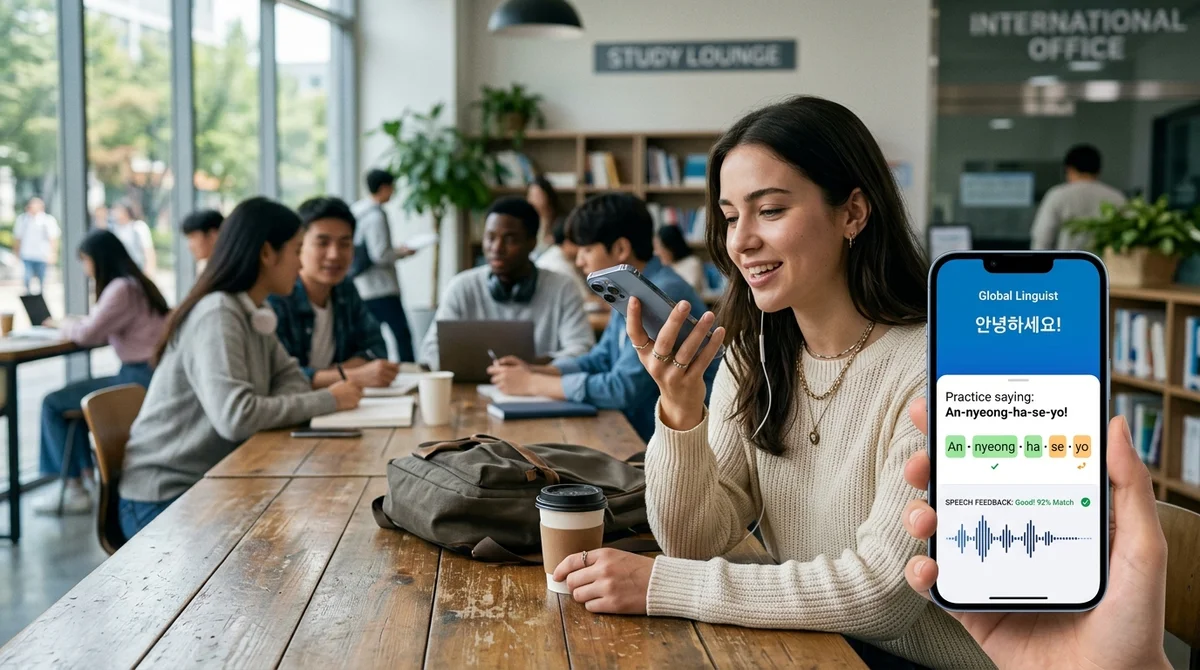
Google has updated the mobile Translate app with a tool that helps users correct their pronunciation of foreign words and phrases. The launch is timed to the 20th anniversary of the Google Translate family of services and shows how the translator is shifting from a reference tool into a more practical language-learning assistant.
The new feature
The new mode in the Google Translate smartphone app is built not only for translating text but also for practicing spoken language. Users can say a word or a short phrase and get a hint about what to fix in how it sounds.
Essentially, Translate is taking another step toward becoming a language trainer. Until now, the service helped you grasp the meaning, see the translation and hear a reference pronunciation. Now it also tries to add feedback. For mobile use this is a logical evolution, because the phone is what people most often use while traveling, in class and in everyday conversation.
It also matters that Google is not spinning this capability off into a separate product but building it into an interface people already know. That lowers the barrier to entry: users don't need to look for a specialized app, learn a new logic or build their study habits around it. They open the same Translate they have long used for menus, messages, signs and simple dialogues, and get an extra layer of usefulness. For a mass audience, that often matters more than launching yet another narrow service.
Why now
Google explains the feature's arrival quite plainly: users asked for it. Over twenty years, Translate has grown from a basic web translator into a large set of tools that handle text, voice, camera input and fast conversational translation. Against that background, the next request looked natural: it is not enough for people to see the right phrase, they want to quickly check whether they can say it in a way that will be understood in a real situation. This is especially relevant for people who learn a language without a teacher and rely on a smartphone as their main tool.
"The feature was added following numerous user requests."
It is symbolic that the update arrives in Translate's anniversary year. Twenty years is a convenient moment to show the product's evolution, from translating individual words to more complex support for communication. In recent years, large digital platforms have increasingly competed not for a one-off launch but for users' regular return. A pronunciation tool fits this logic well, because it is needed not occasionally but almost every day: before a meeting, on a trip, in a lesson or before a short call.
Who it helps
The practical value of the feature is that it closes the gap between passive understanding of a language and real conversation. Many users can already read a translation and recognize words by ear, but still avoid speaking out of fear of mistakes in stress, rhythm or the sound of individual phonemes. If Translate really delivers clear, fast feedback on short words and phrases, the app will become more useful not only to tourists but also to people preparing for job interviews, calls, a move or study abroad.
- Checking short phrases before a conversation
- Quick pronunciation rehearsal on the go
- Self-directed practice without a teacher
- Less awkwardness in typical situations
There is a broader effect too. When speech practice appears inside a mainstream translator, the way people use it changes. Translate is gradually turning from a tool for "understanding foreign text" into a service that helps people act: say a phrase aloud, prepare for contact, remove the barrier before a first conversation. For Google this is a strong product move, because it raises the value of its ecosystem without radically changing audience habits and without having to explain all over again why a new service is needed.
What it means
Google Translate is increasingly moving beyond translation and becoming a general tool for brief language practice. If the pronunciation-correction feature proves accurate and convenient, users will come back to the app more often, not just for translations but for daily speech rehearsal. For the market, it is a signal that major AI services now compete not only on model quality but also on how deeply they embed themselves in everyday tasks.
- Nov 2, 2026Bun creator uses Claude Code to port 750K lines from Zig to Rust in 11 days
- Nov 2, 2026The Verge reviewer builds a $50 Meta Muse Charm alternative with Claude Code
- Nov 1, 202616 models tested on 7 search tools: Exa averaged 10.5 out of 14, SearXNG about 3
- Nov 1, 2026Google's StreamVibe video agent beats other models by 10.7% on response timing and quality
Key Questions Answered
What are the key details on The new feature?
The new mode in the Google Translate smartphone app is built not only for translating text but also for practicing spoken language. Users can say a word or a short phrase and get a hint about what to fix in how it sounds. Essentially, Translate is taking another step toward becoming a language trainer. Until now, the service helped you grasp the meaning, see the translation and hear a reference pronunciation. Now it also tries to add feedback. For mobile use this is a logical evolution, because the phone is what people most often use while traveling, in class and in everyda
Why now?
Google explains the feature's arrival quite plainly: users asked for it. Over twenty years, Translate has grown from a basic web translator into a large set of tools that handle text, voice, camera input and fast conversational translation. Against that background, the next request looked natural: it is not enough for people to see the right phrase, they want to quickly check whether they can say it in a way that will be understood in a real situation. This is especially relevant for people who learn a language without a teacher and rely on a smartphone as their main tool.
Who it helps?
The practical value of the feature is that it closes the gap between passive understanding of a language and real conversation. Many users can already read a translation and recognize words by ear, but still avoid speaking out of fear of mistakes in stress, rhythm or the sound of individual phonemes. If Translate really delivers clear, fast feedback on short words and phrases, the app will become more useful not only to tourists but also to people preparing for job interviews, calls, a move or study abroad. Checking short phrases before a conversation Quick pronunciation re
Test Frontier LLMs & Autonomous Agents in One Workspace
Run Claude Opus 5.5, GPT-6, Gemini 3.1, and DeepSeek side-by-side in Nomad AI (nomadnet.ai) — unified model routing, deep research, and multimodal workflows under one subscription.
The AI world, distilled — once a week
Seven stories that actually mattered, hand-picked. No noise, no reposts, no press releases.
Done! Check your inbox for a confirmation.