Parag Agrawal's Parallel Web Systems hits $2 billion valuation after new round
Parallel Web Systems, founded by former Twitter CEO Parag Agrawal, has closed a new $100 million round led by Sequoia. The company's valuation rose to $2 billion just five months after its previous major raise. The deal shows that AI agents and the infrastructure around them remain one of the hottest areas for venture investment right now.
AI-processed from TechCrunch; edited by Hamidun News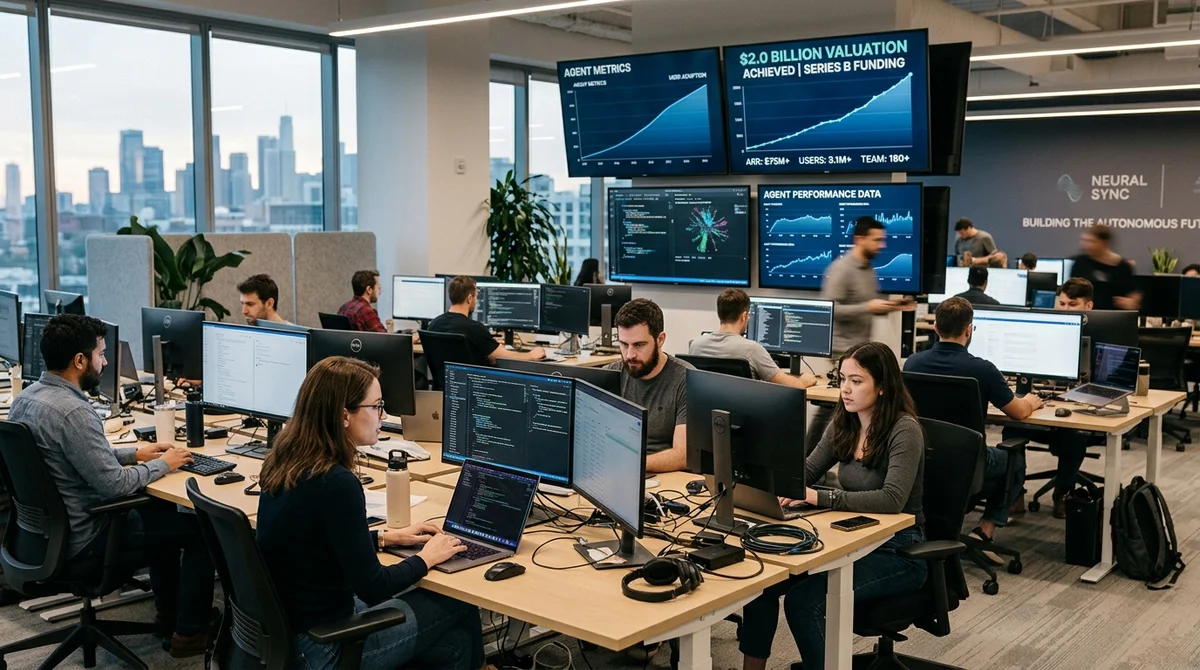
Parallel Web Systems has raised another $100 million and reached a $2 billion valuation just five months after its previous major round. For the AI agent market, it is a signal that investors keep raising their bids quickly when they see a team and a category with potential.
Valuation is climbing fast
Sequoia led the new $100 million round. It came only a few months after the company had already raised a previous $100 million, and the pace matters more than the amount: the market rarely gives a startup two large rounds almost back to back unless it believes the company can claim a significant place in a new technology wave. Against that backdrop, the $2 billion valuation looks not like a vanity figure but like a bet on very fast growth.
The known details add up to a simple picture: Parallel Web Systems has a strong investor, a clear focus on AI agents, and a founder with a high-profile management background. When these elements come together, capital arrives not only for current results but for the likelihood that the company becomes an infrastructure player while the market is still taking shape. That is why investors are willing to pay up front for a position in an early market.
A repeat round after five months is usually read as an attempt to keep momentum while the window of opportunity is still open. In AI, such a window can close quickly: competitors appear weekly, the cost of strong specialists keeps rising, and infrastructure products often win on speed of adoption, not just on the quality of the idea. So the new capital here is not just a cash reserve for the future but a tool for speeding up the grab for position right now.
Who is behind the project
The startup was founded by Parag Agrawal, former CEO of Twitter. For the venture market this is an important marker: investors get not just another team building an AI product, but a founder with experience running a large technology platform and an understanding of how complex products scale. In the AI agent segment, which has plenty of noise and early experiments, such a profile can noticeably reduce distrust of a company at the start.
Below are the reasons that usually matter most to investors in deals like this.
- a strong founder with a recognizable reputation;
- a category where no leaders have firmly established themselves yet;
- a chance to quickly assemble a top team thanks to the name and the capital;
- an opportunity to take the tooling layer for AI agents rather than a single narrow use case;
- an expectation that the market will grow faster than typical SaaS niches.
Why the money is flowing here
The fact that the round closed so soon after the previous one shows the market's mood around agent tools. Until recently, most attention was on chatbots and general-purpose models; now more and more capital is moving into the layer of products that help AI not only answer but also take actions, work with external services, and automate real tasks. This is the level where the next competition is taking shape: who will give developers and companies convenient tools for building reliable AI agents.
At the same time, a high valuation is not only an advance but also pressure. After such deals, a startup is expected to move very fast: hire strong engineers, speed up the product, position itself clearly, and show early signs that the tool is needed not only for demo scenarios but by real customers. For the company this is a comfortable cushion of resources, but also a higher bar of expectations than most young players on the market face.
What this means
Rounds of this size show that the AI agent market has moved from curiosity to big bets. For founders, it is a good signal: the money is there, but it increasingly goes not just to AI in general but to teams that can quickly build a platform layer around agent tools.
- Nov 1, 2026Local models lose to Opus and Codex: 0.21 on a MacBook versus 1.00 for Codex
- Nov 1, 2026Adobe's EditAgent judge picks a usable edit 81.3% of the time, versus 74.8% for EditScore
- Nov 1, 202616 models tested on 7 search tools: Exa averaged 10.5 out of 14, SearXNG about 3
- Nov 1, 2026Google's StreamVibe video agent beats other models by 10.7% on response timing and quality
Key Questions Answered
What are the key details on Valuation is climbing fast?
Sequoia led the new $100 million round. It came only a few months after the company had already raised a previous $100 million, and the pace matters more than the amount: the market rarely gives a startup two large rounds almost back to back unless it believes the company can claim a significant place in a new technology wave. Against that backdrop, the $2 billion valuation looks not like a vanity figure but like a bet on very fast growth. The known details add up to a simple picture: Parallel Web Systems has a strong investor, a clear focus on AI agents, and a founder with
Who is behind the project?
The startup was founded by Parag Agrawal, former CEO of Twitter. For the venture market this is an important marker: investors get not just another team building an AI product, but a founder with experience running a large technology platform and an understanding of how complex products scale. In the AI agent segment, which has plenty of noise and early experiments, such a profile can noticeably reduce distrust of a company at the start. Below are the reasons that usually matter most to investors in deals like this. a strong founder with a recognizable reputation; a categor
Why the money is flowing here?
The fact that the round closed so soon after the previous one shows the market's mood around agent tools. Until recently, most attention was on chatbots and general-purpose models; now more and more capital is moving into the layer of products that help AI not only answer but also take actions, work with external services, and automate real tasks. This is the level where the next competition is taking shape: who will give developers and companies convenient tools for building reliable AI agents. At the same time, a high valuation is not only an advance but also pressure. Af
Test Frontier LLMs & Autonomous Agents in One Workspace
Run Claude Opus 5.5, GPT-6, Gemini 3.1, and DeepSeek side-by-side in Nomad AI (nomadnet.ai) — unified model routing, deep research, and multimodal workflows under one subscription.
The AI world, distilled — once a week
Seven stories that actually mattered, hand-picked. No noise, no reposts, no press releases.
Done! Check your inbox for a confirmation.