Elon Musk stated in court that the OpenAI lawsuit concerns 'theft of the charitable mission'
Elon Musk testified under oath for the first time in his lawsuit against OpenAI and its co-founders. In federal court in Oakland, he stated that the dispute is not about him personally, but about whether the organization's charitable mission could be 'stolen.' Now the case appears not as another industry clash, but as a test for the entire structure of AI companies.
AI-processed from TNW; edited by Hamidun News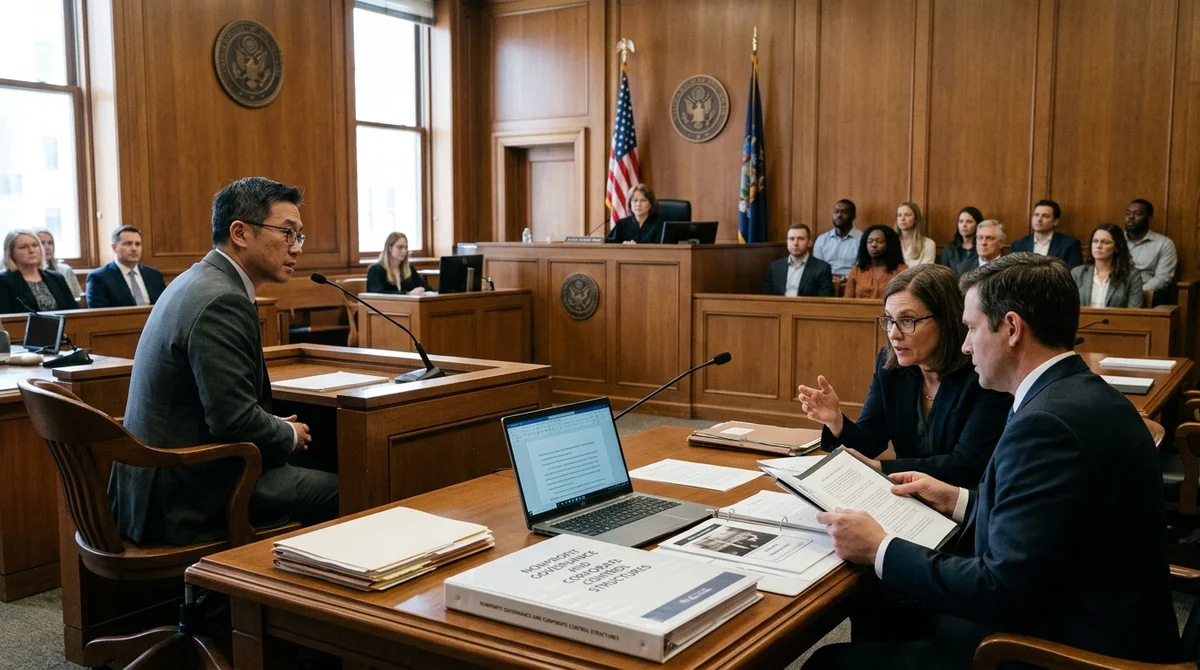
Elon Musk gave sworn testimony in his lawsuit against OpenAI and its co-founders for the first time, arguing that the dispute concerns not personal interests, but the fate of the company's charitable mission. His appearance in federal court in Oakland escalates the conflict from a loud public row into a legal dispute that could reshape the rules for major AI laboratories.
How Musk Explained the Lawsuit
On Tuesday, Musk testified before a federal jury in Oakland, California, in a case he filed back in 2024. These are his first sworn statements on this lawsuit, which is why what he said in the courtroom carries significantly more weight than his usual posts, interviews, or social media comments. Before the jury, he attempted to establish the simplest possible framework: according to him, the matter is not about personal enmity or a struggle for influence, but about the violation of the organization's original purpose.
"You cannot steal a charitable organization — that is my position."
This formulation is important in itself. Musk deliberately frames the lawsuit not as a corporate conflict between influential figures in the AI market, but as a dispute about principle. If the court takes this logic seriously, the discussion will move away from the personal motives of the parties toward the question of what exactly OpenAI promised at the start, who had the right to change that course, and whether such a transformation can be considered a violation of the original mission.
Why the Case Is Broader
Even in a brief summary, it is clear that this trial extends far beyond Musk's biography alone. At stake is not only the relationship between one of the founders and the company he later began to criticize, but also a broader question: how should organizations that began as structures with a public or charitable logic be treated when they find themselves at the center of a commercial race for AI leadership. This is precisely why his words about "stealing a charitable organization" sound like an attempt to set a precedent.
If such an argument is perceived by the court as legally significant, the consequences could extend beyond OpenAI alone. Other research laboratories, foundations, and hybrid structures will also need to be more careful about how they formulate their mission, restructure their governance, and explain the transition from a public agenda to a commercial model. For the industry, this is no longer just a matter of reputation, but of corporate organization.
- who has the right to change an organization's original mission;
- how courts might interpret promises made at the start of a project;
- where the boundary lies between company development and abandonment of original commitments;
- whether such disputes could become a benchmark for future AI companies.
What the Jury Heard
Sworn testimony changes the tone of the story itself. In the public sphere, the Musk-OpenAI conflict was often perceived as another episode in the struggle for influence in the AI industry, where bold statements serve as an extension of competitive warfare. But in court, such rhetoric no longer works on its own: every claim becomes part of a legal construct that will be scrutinized by lawyers, the judge, and the jury.
This is what makes the current hearing more significant than an ordinary media exchange. For OpenAI, this means the case is increasingly shifting from a reputational plane to an institutional one. If the jury finds Musk's arguments convincing, the dispute about the company's past could turn into a discussion about permissible boundaries for the entire industry.
Even without an immediate conclusion, the mere fact of such proceedings strengthens attention to how AI organizations structure governance, make promises, and control strategy. The court is essentially testing how to document such pivots.
What This Means
The story of Musk's testimony is important not only for OpenAI and his personal lawsuit. It demonstrates that in the AI industry, courts are beginning to examine not only technologies and competition, but also the question of who owns a company's mission when large sums of money and influence are at stake. For the market, this is a signal: the legal architecture of AI projects is becoming as important as the models themselves in the coming years.
Need AI working inside your business — not just in your newsfeed?
I build production AI for companies — custom CRM, internal tools, autonomous agents, workflow automation. Owned by you, shaped to your process, no per-seat tax. Built by Zhemal Khamidun, CPO of AlpinaGPT (AI platform, 6,000+ users).
The AI world, distilled — once a week
Seven stories that actually mattered, hand-picked. No noise, no reposts, no press releases.
Done! Check your inbox for a confirmation.