MIT Developed Methodology for Detecting Discrimination in AI Decision Support Systems
MIT researchers developed a framework for testing the ethics of autonomous AI systems — a tool that precisely identifies situations where AI decision support…
AI-processed from MIT News; edited by Hamidun News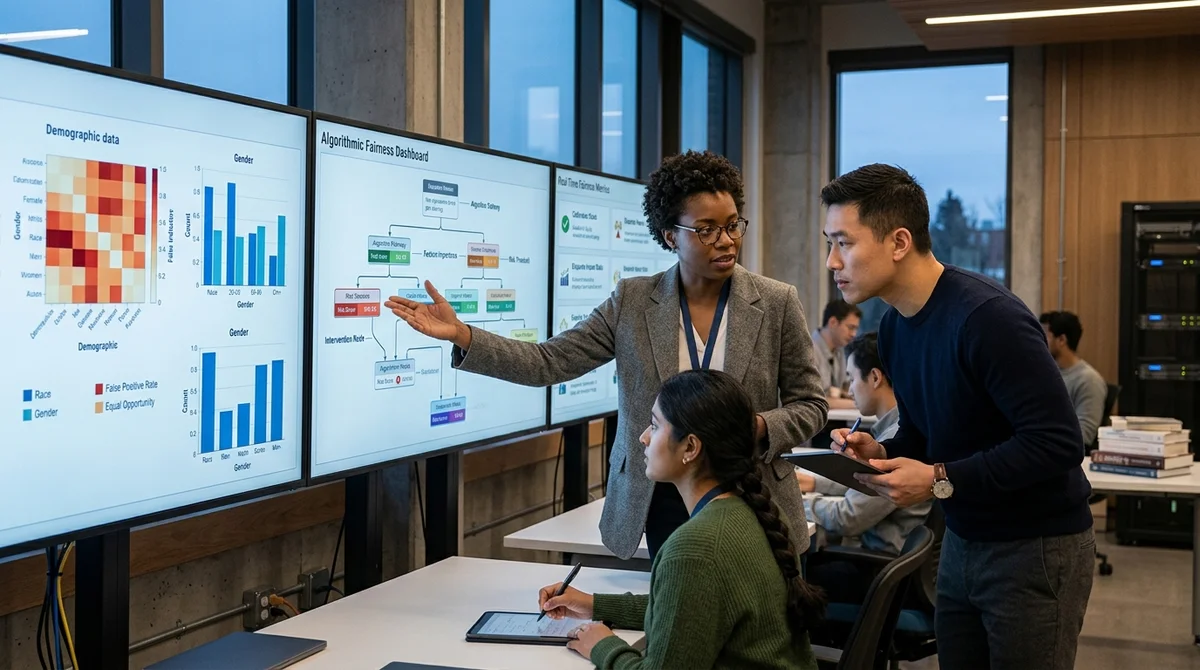
Researchers at the Massachusetts Institute of Technology have developed a testing framework that systematically identifies situations where autonomous AI systems make unfair decisions regarding specific individuals and entire communities. The work addresses one of the key gaps in the toolkit for assessing AI ethics—the absence of a methodology capable of detecting discrimination not only at the statistical level but also in concrete scenarios. Decision-support systems—algorithms that help make decisions in healthcare, lending, education, hiring, and criminal justice—are becoming increasingly embedded in everyday processes.
It is precisely in these areas that algorithmic bias causes the most tangible real-world harm. A person receives a mortgage denial, their resume is filtered out before the interview stage, they receive a harsher sentence—all without clear justification and, often, without the ability to appeal the decision. Existing approaches to auditing AI systems typically measure demographic disparities in aggregated results.
Such analysis can detect major systematic skews but misses subtle, context-dependent cases of discrimination. A system may demonstrate statistical parity overall while simultaneously providing systematically disadvantageous recommendations to members of certain groups under specific circumstances. Classical fairness metrics simply do not see such localized violations.
MIT's framework addresses this challenge using a scenario-based approach. The tool automatically generates test sets—situations in which specific parameters change: the applicant's demographic characteristics, their history of requests, question formulations, and surrounding context. The system then analyzes the AI model's response to these variations and identifies patterns indicating unfair treatment.
The key difference: the framework searches not only for disparities between demographic groups at the statistical level but also for specific situational triggers that provoke biased conclusions. During testing on several real AI systems, researchers confirmed: bias is often concentrated precisely in narrow, specific scenarios that standard audits simply overlook. This means that developers and regulators relying solely on aggregated metrics may receive a false sense of security while real discrimination continues to occur at the level of individual cases.
The MIT team deliberately designed the tool as practical, not merely research-oriented. The methodology is compatible with existing responsible AI standards—particularly the NIST AI Risk Management Framework—and could potentially be integrated into mandatory system verification procedures before market release. The authors describe possible application scenarios: from internal checks within developer companies to independent audits by regulators.
The research emerges against a backdrop of mounting regulatory pressure on the AI industry. In Europe, the AI Act requires suppliers of high-risk systems to undergo risk assessment and maintain documentation. In the United States, several states have already introduced algorithmic accountability legislation, and federal agencies are increasingly turning attention to algorithmic discrimination.
In this context, standardized testing tools are precisely what regulators currently lack. MIT's work formulates a simple but important conclusion: AI ethics is not only a question of intentions and declarations but also a question of verification. Without tools capable of detecting injustice in concrete situations, even the most conscientious developers risk releasing a system with undetected violations.
The new framework offers a concrete step toward making promises about fair AI verifiable in practice.
Want to stop reading about AI and start using it?
AI News is a curated feed of AI/tech news. Hamidun Academy teaches you to use AI systematically in your work.