How AI Is Helping Clothing Brands Design the Fashion of the Future
Artificial intelligence is becoming a new working layer of the fashion industry: it speeds up design, helps forecast demand, reduces waste and makes online shopping more precise. According to the source material, more than 45% of the world's clothing brands have already plugged AI tools into collection development, while virtual try-ons and personal recommendations are gradually changing the mechanics of buying right now. The technology also brings friction. Virtual influencers, AI imagery in campaigns and the fate of human creative work are raising questions about consent, transparency and audience trust.
AI-processed from MarkTechPost; edited by Hamidun News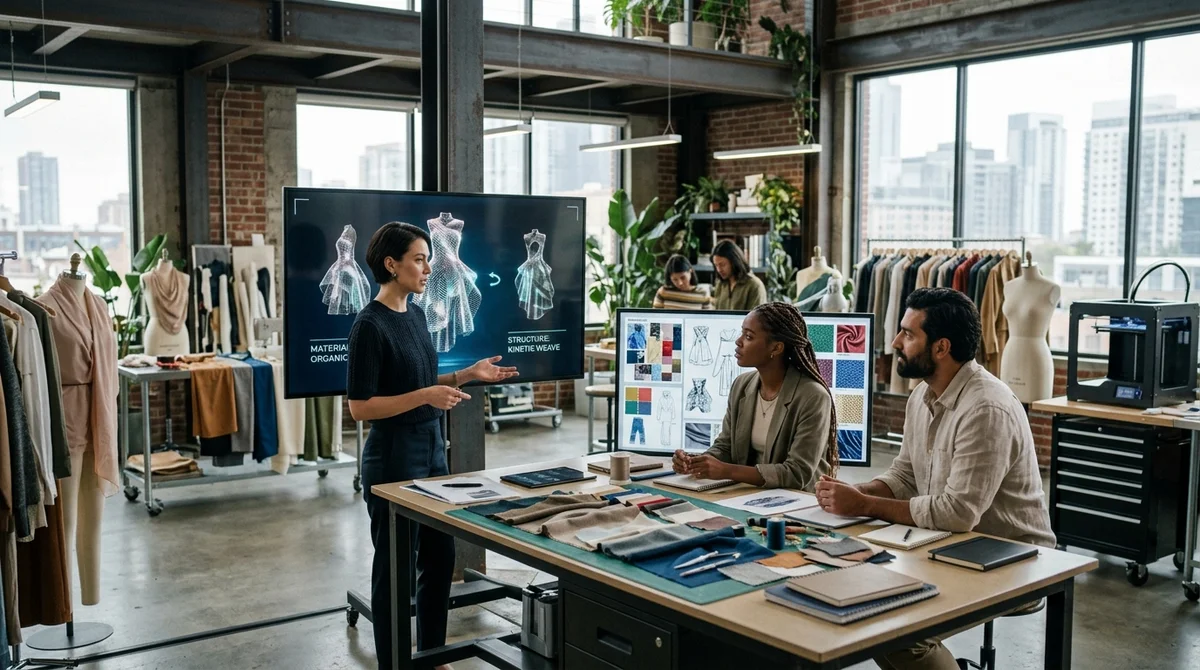
Artificial intelligence is quickly turning from auxiliary software into a full-fledged layer of the fashion industry: it takes part in creating sketches, predicts demand, optimizes factories and even changes how people try on and buy clothes. But the deeper algorithms move into fashion processes, the sharper the questions become about authorship, transparency and where automation ends and human decision-making begins.
Not long ago, a collection began in a traditional way: moodboards, fabric selection, hand sketches, long approvals and many iterations. Now generative tools are increasingly brought in at this stage. The article notes that, according to the McKinsey State of Fashion 2026 report, more than 45% of the world's clothing brands have already adopted AI services for design in order to shorten development times. Systems such as Adobe Firefly, Midjourney and specialized fashion platforms help assemble moodboards, generate silhouette options, create tech packs and even produce quick 3D prototypes from a text description. For designers this is not a replacement for taste but a way to speed up draft work and run through more ideas faster.
The effect of AI is most visible in trend forecasting. Where runway shows, buyer reports and seasonal reviews from large agencies such as WGSN used to be the guide, the cycle is now much shorter. Trends are born not only on the runway but also on social networks, marketplaces, search queries and video. Multimodal models can analyze text, images and video at the same time to find early signals: growing interest in particular colors, materials, cuts or micro-aesthetics. Platforms such as Heuritech build dashboards for brands with near-live demand feedback, letting them adjust collections based on audience behavior data rather than a manager's intuition.
For the industry this matters not only for speed but also for the environment. Fashion remains one of the most polluting sectors: the source cites an estimate that it accounts for 2% to 8% of global carbon emissions and about 20% of global wastewater. AI tools work here as a practical mechanism for cutting losses.
Demand forecasting helps produce less excess stock, digital samples reduce fabric spent on physical prototypes, and planning models adjust production volumes to real demand. In factories, computer vision and deep learning models find defects earlier, predictive maintenance lowers the risk of downtime, and digital twins let teams run production scenarios before a line starts. The result is more consistent quality, better safety and a more manageable supply chain.
Consumer experience is a separate front of change. Online stores rely less and less on crude segmentation by gender, age or price and adapt more and more to the intent of the individual shopper. If a customer likes muted shades, the system shows them first; if they are looking for an outfit for an event, recommendations are built around the task, not just around similar products. Add virtual try-ons: services like DressX Agent let users create an avatar from a selfie, try on items digitally and choose from hundreds of brands. For online retail this is especially valuable, because returns in fashion remain an expensive and chronic problem, and an accurate virtual try-on can noticeably reduce them.
But efficiency comes with discomfort. Virtual influencers, fully digitally created characters for advertising and content, are entering the industry more actively. They do not get tired, do not land in reputational scandals and can appear in any clothing and any scene at the brand's request. At the same time, the number of AI images in campaigns is growing, and with it questions about consent, digital doubles, the displacement of human labor and audience trust. A telling episode was the discussion in Vogue of GUESS's AI advertising in 2025, after which the topic of models' rights and transparency in the use of their likenesses became even more prominent.
The article's main conclusion is that fashion is not heading toward the complete displacement of humans. Rather, a new creative stack is forming, in which human vision sets the direction and AI adds speed, scale and precision. The winners will not be the brands that simply plugged in a fashionable tool, but those that managed to build it into their process transparently and thoughtfully. Against this backdrop, it is no surprise that the market for fashion technology, according to the source's estimate, is set to exceed $8.2 billion by the end of 2026: for the industry, the question is no longer whether AI is needed, but how deeply and responsibly to apply it.
- Oct 25, 2026Shadow AI in the Enterprise: Why 90% of Security Officers Break Their Own Bans and How a 3-Zone Traffic Light System Works
- Oct 19, 2026Black Forest Labs: A 70-Person Team Takes On Silicon Valley's Giants
- Oct 11, 2026BBC: AI Is Devaluing Images and Raising the Price of Human-Made Work
- Oct 9, 2026Midjourney Adds Thinking Mode for V8.2 and Shared Folders in Alpha
Test Frontier LLMs & Autonomous Agents in One Workspace
Run Claude Opus 5.5, GPT-6, Gemini 3.1, and DeepSeek side-by-side in Nomad AI (nomadnet.ai) — unified model routing, deep research, and multimodal workflows under one subscription.
The AI world, distilled — once a week
Seven stories that actually mattered, hand-picked. No noise, no reposts, no press releases.
Done! Check your inbox for a confirmation.