OpenAI proposes creating a welfare fund and accelerating power grid development for the AI era
OpenAI released a package of policy recommendations for governments on preparing for the AI era. Three key proposals: establish a public welfare fund that distributes AI growth benefits among citizens; launch rapid social support programs for those who lose jobs due to automation; accelerate electricity grid construction—large-scale AI infrastructure is physically impossible without it.
AI-processed from Bloomberg Tech; edited by Hamidun News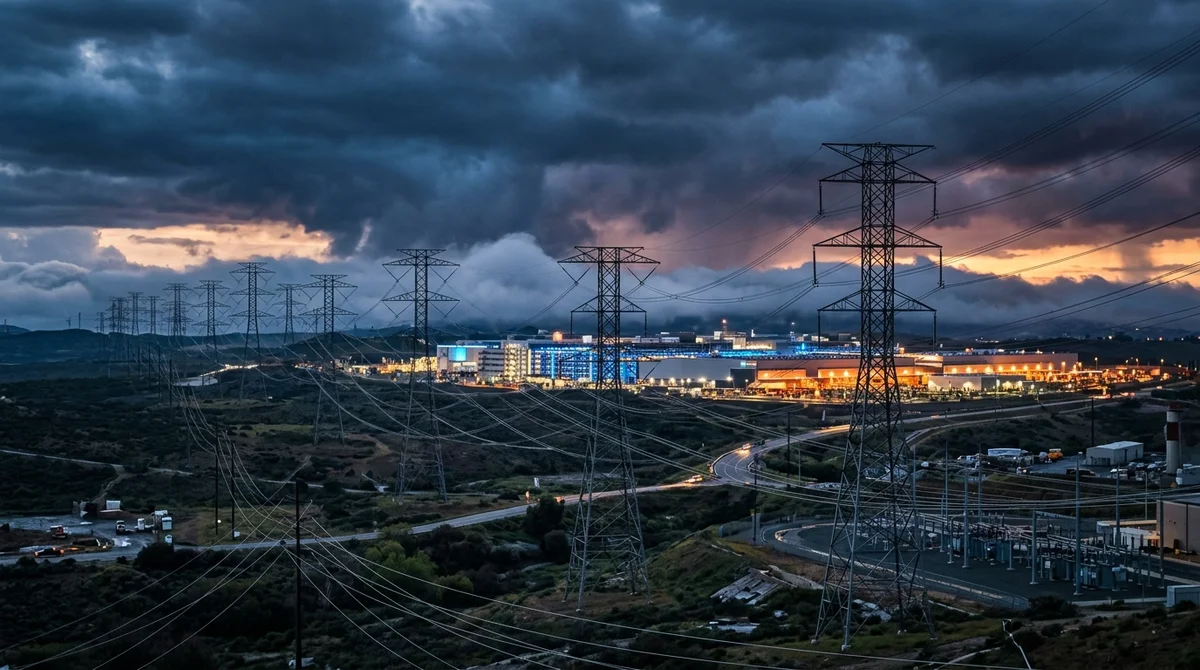
OpenAI has published a set of policy recommendations aimed at helping society cope with the economic and social disruptions brought about by the age of artificial intelligence. Key proposals include establishing a state welfare fund, implementing rapid social support programs, and accelerating the development of electrical infrastructure. The document was released amid growing discussions about how governments should prepare for large-scale labor automation.
OpenAI is among the few technology companies that simultaneously push the development of increasingly powerful AI systems and actively shape the regulatory agenda by offering governments ready-made response scenarios. The very fact of publishing such recommendations is telling: the company views itself not simply as a technology vendor, but as a participant in the social contract governing AI management.
The central idea of the proposals is to create a public welfare fund that would accumulate a portion of income from economic growth generated by AI and distribute it among citizens. This concept is close to the idea of 'AI dividends,' which economists and policymakers have discussed in various forms for several years. The key difference is that OpenAI proposes tying payouts specifically to productivity gains from AI, rather than to overall tax revenues. This approach allows the fund to be presented not as redistribution, but as a natural consequence of technological progress.
In parallel, the company insists on reforming social support systems. Current unemployment assistance programs are too slow to respond to labor market changes: bureaucratic procedures can take months, whereas AI-driven challenges for specific professions materialize within weeks. The proposed rapid-response programs should deliver support within days, not quarters.
A separate and most practical block of recommendations concerns the power sector. OpenAI insists on accelerated construction and modernization of electrical grids—and this demand has a direct commercial basis. Large-scale deployment of AI infrastructure is already creating enormous strain on the energy system: data centers worldwide consume several percent of global generation, and exponential growth is forecast by the end of the decade. Without proactive investments in grid infrastructure, plans to expand AI computing will prove physically unfeasible.
Notably, the document is written in the language of state interests rather than corporate lobbying. The emphasis is placed on economic growth, social stability, and energy security. At the same time, most of the proposed measures create an environment in which rapid AI expansion becomes not a problem, but a solution: more AI means more revenue for the welfare fund, more reasons to build networks, more jobs in the AI industry.
The signal for practitioners is clear: OpenAI is betting on active state participation in AI transformation—both in infrastructure financing and in managing social consequences. Companies from adjacent sectors—energy, data center construction, edtech, social technologies—can expect increased regulatory attention and a new generation of government programs.
Need AI working inside your business — not just in your newsfeed?
I build production AI for companies — custom CRM, internal tools, autonomous agents, workflow automation. Owned by you, shaped to your process, no per-seat tax. Built by Zhemal Khamidun, CPO of AlpinaGPT (AI platform, 6,000+ users).
The AI world, distilled — once a week
Seven stories that actually mattered, hand-picked. No noise, no reposts, no press releases.
Done! Check your inbox for a confirmation.