OpenAI Proposes a Public Wealth Fund and Faster Grid Buildout for the AI Era
OpenAI has released a package of policy recommendations for governments on how to prepare for the AI era. It makes three core proposals: create a public wealth fund that distributes the gains from AI-driven growth among citizens; launch rapid social support programs for people who lose their jobs to automation; and speed up construction of power grids, without which large-scale AI infrastructure is physically impossible.
AI-processed from Bloomberg Tech; edited by Hamidun News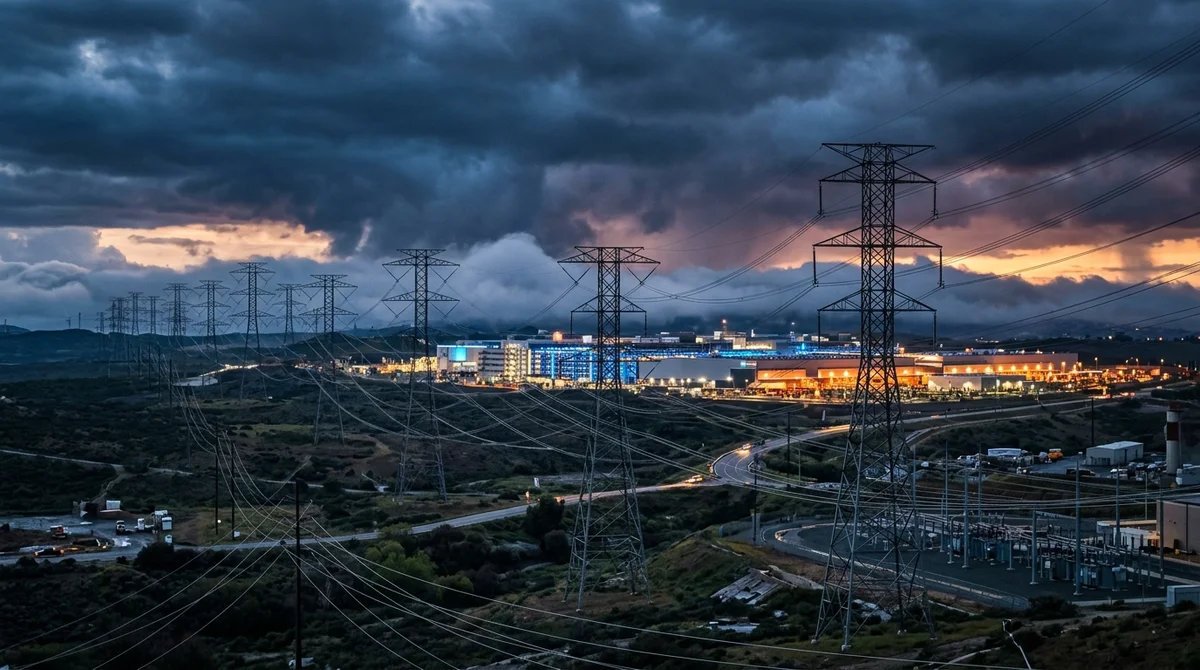
OpenAI has published a set of policy recommendations meant to help society cope with the economic and social shocks of the AI era. The key proposals include a government wealth fund, rapid social support programs, and faster development of electric power infrastructure. The document arrives amid a growing debate over how governments should prepare for large-scale automation of work.
OpenAI is one of the few tech companies that is simultaneously racing to build ever more powerful AI systems and actively shaping the regulatory agenda by handing governments ready-made response playbooks. The very fact that it published these recommendations is telling: the company sees itself not merely as a technology vendor but as a party to the social contract on AI governance. The centerpiece is a public wealth fund that would capture a share of the revenue from AI-driven economic growth and distribute it among citizens.
The concept is close to the idea of "AI dividends," which economists and politicians have discussed in various forms for several years. The key difference is that OpenAI proposes tying payouts specifically to AI-driven productivity gains rather than to general tax revenue. This framing lets the fund be presented not as redistribution but as a natural consequence of technological progress.
At the same time, the company is pushing for reform of social support systems. Current unemployment assistance programs respond too slowly to labor market shifts: bureaucratic procedures can take months, while AI-driven disruption to specific occupations materializes within weeks. The proposed rapid-response programs would deliver support within days, not quarters.
A separate and most practical set of recommendations concerns the power sector. OpenAI is pressing for faster construction and modernization of power grids, and this demand has a direct commercial motive. The large-scale rollout of AI infrastructure is already putting enormous strain on the energy system: data centers worldwide consume several percent of global generation, and that figure is projected to grow several times over by the end of the decade.
Without investment in grids ahead of demand, plans to expand AI compute will be physically unachievable. Notably, the document is written in the language of national interest rather than corporate lobbying. It emphasizes economic growth, social stability, and energy security.
Yet most of the proposed measures create an environment in which rapid AI expansion becomes not a problem but the solution: more AI means more revenue for the wealth fund, more reasons to build grids, and more jobs in the AI industry. For practitioners, the signal is clear: OpenAI is betting on active government involvement in the AI transition, both in financing infrastructure and in managing its social consequences. Companies in adjacent sectors — energy, data center construction, edtech, social technology — can expect increased regulatory attention and a new generation of government programs.
- Nov 1, 2026Local models lose to Opus and Codex: 0.21 on a MacBook versus 1.00 for Codex
- Nov 1, 2026Kimi scores 96.2% on a 1C database analytics test and emerges as a fallback if Claude access is blocked
- Nov 1, 2026OpenAI Rewrites GPT Behavior Rules: Five Values and a Chain of Command
- Nov 1, 2026Google admits AI Mode cuts search revenue, shares fall 15%
Test Frontier LLMs & Autonomous Agents in One Workspace
Run Claude Opus 5.5, GPT-6, Gemini 3.1, and DeepSeek side-by-side in Nomad AI (nomadnet.ai) — unified model routing, deep research, and multimodal workflows under one subscription.
The AI world, distilled — once a week
Seven stories that actually mattered, hand-picked. No noise, no reposts, no press releases.
Done! Check your inbox for a confirmation.