US Treasury Wants Access to Anthropic's Mythos Model to Hunt for Vulnerabilities
The US Treasury wants access to Anthropic's Mythos model so it can start looking for vulnerabilities. The goal is not to deploy the model for efficiency, but to test its security: officials want to know whether the model's restrictions can be bypassed, whether it can be pushed into failures, or whether it can be made to give risky answers. If access is granted, it will be one more sign that government is moving from talking about AI to real technical auditing.
AI-processed from Bloomberg Tech; edited by Hamidun News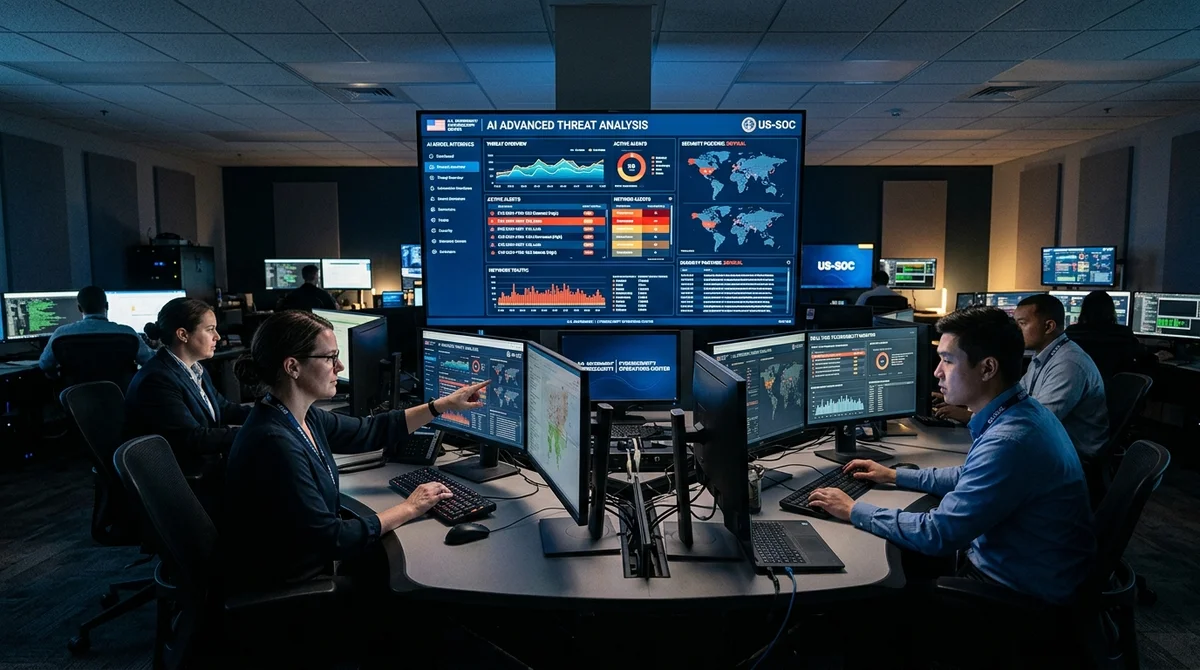
The US Treasury wants access to Anthropic's Mythos model so it can start looking for vulnerabilities in the system before it is used more widely in sensitive scenarios. The request itself shows that US agencies are moving from general talk about AI to hands-on testing of specific models for reliability, controllability and resistance to abuse.
According to available information, the technology team at the US Treasury is trying to get access to Mythos. The aim appears to be not deploying the model for productivity, but a security audit: specialists want to understand where the system can fail, how it behaves under unusual requests, and whether it can be made to step outside its own restrictions.
There are no official details yet on the format of the review, nor confirmation that Anthropic has already granted access. The technical characteristics of Mythos itself have not been disclosed either, so it is too early to say whether it is an internal product, a specialized one, or one being prepared for broader use.
For the US government, this work looks logical. The more actively federal bodies consider AI for data analysis, document preparation, staff support and automation of internal processes, the higher the cost of errors. In federal systems, the problems may go beyond reputational damage. They may include leaks of sensitive information, bypassing of safeguards, generation of unreliable recommendations, or model behavior that can be deliberately provoked. That is why early access to a model matters as much as the developer's public promises about safety.
If the Treasury team does begin testing, it will likely look for the typical weak points of modern generative systems. Such a review usually includes attempts to bypass built-in restrictions, elicit dangerous answers, extract hidden instructions, test resistance to prompt injection, and evaluate how the model handles confidential data and long context. This does not mean such problems have already been found in Mythos. Rather, it is the standard set of questions now asked of any advanced model, especially one that organizations with a high level of responsibility could potentially use.
The choice of company is of particular interest. Anthropic has long built its reputation as a developer that bets on safety and controlled model behavior. If the government wants direct access even to such systems for its own stress testing, it underlines a new standard in relations between authorities and AI companies: general assurances are not enough, and real checks on the side of the customer or regulator are needed. For developers, this means additional pressure: they will have to prepare not only for market competition but for increasingly deep technical audits.
The story also matters because it changes the logic of government interest in AI. Not long ago, officials mostly discussed rules, risks and frameworks. Now the focus is shifting to specific models, specific scenarios and specific vulnerabilities. This is a more practical stage: instead of abstract regulation, there are attempts to understand how a system behaves under real stress conditions. For the market, it signals that trust in frontier models will increasingly rest not on presentations but on the results of independent testing.
The main takeaway is simple: government is starting to treat advanced AI systems like other critical technology: access first, then testing, and only then possible deployment. For Anthropic, this may become a maturity test of its approach to safety, and for the whole market, a sign that the era of informal promises is ending and the era of mandatory verification is beginning.
- Nov 2, 2026Faros: median code review time up 441% in teams using AI agents
- Nov 2, 2026The "no gold documents" label lost accuracy, from 0.68 to 0.10, on strong retrievers
- Nov 2, 2026Karpathy builds a YouTube clone with 6454 videos from Hacker News recommendations in two hours
- Nov 2, 2026Karpathy used Claude to build HackerTube from 6,454 videos recommended on Hacker News
Test Frontier LLMs & Autonomous Agents in One Workspace
Run Claude Opus 5.5, GPT-6, Gemini 3.1, and DeepSeek side-by-side in Nomad AI (nomadnet.ai) — unified model routing, deep research, and multimodal workflows under one subscription.
The AI world, distilled — once a week
Seven stories that actually mattered, hand-picked. No noise, no reposts, no press releases.
Done! Check your inbox for a confirmation.