Google releases standalone Gemini app for macOS, making AI easier to reach on Mac
Google has released a standalone Gemini app for macOS. Mac owners can now launch the AI assistant without extra steps and use it as a permanent work tool rather than just a browser tab. For Google, it is an important move in the fight for Apple's desktop audience and for the habit of turning to AI directly in everyday tasks.
AI-processed from Bloomberg Tech; edited by Hamidun News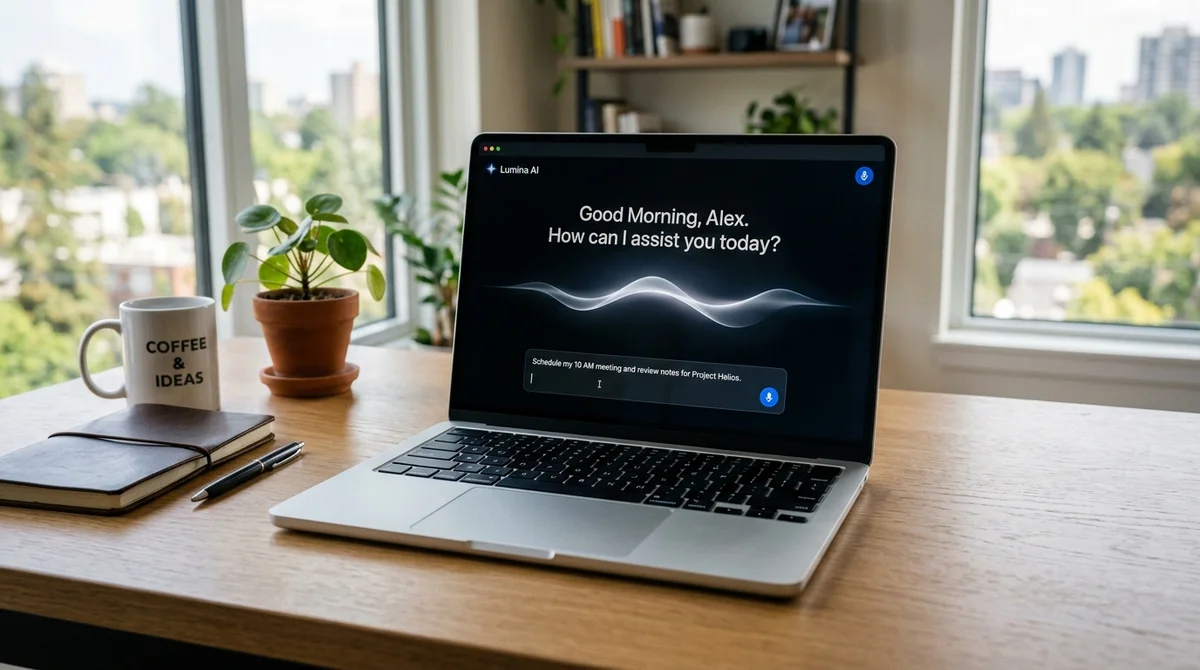
Google has released a standalone Gemini app for macOS, bringing its AI assistant closer to daily work on Apple computers. For Mac users, this is not just another way to open a chat with the model, but a shift from a browser-based workflow to a more direct, desktop format. For Google itself, it is an important signal: the company wants Gemini to be used not only in search, on Android and on the web, but also as a permanent tool on a platform it does not fully control.
This is specifically a self-contained macOS app, meant to make Gemini easier to reach for Mac owners. Such a launch reduces friction in everyday use: users no longer need to hunt for a browser tab or keep the web interface open separately from their other tasks. On the desktop this matters especially, because AI is increasingly used not occasionally but as a working layer on top of text, code, notes, documents and correspondence. The faster the assistant opens and the more naturally it fits into a daily routine, the higher the chance that the service becomes a habit rather than a one-off feature.
For Google, a native Mac client is also a battle for an audience that traditionally has a lot of influence on the software market: developers, designers, product managers, analysts and content creators. These groups are often the first to test new tools and then bring them into their teams. If Gemini is more convenient to use directly on macOS, Google gets a chance to anchor the assistant in work processes in the place where users are simultaneously comparing it with other AI services. With competition now running not only between models but also between the interfaces used to access them, a standalone app is not a cosmetic update but part of a distribution strategy.
The enterprise angle matters separately. The Mac has long been a standard work machine in many tech companies and creative teams, so a native client lowers the barrier to internal pilots and wide rollout. When it is easier for an employee to launch an AI assistant on their main device, it is easier for a company to test real use cases: drafting texts, meeting summaries, working with ideas, analyzing documents, coding help. For Google, this is a way to expand Gemini's presence not only among individual users but also inside the professional environment, where decisions about services are often scaled at once to dozens or hundreds of people.
There is also a broader context. Apple remains one of the main consumer platforms, and control over the entry point to AI is becoming more important. Whoever owns the interface largely controls usage frequency, retention and the quality of feedback from the audience. That is why Gemini's launch on macOS can be read as a pragmatic step: Google is not waiting for users to pick the web version on their own, but is offering a shorter route to its product. Even if the app's feature set at launch matches the web version, the standalone client format already changes how the service is perceived: it looks not like a page that can be closed, but like a full-fledged work tool.
For the AI ecosystem, this is one more confirmation that the market is entering a stage where winning depends not only on model quality but also on how conveniently the product is packaged. Users rarely choose an assistant by benchmarks in isolation from the environment in which they have to work every day. They choose what opens faster, fits the process more clearly and requires fewer unnecessary actions.
So the arrival of a standalone Gemini for macOS is not just news about a new client, but a step toward AI finally turning from a website into a permanent layer of desktop work. If Google can keep access simple and develop the product around real Mac use cases, its position in the assistant race will strengthen noticeably.
- Nov 2, 2026Bun creator uses Claude Code to port 750K lines from Zig to Rust in 11 days
- Nov 2, 2026The Verge reviewer builds a $50 Meta Muse Charm alternative with Claude Code
- Nov 1, 202616 models tested on 7 search tools: Exa averaged 10.5 out of 14, SearXNG about 3
- Nov 1, 2026Google's StreamVibe video agent beats other models by 10.7% on response timing and quality
Test Frontier LLMs & Autonomous Agents in One Workspace
Run Claude Opus 5.5, GPT-6, Gemini 3.1, and DeepSeek side-by-side in Nomad AI (nomadnet.ai) — unified model routing, deep research, and multimodal workflows under one subscription.
The AI world, distilled — once a week
Seven stories that actually mattered, hand-picked. No noise, no reposts, no press releases.
Done! Check your inbox for a confirmation.