Seedance 2.0 draws attention with hyperrealistic generation of people and scenes
Seedance 2.0 is a multimodal model that works with text, images, audio and video. The buzz around it comes not only from the quality of its clips but from their almost unsettling plausibility: scenes with people and recognizable characters look like footage from a film. Its public release was delayed, and the reason is now clear: capabilities like these immediately raise questions about deepfakes and moderation.
AI-processed from Habr AI; edited by Hamidun News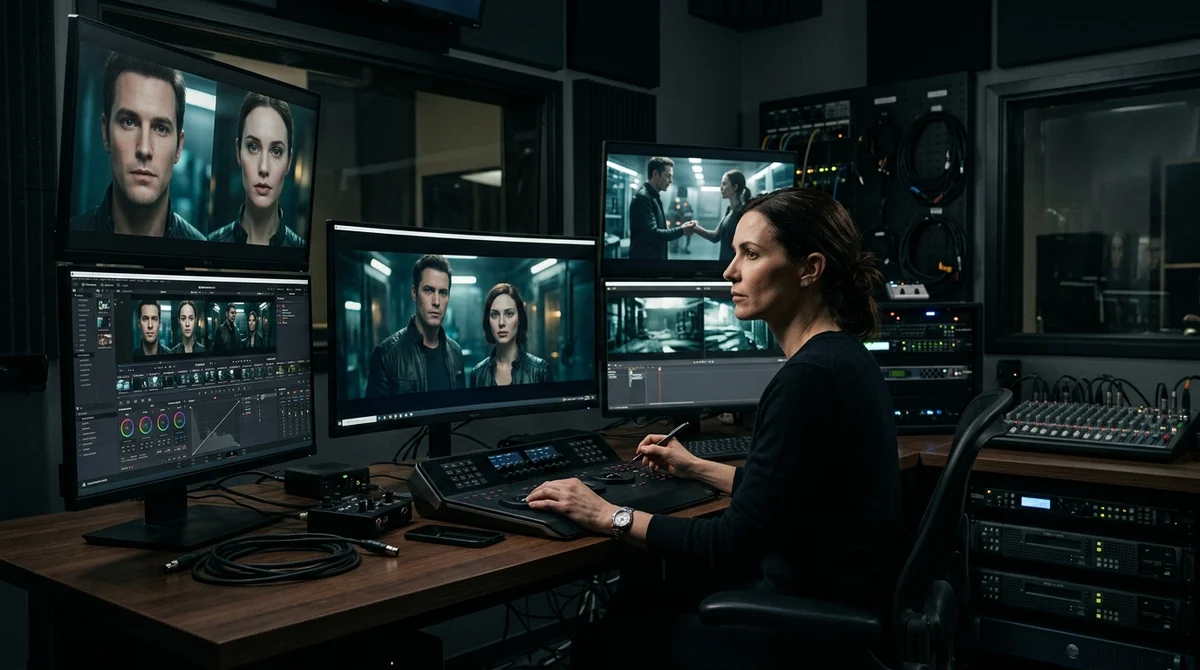
Seedance 2.0 quickly became one of the most discussed video generation models, even though its public release came noticeably later than the market expected. The reason for the interest is easy to see: the system creates scenes with people, characters and cinematic lighting so realistic that the clips are easily mistaken for real footage. This combination of quality and unsettling plausibility has moved the model out of the ordinary circle of AI novelties and into a category of technology watched not only by developers but by a broad audience.
At its core, Seedance 2.0 is a unified multimodal system that works not only with text but also with images, audio and video. This approach matters because it makes the model more than a prompt-to-clip generator: it becomes a more versatile tool for assembling scenes from different types of source material. A user can supply a description, rely on a reference image, add audio as an extra input, or rework existing video. For the market, this is a step from isolated demo clips toward more complex production, where AI becomes part of a full content-creation workflow.
In practice, this setup opens up several scenarios. Some creators will be able to quickly assemble concept videos and test ideas without expensive shoots; others can adapt a visual style to ad campaigns, music videos or short narrative clips. The merging of different input modes matters in itself: the smaller the gap between a text idea, a visual reference and the final moving image, the closer such models come to being a universal editor rather than a toy generator for one-off experiments.
Seedance 2.0 also draws particular attention for how it handles people. Where video models used to stumble on unnatural facial expressions, brittle movement and a "plastic" look, the emphasis here has shifted toward photorealism. That is why clips with recognizable faces and characters, looking almost like fragments of a film or an ad campaign, began circulating quickly around the model. The result is visually impressive, but it raises an old question in a new form: the better the generation, the harder it is for viewers to tell synthetic footage from real footage without extra labels and context.
Against this backdrop, the delayed public release looks less like chance and more like a logical consequence of the system's capabilities. When a model can convincingly reproduce a person's appearance, a scene's mood and the texture of a film frame, developers inevitably face tougher questions about safety, moderation and permissible use. For the industry, this is a familiar fork: on one side, such tools sharply lower the barrier to entry for video production and give creators, marketing teams and studios a new level of speed; on the other, they amplify the risks of deepfakes, faked visual evidence and mass production of convincing but false content.
The architectural idea of multimodality also makes Seedance 2.0 especially prominent among its competitors. It is no longer about generating one pretty short clip from a text prompt. A broader scenario is emerging: the user builds a scene from several inputs, keeps the style consistent and continues an existing fragment. If such tools become more stable and accessible, the market will get not only striking viral examples but also a practical toolkit for advertising, educational videos, scene prototyping and fast pre-production.
The main takeaway is that Seedance 2.0 won attention not just for image quality but for raising the bar of realism. This is a case where technological progress expands creative possibilities while sharpening the question of trust in images as evidence. The more convincing AI video becomes, the more important rules of use, labeling of synthetic content and tools for verifying the provenance of clips will be.
- Nov 2, 2026The Verge reviewer builds a $50 Meta Muse Charm alternative with Claude Code
- Nov 2, 20268 Skills for video in Claude Code: from 244 pixel effects to rough-cut editing
- Nov 1, 2026Pika Labs releases open video model H3 Flex: 6 steps instead of 50
- Nov 1, 2026Google's StreamVibe video agent beats other models by 10.7% on response timing and quality
Test Frontier LLMs & Autonomous Agents in One Workspace
Run Claude Opus 5.5, GPT-6, Gemini 3.1, and DeepSeek side-by-side in Nomad AI (nomadnet.ai) — unified model routing, deep research, and multimodal workflows under one subscription.
The AI world, distilled — once a week
Seven stories that actually mattered, hand-picked. No noise, no reposts, no press releases.
Done! Check your inbox for a confirmation.