OpenAI and Microsoft End Mutual Exclusivity on Models, Opening Path to New Deals
The headline today: OpenAI and Microsoft are lifting mutual exclusivity on AI models, giving both sides greater freedom for new partnerships. Meanwhile…
AI-processed from Bloomberg Tech; edited by Hamidun News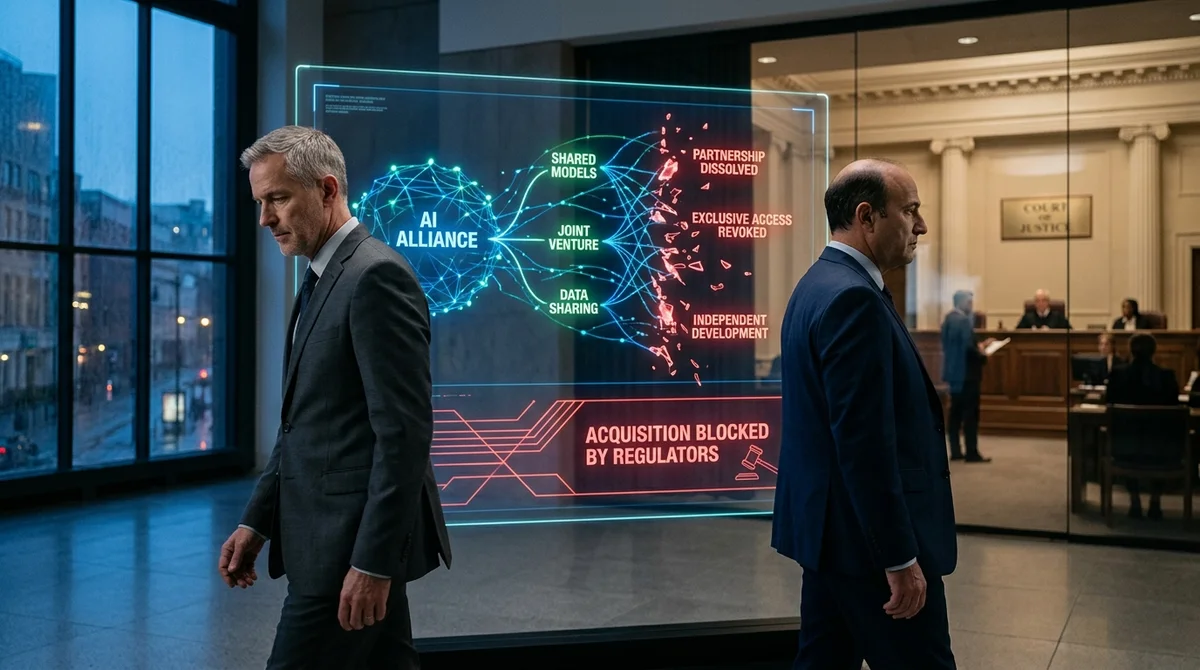
The artificial intelligence market is rapidly exiting an era of closed alliances and informal agreements. Three events in a single day demonstrate how the balance of power is shifting: OpenAI and Microsoft are abandoning mutual exclusivity on models, China is blocking Meta's $2 billion acquisition of AI startup Manus, and the long-standing conflict between Elon Musk and Sam Altman over OpenAI's mission is moving into the judicial phase. All this points to a new reality where the struggle is not only over technologies, but also over access to markets, capital, and the rules of the game.
The main news concerns the relationship between OpenAI and Microsoft. The companies have decided to abandon exclusive rights to AI models, which means each side gains more freedom in choosing partners and formats for cooperation. For OpenAI, this potentially expands the space for new commercial agreements, distribution, and infrastructure alliances.
For Microsoft, such a move is also important: the corporation maintains a strategic connection with one of the key market players, but no longer appears tied to a rigid model of exclusive access. Against the backdrop of growing competition, this decision looks not like a weakening of relations, but as an attempt to make them more flexible. In fact, both companies are reserving the right to negotiate with other market participants where it will give them better access to customers, computing power, or new product scenarios.
The meaning of this shift is that the artificial intelligence market has become too large and too competitive for old schemes. When the largest players remove exclusivity restrictions, they essentially acknowledge: further growth will require new deals, new sales channels, and possibly new technological combinations. This opens the door for competitors, partners, and corporate clients who previously might have considered the market already divided.
At the same time, such a move increases uncertainty: if key alliances become less closed, then the competition for the best models, infrastructure, and corporate budgets will only intensify. For the industry, this is also a signal that even the loudest alliances are now evaluated primarily by their practical benefit, rather than their symbolic status. The second story shows that in AI deals, it's not just money that matters.
China has blocked Meta's purchase of the AI startup Manus for $2 billion. Even without disclosing all the details, the very fact of the blockage emphasizes: major deals in artificial intelligence are increasingly viewed through the lens of national interests, technological control, and political sensitivity. For Meta, this is a blow to plans to strengthen its position through acquisition, and for the entire market, it is another signal that cross-border purchases of AI companies will face an increasingly strict filter.
The more important models, data, and applied developments become, the higher the likelihood that states will intervene in deals that not long ago were considered routine corporate expansion. The third line is the legal escalation of the conflict between Elon Musk and Sam Altman. The Tesla CEO claims that OpenAI has strayed from its original mission, and now this dispute is moving from public debate into the legal sphere.
The trial itself is important not just because of the famous names involved. It once again raises the question of how the largest AI organizations should be structured: where the line is drawn between research mission and commercial interests, who controls the development of models, and how transparent should the decisions of companies determining the future of the industry be. Even if the court does not provide quick answers to all these questions, it increases pressure on market leaders, for whom it is becoming increasingly difficult to separate ideology, business, and corporate governance from each other.
Together, these three events describe one and the same shift. The artificial intelligence market is becoming more open in terms of partnerships, but at the same time more rigid in terms of regulation and conflicts over power. For users and businesses, this means expanded choice and accelerated competition.
For the companies themselves, it means the end of the period when strategy could be built solely on exclusive deals, high-profile investments, or the reputation of founders. Now flexibility, legal resilience, and the ability to negotiate on multiple fronts become decisive. It is around these three qualities that the new hierarchy in the global AI sector will be built in the coming time.
Want to stop reading about AI and start using it?
AI News is a curated feed of AI/tech news. Hamidun Academy teaches you to use AI systematically in your work.