Creatives Sound the Alarm: AI Threatens Cultural Heritage
More than 800 artists, writers, and musicians have come out against companies that train AI on their work without consent. Their campaign, "Stealing Isn't Innovation," calls for copyright protection and regulation of GenAI.
AI-processed from The Verge; edited by Hamidun News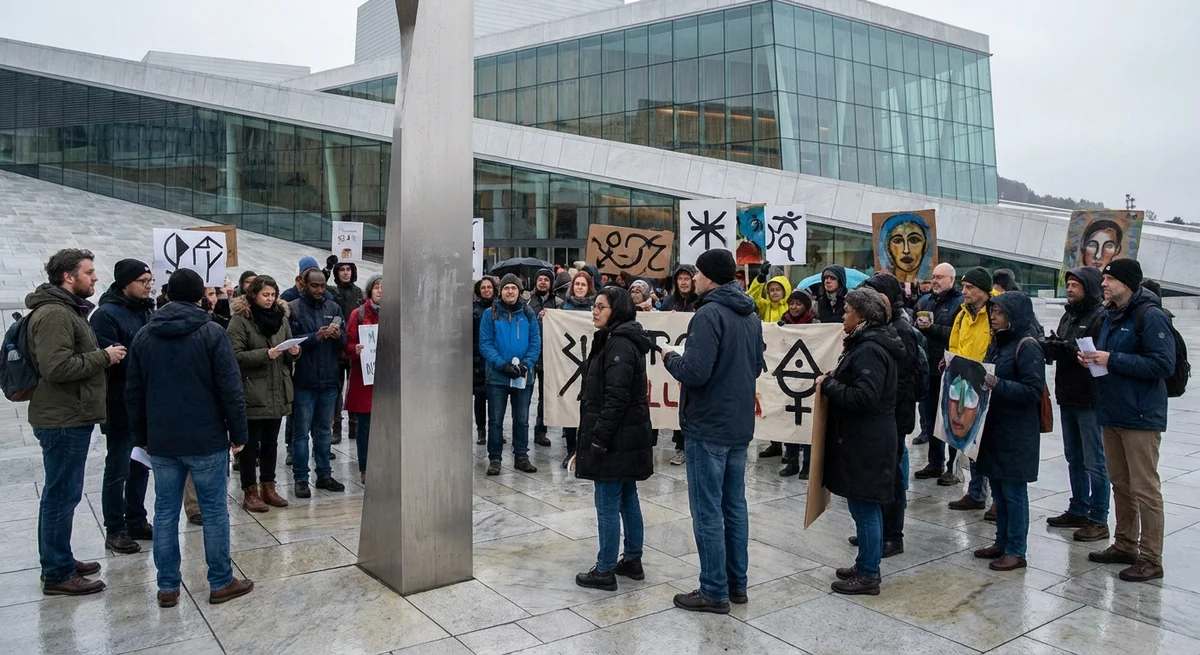
A serious scandal is brewing where art meets technology. About 800 prominent artists, writers, actors, and musicians have joined a new campaign called "Stealing Isn't Innovation" to protest what they call "theft on a grand scale" by AI companies. The petition's signatories include writers George Saunders and Jodi Picoult, actors Cate Blanchett and Scarlett Johansson, and musicians from R.E.M., Billy Corgan, and The Roots.
The backlash stems from the widespread use of creative work to train generative AI models without the creators' explicit consent. According to the campaign's participants, companies racing to lead in GenAI simply copy vast amounts of content from the internet, infringing copyright and devaluing the work of creative professionals. This threatens not only the livelihoods of artists and writers but the very idea of creativity, because AI reproduces and reworks existing works rather than creating anything fundamentally new.
The core complaint is that GenAI models trained on datasets containing copyrighted works can generate content that imitates the style or substance of those works. As a result, AI-generated content competes with the originals and strips creators of the chance to earn a living from their work. Attribution is another open question: how do you determine which specific works served as the basis for AI-generated content, and who should be held liable for copyright infringement?
The situation has far-reaching consequences for the entire entertainment and media industry. On one hand, GenAI opens up new creative possibilities and can automate routine tasks. On the other, unchecked use of copyrighted material could devalue creative work and weaken the incentive to produce new works. The challenge is to strike a balance between technological progress and creators' rights to avoid an "AI future" dominated by faceless, homogeneous content.
One possible solution is to build more transparent and fair mechanisms for licensing and compensating creators whose works are used to train AI. Another important step is developing effective systems to detect and prevent copyright infringement in GenAI. Finally, AI developers, rights holders, and the public need an open dialogue to agree on common ground rules and avoid conflict.
Ultimately, the "Stealing Isn't Innovation" campaign highlights the need to protect copyright in the age of generative AI. How this issue is resolved will shape the future of creativity and cultural heritage. Innovation should not come at the expense of the rights and interests of creative workers.
Test Frontier LLMs & Autonomous Agents in One Workspace
Run Claude Opus 5.5, GPT-6, Gemini 3.1, and DeepSeek side-by-side in Nomad AI (nomadnet.ai) — unified model routing, deep research, and multimodal workflows under one subscription.
The AI world, distilled — once a week
Seven stories that actually mattered, hand-picked. No noise, no reposts, no press releases.
Done! Check your inbox for a confirmation.