SpaceX is preparing its own AI GPUs, targeting Nvidia and AMD
SpaceX plans to develop its own GPUs for artificial intelligence systems and says so explicitly in its pre-IPO filing. The idea stems from a shortage of computing capacity and heavy dependence on external chip suppliers. The project could become part of Terafab, a major SpaceX, xAI and Tesla initiative to produce AI chips, in which Intel is being considered as a possible technology partner.
AI-processed from CNews AI; edited by Hamidun News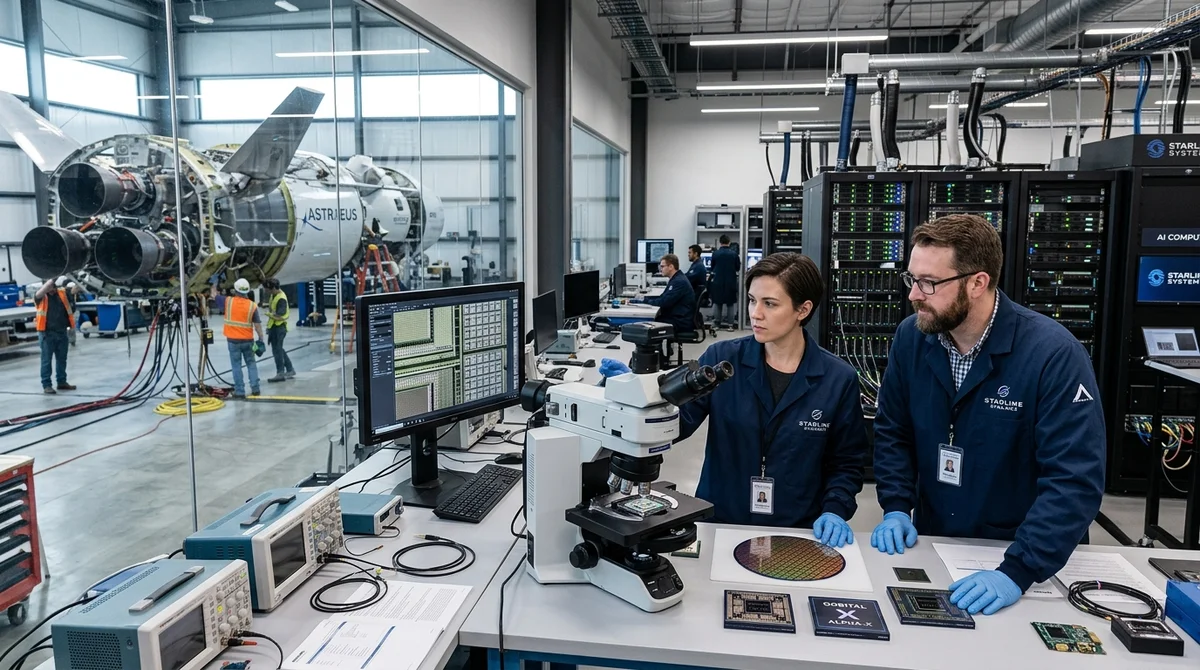
SpaceX has officially confirmed that it is considering building its own GPUs for artificial intelligence systems. For the company this is no longer a side research idea but part of major capital expenditure that it has warned investors about ahead of an expected IPO, in which the business could be valued at up to 1.75 trillion dollars. If the project gets built, SpaceX will try to enter territory that Nvidia and AMD dominate today, and the bet is about more than AI: it is part of a broader attempt to control critical computing infrastructure.
The plans came to light in an S-1 registration statement filed with the US Securities and Exchange Commission. In the document, SpaceX explicitly named production of its own GPUs as a significant item of future investment. However, the company disclosed neither a budget, nor a timeline, nor the exact architecture of the future chips. So it remains unclear whether these are full GPUs in the conventional market sense or specialized accelerators for machine learning, which corporate rhetoric often also calls GPUs.
The reasoning looks clear. SpaceX acknowledges that it depends on external chip suppliers and has no long-term contracts with many of them. Amid a shortage of high-performance AI accelerators, this becomes a strategic risk: companies building large models, data centers and robotics platforms find it increasingly hard to guarantee supply in the volumes they need and at an acceptable price. The issue is especially sensitive for SpaceX because several of its business lines need compute, from its own AI systems to related projects tied to xAI, Tesla and robotics.
The chip effort is linked to Terafab, a joint initiative of SpaceX, xAI and Tesla overseen by Elon Musk. The plan envisions an advanced manufacturing complex in Austin producing AI chips able to run in cars, Optimus humanoid robots and even space-based data centers. At a Tesla meeting with analysts, Musk also pointed to Intel's 14A process as a likely basis for taking the project to industrial scale. That raised expectations that Intel could become the key manufacturing partner, although the division of roles among the participants has not been disclosed.
The main problem is that the GPU market can hardly be stormed with money and ambition alone. Even Nvidia, the de facto segment leader, mostly designs chips and leaves manufacturing to TSMC, which spent years building ultra-complex production processes and invested billions of dollars in them. The barrier to entry for a newcomer is huge: it is not enough to design a competitive accelerator; one must also establish production with acceptable yields of good dies, stable packaging, memory, interconnect and a software ecosystem. If SpaceX really aims at the full cycle, this is one of the most expensive and risky industrial projects in the AI sector.
Estimates for Terafab underline the scale. The project's stated end goal is to produce one terawatt of computing capacity per year, roughly twice the current combined computing capacity of the US. Bernstein analysts put the potential capital expenditure for that level of capacity at 5 to 13 trillion dollars. Even if actual investment turns out lower or is spread over years, the goal itself shows that SpaceX and its affiliated companies want not just to buy accelerators for their own needs but to build their own compute vertical.
The market can read this in several ways. First, the largest tech groups increasingly fear dependence on Nvidia and a limited number of makers of advanced chips. Second, AI infrastructure is becoming such a scarce and expensive asset that companies are ready to move into manufacturing once considered too complex even for giants. Finally, the news shows that the next competition in AI will be fought not only over models and products but also over control of hardware, fabs and supply chains.
SpaceX does not yet have a finished GPU, but the mere fact of the intention already shifts market expectations.
- Nov 2, 2026TensorFold 1.2.0 boosts Qwen3.8-27B throughput on M3 Ultra by 44.2% at 16 streams
- Nov 1, 2026Local models lose to Opus and Codex: 0.21 on a MacBook versus 1.00 for Codex
- Nov 1, 2026Habr author fine-tunes YOLOv8l on dental X-rays and pushes mAP50 to 0.642
- Nov 1, 2026Voice bots built on LLMs turn to Jev, a fast classifier, for decisions in 200–500 ms
Ship AI Faster with Founders, Engineers & Weekly Architecture Reviews
Inside Vibe Club (hamidun.com/club) — weekly live masterminds with Zhemal Khamidun, Tech Radar, full LMS access, and 370+ production Claude Code skills.
The AI world, distilled — once a week
Seven stories that actually mattered, hand-picked. No noise, no reposts, no press releases.
Done! Check your inbox for a confirmation.