Cloud Crunch: OpenAI and Anthropic Have Locked Startups Out of GPU Access
The AI race has created a severe shortage of computing capacity. Leading cloud providers, including Microsoft, Amazon and CoreWeave, have reserved the lion's share of their GPUs for OpenAI, Anthropic and their own development teams. As a result, independent AI startups are cut off from critical infrastructure. Even substantial capital from venture giants such as Sequoia Capital and Andreessen Horowitz does not spare them from queues of several months for server rentals. Over the past six months, rental rates for accelerators have jumped by more than 25%. Microsoft Azure forecasts that this infrastructure hunger will last until at least the end of 2026.
AI-processed from 3DNews AI; edited by Hamidun News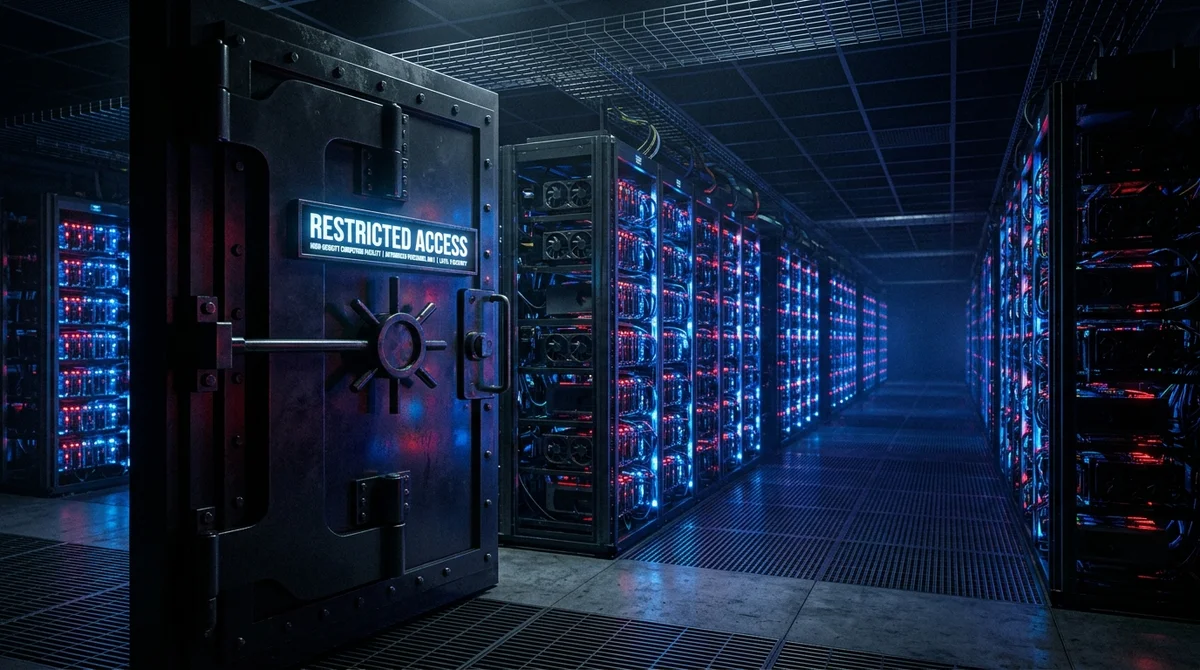
The AI world has run into a fundamental contradiction: venture funds are ready to pour billions of dollars into the market, yet that money suddenly has nothing to be spent on. The illusion of an endless technological frontier has shattered against the hard physical reality of data centers. Behind the scenes, a quiet but ruthless war for computing capacity is under way, and the winners have already been decided. Leading cloud platforms have effectively shut their doors to independent developers, turning access to graphics processors into an exclusive privilege of a few chosen corporations.
The market for hardware infrastructure has reached a critical point. The biggest players, including Microsoft, Amazon and the specialized provider CoreWeave, have reserved the overwhelming majority of their GPU clusters for OpenAI, Anthropic and their own internal development teams. Independent AI startups have been pushed to the margins of the industry and face queues of several months to rent servers. Notably, this infrastructure hunger hits not only newcomers but also projects backed by Silicon Valley's most influential capital, such as Sequoia Capital, Founders Fund, General Catalyst and Andreessen Horowitz. A fat bank account no longer guarantees the ability to train models.
The mechanics of the crisis are driven by dry economic logic and corporate scaling strategy. For cloud providers, supplying capacity to giants like OpenAI or Anthropic means more than stable contracts worth hundreds of millions of dollars. It is also a strategic partnership, often reinforced by mutual investments. It is far more profitable and safer to serve one colossal customer with predictable, continuous compute demand than to split resources among dozens of startups with murky prospects. The result is a harsh seller's market in which absolute scarcity dictates prices. In just the past six months, rental rates for graphics accelerators have risen by more than twenty-five percent, and the trend is still gathering pace.
The consequences of this monopolization of computing resources for the tech entrepreneurship ecosystem could be devastating. Today, a young company's ability to bring a competitive product to market depends not on the brilliance of its mathematicians or the elegance of its neural network architecture, but on having the clout to get access to hardware. Startups are forced to freeze training cycles, miss release deadlines and rewrite roadmaps to fit the scraps of compute they manage to rent at inflated prices. Venture investors are realizing with alarm that their checks are sitting idle, because the physical production of silicon chips and the construction of power-hungry data centers cannot be sped up by a simple infusion of cash.
The most worrying part is the forecast timeline for relief. According to internal estimates by Microsoft Azure analysts, the current hardware shortage will persist until at least the end of 2026. In an industry where a generation of algorithms turns over in a matter of months, nearly three years of waiting amounts to a death sentence for many independent players. That means the window for building next-generation foundation models is closing right now. Companies that fail to jump onto the departing train of infrastructure contracts will have to give up their ambitions of building their own large language models and move to less resource-intensive tasks.
The global AI landscape is rapidly turning into a classic oligopoly. The revolution that promised to democratize access to cutting-edge technology is, in practice, producing a closed club of two or three megacorporations that control the entire production chain from silicon to the end-user interface. To survive in these harsh conditions, the industry will have to radically rethink its approach to machine learning, shifting focus from brute-force parameter growth to extreme algorithmic efficiency. Otherwise, we risk a future in which the development of artificial intelligence is fully and entirely subordinated to the delivery schedules of servers to the data centers of a few monopolists.
- Nov 2, 2026Meta's Muse assistant keeps dossiers on loved ones and gets root on Ubuntu by default
- Nov 1, 2026Local models lose to Opus and Codex: 0.21 on a MacBook versus 1.00 for Codex
- Nov 1, 2026Kimi scores 96.2% on a 1C database analytics test and emerges as a fallback if Claude access is blocked
- Nov 1, 2026OpenAI Rewrites GPT Behavior Rules: Five Values and a Chain of Command
Test Frontier LLMs & Autonomous Agents in One Workspace
Run Claude Opus 5.5, GPT-6, Gemini 3.1, and DeepSeek side-by-side in Nomad AI (nomadnet.ai) — unified model routing, deep research, and multimodal workflows under one subscription.
The AI world, distilled — once a week
Seven stories that actually mattered, hand-picked. No noise, no reposts, no press releases.
Done! Check your inbox for a confirmation.