Cheap AI Models From China Are Winning Global Users and Reshaping the Stock Market
China is reshuffling the global AI market: low-cost models from Chinese companies are rapidly gaining users worldwide. The shift is already visible on the stock market, where new winners are emerging. Bloomberg calls the phenomenon a token-economy revolution: price competition is breaking the monopoly of American players and rewriting investment scenarios.
AI-processed from Bloomberg Tech; edited by Hamidun News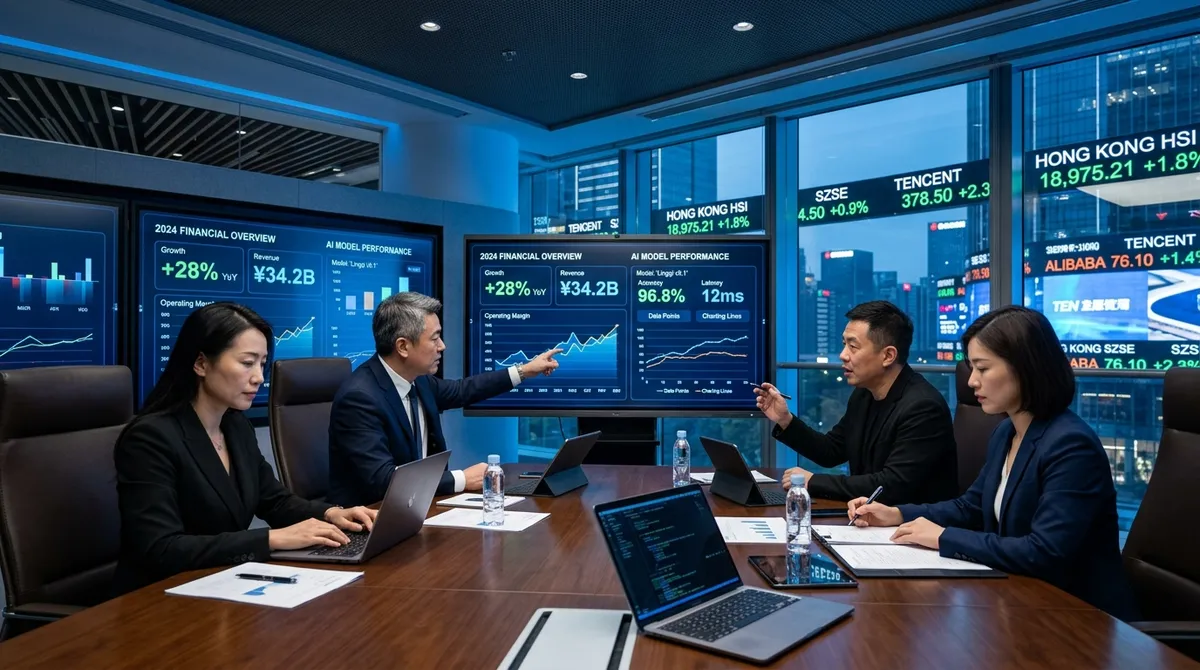
The Chinese wave of cheap AI models is turning into a full-fledged economic phenomenon: new players are capturing a global audience, while investors scramble to find the next winners on the Chinese stock market. Bloomberg notes that the token-economy revolution is already shifting the balance of power in the global artificial intelligence industry.
In early 2025, it became clear that a competitive large language model can be trained at a fraction of the cost of its American counterparts. Chinese tech companies took that as a powerful signal: a price war is their main weapon. Dozens of models with aggressive pricing have appeared on the market: Alibaba with Qwen, Baidu with ERNIE, ByteDance with its own developments, plus startups such as Zhipu AI and Moonshot. Chinese providers often charge 5–20 times less than OpenAI or Anthropic for generating a million tokens.
The token-economy concept grew out of this pricing dynamic. Its core idea is simple: when inference gets cheaper, the number of requests grows exponentially. Developers who previously could not afford to integrate AI into a product because of high API costs are now launching apps, agents and automations. The market is expanding not through richer users but through everyone else, and Chinese providers were the first to ride this wave.
Global reach is not just a marketing claim. According to analysts, Chinese models are actively used in Southeast Asia, India, Latin America and Arab countries, where price sensitivity is especially high. An API from Alibaba Cloud or Baidu costs literally pennies compared with Western alternatives, and the quality gap has practically disappeared. Companies are adapting the models to local languages, which speeds up adoption even more.
The stock market reaction was entirely expected. Shares of companies that either develop their own models or build the infrastructure to deliver them are being sharply repriced. The gains are especially visible among cloud computing providers and among corporations that have built AI features into mass-market products, from e-commerce to educational platforms. A Chinese analogue of the "Magnificent 7" appears to be taking shape already, though its lineup has not yet settled.
At the same time, the geopolitical dimension is sharpening. The US continues to tighten export controls on high-performance chips, hoping to slow Chinese development. The effect, however, is ambiguous: the restrictions are forcing Chinese companies to develop more efficient algorithms and architectures. The shortage of compute has become a spur to engineering ingenuity.
The monopoly of American companies on frontier model development is gradually eroding, not because someone built something revolutionary, but because price has become a competitive advantage in its own right. Businesses worldwide now have a real choice between expensive Western APIs and cheap but quite capable Chinese alternatives.
The question is no longer who has the smartest model. It is who will be first to build the infrastructure to deliver intelligence at prices that make it accessible to the next billion users.
- Nov 2, 2026Meta's Muse assistant keeps dossiers on loved ones and gets root on Ubuntu by default
- Nov 1, 2026Local models lose to Opus and Codex: 0.21 on a MacBook versus 1.00 for Codex
- Nov 1, 2026Kimi scores 96.2% on a 1C database analytics test and emerges as a fallback if Claude access is blocked
- Nov 1, 2026OpenAI Rewrites GPT Behavior Rules: Five Values and a Chain of Command
Ship AI Faster with Founders, Engineers & Weekly Architecture Reviews
Inside Vibe Club (hamidun.com/club) — weekly live masterminds with Zhemal Khamidun, Tech Radar, full LMS access, and 370+ production Claude Code skills.
The AI world, distilled — once a week
Seven stories that actually mattered, hand-picked. No noise, no reposts, no press releases.
Done! Check your inbox for a confirmation.