NSA keeps using Anthropic's models despite official warnings
US authorities have designated Anthropic a threat to national security, but that has not stopped the National Security Agency itself. The NSA continues to work with the company's AI models while the federal government tries to settle on a unified position. The situation exposes a sharp contradiction: intelligence agencies have become dependent on technology that the government has officially labeled dangerous.
AI-processed from 3DNews AI; edited by Hamidun News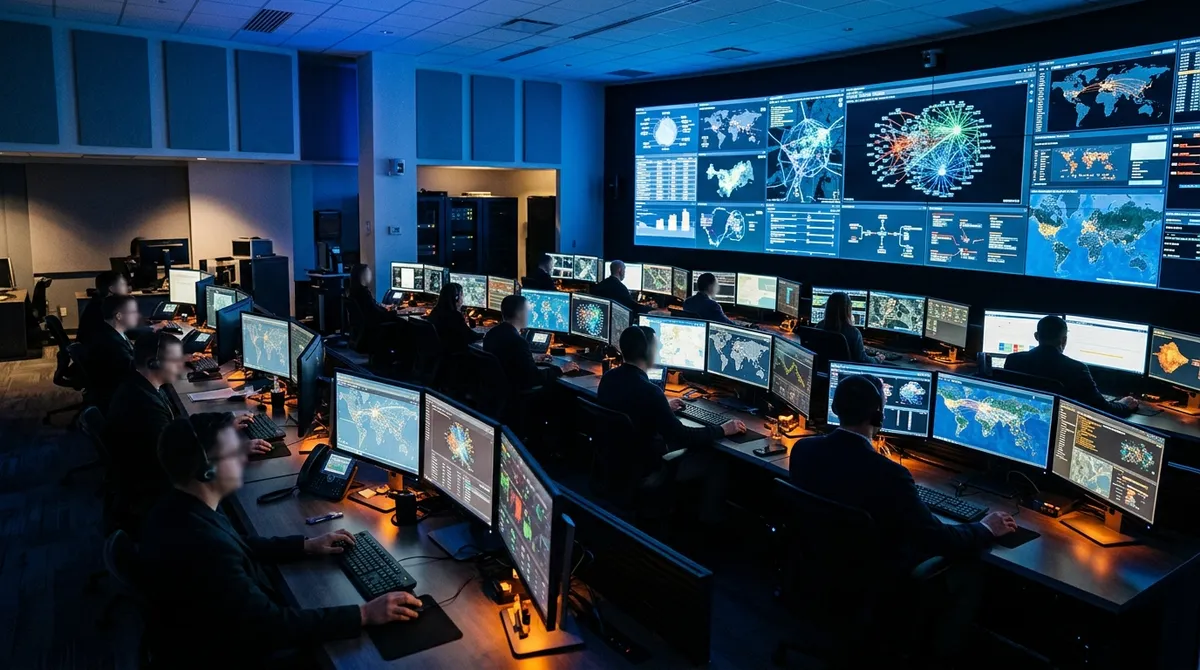
The US National Security Agency continues to use artificial intelligence from Anthropic, even though American authorities have declared the company a potential threat to national security. While the federal government works out how to handle its relationship with the developer, the security services are following their own logic.
The situation looks openly paradoxical. On one hand, Anthropic, the maker of Claude, one of the most powerful commercial AI assistants, has come under the scrutiny of US regulators. On the other, the NSA, whose work hinges on processing vast volumes of intelligence data, has clearly found a use for these tools and does not intend to give them up. There have been no official comments on which specific tasks the models are used for, but the logic is obvious: document summarization, linguistic analysis, and automation of routine analytical operations.
The complaints against Anthropic center on several factors. The company is incorporated in the US, but Google is among its major investors, and its founders are former OpenAI employees. None of this makes it a threat in itself, but amid escalating technological rivalry with China, US regulators have become more finicky about any foreign ties in the AI sector. Anthropic's talks on expanding partnerships with Asian investors apparently drew the authorities' heightened attention.
This is not the first time US government agencies have run into such an internal contradiction. The CIA was testing its own AI platform based on large language models as early as 2023, and the Pentagon actively introduced generative AI into analytical processes. The difference is that those efforts involved closed, isolated environments, not publicly available commercial products whose status is now being contested at the regulatory level.
It is important to understand that using commercial AI in government is not in itself unusual. The US has long brought civilian technology into federal agencies, and certification programs such as FedRAMP exist for that purpose. The real question is what happens when an agency keeps using a tool that colleagues in another branch of government call risky.
This gap between official rhetoric and actual practice is what makes the NSA case telling. The regulator sees a risk and records it. The operational agency sees a tool that works and keeps using it. Until a unified policy is developed, both positions coexist in parallel, and nobody is in a hurry to reconcile them.
For Anthropic itself, the situation cuts both ways. Government contracts mean steady revenue and a sign of institutional trust. But being at the center of a national security debate is not what most technology companies would want for their brand, especially amid fierce competition with OpenAI and Google DeepMind, which are also fighting for government contracts.
How the assessment of Anthropic as a source of risk will end is still unclear. But the precedent is notable: it shows that even with declared caution, the state remains dependent on particular technology players. And that dependence is not easy to break, even when the political will to do so emerges.
- Nov 2, 2026Karpathy builds a YouTube clone with 6454 videos from Hacker News recommendations in two hours
- Nov 2, 2026Karpathy used Claude to build HackerTube from 6,454 videos recommended on Hacker News
- Nov 2, 2026Arca gives AI agents finance tasks lasting up to 10 days, but leaves the trades to humans
- Nov 2, 2026Anthropic needs to grow revenue 32% a year to cover $850 billion in contracts
Test Frontier LLMs & Autonomous Agents in One Workspace
Run Claude Opus 5.5, GPT-6, Gemini 3.1, and DeepSeek side-by-side in Nomad AI (nomadnet.ai) — unified model routing, deep research, and multimodal workflows under one subscription.
The AI world, distilled — once a week
Seven stories that actually mattered, hand-picked. No noise, no reposts, no press releases.
Done! Check your inbox for a confirmation.