Google Maps Gets Ask Maps AI Feature and Revamped Immersive Navigation
Google Maps is getting two major updates: Ask Maps, an AI assistant that handles natural-language conversational queries, and a reworked Immersive Navigation with a real-time 3D view of streets. The company calls it the biggest update to the maps service in more than a decade. Ask Maps lets users ask open-ended questions instead of typing precise search terms, while Immersive Navigation overlays turns, lane markings and warnings on a 3D street view as you drive.
AI-processed from TechCrunch; edited by Hamidun News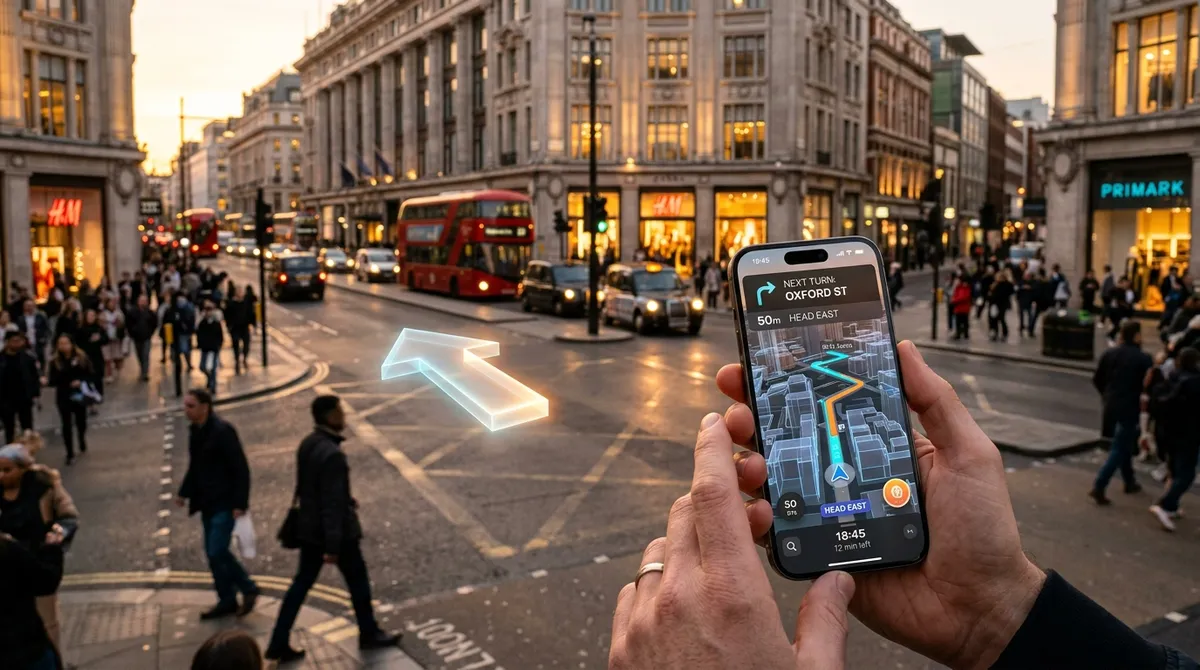
Google has announced two major updates to Maps: Ask Maps, a conversational AI assistant, and a substantially reworked immersive navigation mode. The company describes the latter as the biggest change to the service in more than ten years.
Ask Maps is a new AI tool built directly into the app's interface. Instead of exact search queries, users can ask free-form questions: "Where can I go with kids near the center?" or "Which restaurant with parking is open on Sunday evening?" The system processes such queries with a language model and returns specific recommendations that take into account time of day, distance and user preferences.
This fundamentally changes how people use maps. Maps used to be a tool for pinpoint search: you knew where you wanted to go and plotted a route. Ask Maps turns the service into a local advisor that helps you decide before you have settled on a destination.
The second part of the update, Immersive Navigation, builds on Immersive View, which launched several years ago. The previous version let you explore a destination in 3D before a trip; the updated mode works in real time while you are moving. Navigation gets a detailed street view with overlaid turns, lane markings and warnings, in a three-dimensional space visually close to what a driver sees through the windshield.
Google stresses the scale of the update, calling it the "biggest update in more than a decade," a phrasing the company uses very rarely. For comparison, earlier milestones included the launch of Street View in 2007, offline maps, real-time traffic data and public transit integration.
In the broader context, Google is embedding AI across its entire product stack. Search got AI Overviews, Workspace got Gemini assistants, and now Maps completes the chain. The service has more than two billion monthly users, so an update of this scale is not an experiment but a bet on changing a core behavior for a huge number of people.
For advertisers, Ask Maps is a potentially significant entry point. Conversational queries like "where to eat nearby" create a direct advertising surface at the moment of decision. Google has not yet disclosed monetization details, but analysts already point to it as one of the most promising formats in the coming years.
The update will begin rolling out to users soon, first in the US, then in other regions.
Ask Maps and Immersive Navigation are different but complementary shifts. One changes how people search for places. The other changes how they get there. Together they turn Maps from a navigation app into a full digital companion for getting around the city.
- Nov 2, 2026Bun creator uses Claude Code to port 750K lines from Zig to Rust in 11 days
- Nov 2, 2026The Verge reviewer builds a $50 Meta Muse Charm alternative with Claude Code
- Nov 1, 202616 models tested on 7 search tools: Exa averaged 10.5 out of 14, SearXNG about 3
- Nov 1, 2026Google's StreamVibe video agent beats other models by 10.7% on response timing and quality
Ship AI Faster with Founders, Engineers & Weekly Architecture Reviews
Inside Vibe Club (hamidun.com/club) — weekly live masterminds with Zhemal Khamidun, Tech Radar, full LMS access, and 370+ production Claude Code skills.
The AI world, distilled — once a week
Seven stories that actually mattered, hand-picked. No noise, no reposts, no press releases.
Done! Check your inbox for a confirmation.