Ben Affleck, Netflix and the Next Generation of AI for Film: Why Sora Falls Short
General-purpose AI video generators such as Sora, Veo and Runway fall short of the demands of professional film production. Custom models built around filmmakers' needs are starting to replace them. Among the pioneers are Interpositive, a startup that Ben Affleck has joined, and Netflix, with its in-house AI development. The key advantages: integration into the production pipeline and a way around copyright problems.
AI-processed from The Verge; edited by Hamidun News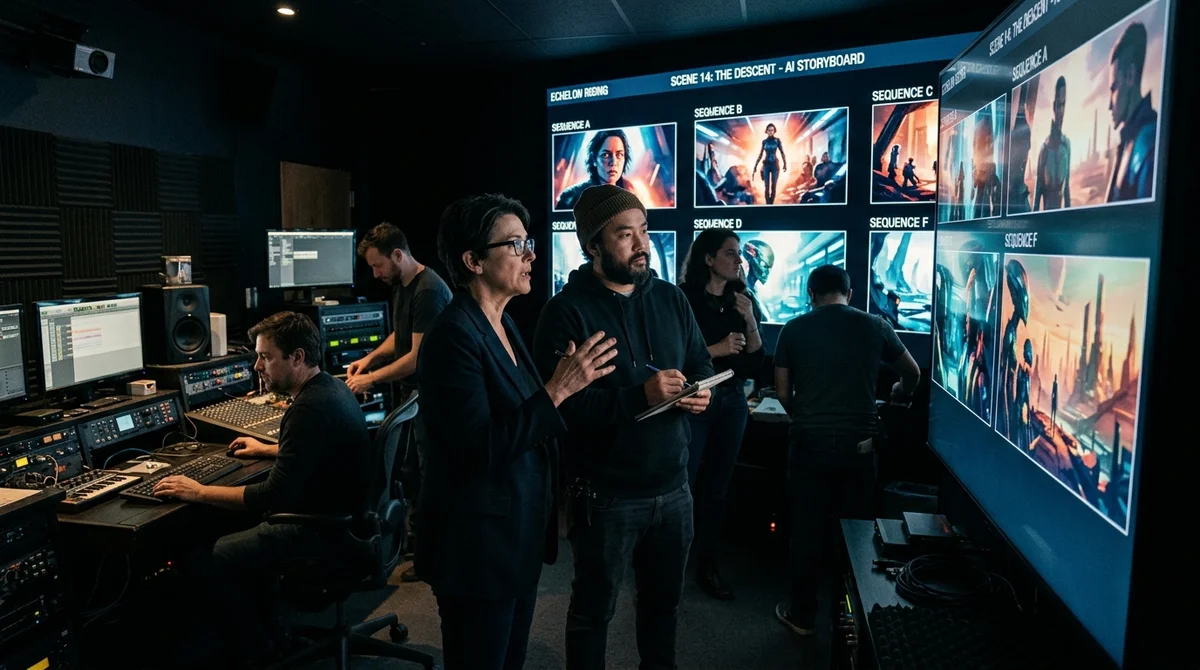
Publicly available AI video generators are not yet ready for Hollywood, and the industry is starting to admit it. Models such as OpenAI's Sora, Google DeepMind's Veo and Runway produce impressive demo reels, but they prove too unreliable for real film production: they hold style poorly, do not grasp production requirements, and create legal risk because of potential copyright infringement.
The industry is looking for an alternative. The new trend is custom AI models built specifically for filmmakers' needs. Unlike general-purpose generators, these systems plug into the full development cycle, from concept and storyboarding to post-production. They are trained on licensed data, which removes part of the legal risk, and they aim to help professional teams rather than to create viral content.
One prominent example is the startup Interpositive, which actor and director Ben Affleck has joined. The name references the term interpositive from traditional film technology: the intermediate master positive needed to make high-quality copies. The choice of term is symbolic, as the company positions itself as the link between the creative process and the capabilities of generative AI.
Netflix is also moving in this direction. The largest streaming service is actively testing AI tools at various production stages, primarily where the technology can cut costs without sacrificing quality: pre-production visualization and the generation of references and supporting materials. Netflix prefers to keep development in-house rather than rely solely on third-party platforms.
The gap between promotional promises and what AI can actually do has been painful for many in the industry. Over the past two years, a number of producers have publicly claimed that generative AI would destroy Hollywood in the near future. Practice has shown the opposite: mass content production with Sora or Runway mostly yields what is known as AI slop, material that looks striking but is empty and unusable for professional needs.
The problem is not only image quality. Professional filmmaking demands consistency: characters must look the same from shot to shot, lighting must follow the logic of the shoot, and props must stay where they are. General-purpose models handle this poorly. Custom systems promise deeper integration with the production pipeline and could potentially be trained on specific characters, styles and universes.
The legal side matters just as much. Several major lawsuits against AI companies have called into question whether it is lawful to use copyrighted material to train models. Custom models built on licensed data or studios' internal libraries look considerably better protected, although case law in this area is still taking shape.
It is too early to talk about a mass shift. Custom AI models for film are expensive, technically complex products, so far available only to major players. But the direction itself suggests that the future of AI in Hollywood most likely belongs not to general-purpose generators for the masses but to specialized tools built into the professional workflow. That fundamentally changes the balance of power in the market for AI in the media industry.
- Nov 2, 2026Meta's Muse assistant keeps dossiers on loved ones and gets root on Ubuntu by default
- Nov 1, 2026Local models lose to Opus and Codex: 0.21 on a MacBook versus 1.00 for Codex
- Nov 1, 2026Kimi scores 96.2% on a 1C database analytics test and emerges as a fallback if Claude access is blocked
- Nov 1, 2026OpenAI Rewrites GPT Behavior Rules: Five Values and a Chain of Command
Test Frontier LLMs & Autonomous Agents in One Workspace
Run Claude Opus 5.5, GPT-6, Gemini 3.1, and DeepSeek side-by-side in Nomad AI (nomadnet.ai) — unified model routing, deep research, and multimodal workflows under one subscription.
The AI world, distilled — once a week
Seven stories that actually mattered, hand-picked. No noise, no reposts, no press releases.
Done! Check your inbox for a confirmation.