Tinder Relaunches: Offline Events, Virtual Speed Dating and AI for Matchmaking
Tinder has rolled out a major update for the first time in several years. The service is adding live offline events in cities, virtual speed dating over video calls, and new AI features for matching partners. The goal is to win back users tired of endless swiping and to attract Gen Z, which prefers face-to-face interaction to the screen.
AI-processed from TechCrunch; edited by Hamidun News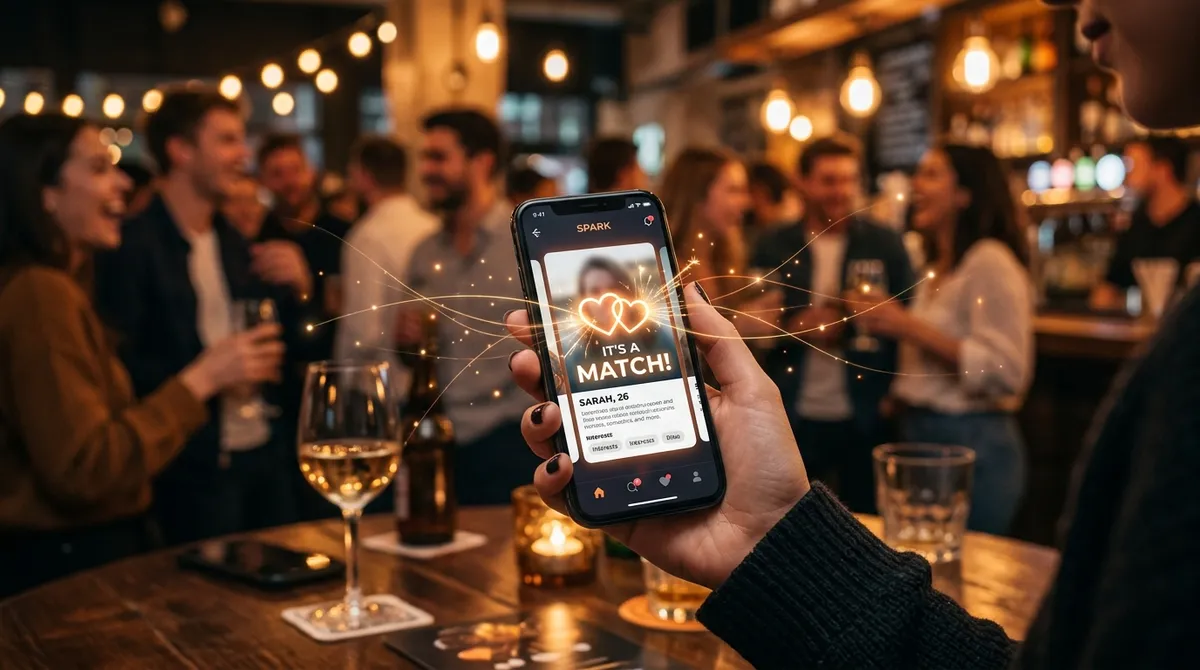
Tinder is undergoing one of the biggest redesigns in its history. Match Group, which owns the app, has announced a large package of updates aimed at bringing back disillusioned users and attracting a new generation. Key additions include live offline events, built-in AI features and virtual speed dating in the form of short video calls.
The context for the update is difficult. The online dating market is in an engagement crisis. After the pandemic boom, when dating apps became the only alternative to meeting in person, users began to tire of endless swiping.
According to Match Group, the number of paying Tinder subscribers has fallen for several quarters in a row: in 2024 the company lost about 10% of its paying audience compared with the peak. Gen Z, which should be the app's core audience, increasingly says it prefers to meet people in person, or avoids actively looking for a partner through a screen altogether. This poses an existential question for the business: how do you convince people to use a tool whose usefulness they no longer believe in?
The first part of the answer is going offline. Tinder is launching a series of live events in major cities: dating parties, themed meetups around shared interests, and classic speed dating in bars and cafés. The idea is to turn the brand from a swiping tool into an entry point to a real-life social scene: first in the app, then in reality. Bumble has already tested a similar strategy with Bumble IRL: the company's data showed that users who attend offline events return to the app more often and show higher engagement.
The second part is virtual speed dating. The new format offers online sessions of short video calls, a digital version of classic speed dating evenings. Each conversation lasts a few minutes, after which both participants can mark mutual interest and continue chatting. The format itself is not new: in 2020–2021 dozens of startups actively tested it. But Tinder is integrating it natively into its main app for the first time, removing the barrier of separate services. The distinctive point is that the meeting happens before people agree to a date, which reduces anxiety and social pressure.
The third part is AI. The company has not yet detailed all the features, but they cover two areas: an improved matching algorithm and help with messaging. The first involves algorithms that take behavioral patterns into account: how long a user looks at a profile, which bios appeal to them, and how actively they hold conversations. The second involves possible AI suggestions for writing a first message. Competitor Hinge launched a similar feature in 2024, and it received positive feedback from users who admit they don't know how to start a conversation.
Tinder is not alone in this. Hinge is repositioning itself as an app for serious relationships, Bumble is building an ecosystem around women making the first move, and specialized platforms are growing niche audiences. The historically dominant leader in downloads now has to explain all over again what value it offers in 2025.
Tinder's big redesign is a symptom of a broader crisis in the online dating industry. The mechanics of endless scrolling and instant judgment of looks created a market that has oversaturated its own audience. People haven't stopped looking for partners; they have grown disillusioned with one particular format. If Tinder manages to combine the convenience of a digital platform with formats that give a sense of real contact, it could become a working model for the whole sector. The first results will show how willing users are to give the app a second chance.
- Nov 1, 2026Pika Labs releases open video model H3 Flex: 6 steps instead of 50
- Nov 1, 2026Google's StreamVibe video agent beats other models by 10.7% on response timing and quality
- Oct 31, 2026AI cartoon series: a 24-second episode built ten ways, the best cost 162 credits
- Oct 31, 2026Anthropic: Fold Subagents Back Into a Single Loop — One Customer's Tasks Ran Twice as Fast
Test Frontier LLMs & Autonomous Agents in One Workspace
Run Claude Opus 5.5, GPT-6, Gemini 3.1, and DeepSeek side-by-side in Nomad AI (nomadnet.ai) — unified model routing, deep research, and multimodal workflows under one subscription.
The AI world, distilled — once a week
Seven stories that actually mattered, hand-picked. No noise, no reposts, no press releases.
Done! Check your inbox for a confirmation.