Eon Systems announced a digital emulation of a fly brain — but it’s not what it seems
Startup Eon Systems set X alight with a video of a “digital fly” — supposedly the world’s first whole-brain emulation with several behavioral responses. The company says it can digitize a mouse brain within two years. The Verge and experts have cooled the excitement: the reality is far more modest than advertised.
AI-processed from The Verge; edited by Hamidun News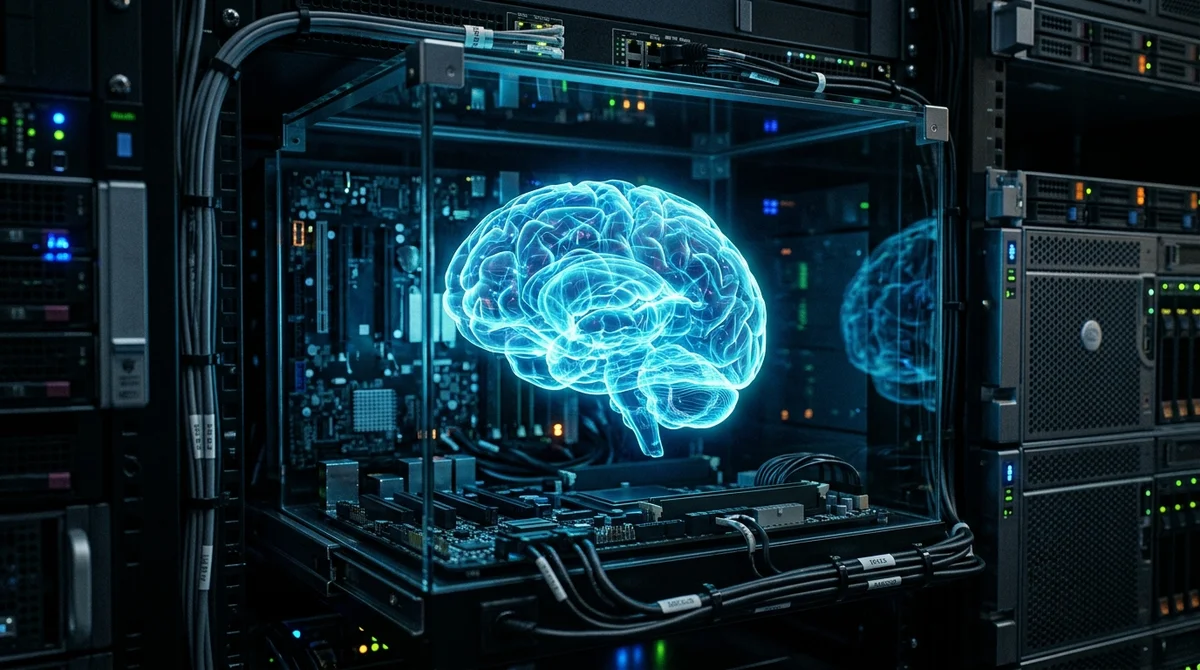
San Francisco-based startup Eon Systems became the centerpiece of AI hype on social media last week. The company published a video featuring a so-called "digital fly" — a virtual simulation that co-founder Alexander Wissner-Gross called "the world's first implementation of a complete brain emulation demonstrating several behavioral responses." The post went viral on X, picked up by AI hype accounts and thousands of enthusiastic commentators.
Eon Systems positions itself as a company moving toward "digital human intelligence." As an intermediate goal, they cite the complete digital emulation of a mouse brain — and promise to achieve this within two years. A timeline that is, to say the least, ambitious: a mouse brain contains roughly 70 million neurons with dozens of trillions of synaptic connections, and no team in the world has yet come close to its complete computational reproduction.
What exactly did the video show? Based on available materials, this is a simulation of insect behavior based on a neural model — not the uploading of a real fly brain into a computer, as many viewers might have understood. The brain of the fruit fly Drosophila contains around 140 thousand neurons.
Its connectivity map — the connectome — was completely mapped by scientists only in 2023 after years of work. Even with this map, building a functional simulation of all behavior is an entirely different task. The Verge put skepticism directly in its headline: "This is not a fly uploaded to a computer."
The publication notes that much of the buzz around Eon Systems' video was sustained by audience misunderstanding — people reposted the video without understanding what they were actually watching. This is typical AI hype mechanics: an impressive formulation, viral spread, and only later — substantive analysis. Similar cases have already occurred in neuroscience.
In 2014, the OpenWorm project recreated the neural network of the worm Caenorhabditis elegans (302 neurons) and "uploaded" it to a Lego robot. Media exploded with headlines about "consciousness uploading." Scientists later spent considerable time explaining that this was a simplified model of reflexes, not consciousness or even full-fledged behavior.
History, it seems, is repeating itself. What this means for the industry as a whole: the boundary between real scientific progress and marketing narrative in neurotech is becoming increasingly blurred. Startups attract attention and investment with loud claims, and a public raised on AGI news readily believes in breakthroughs.
Healthy skepticism here is not pessimism — it's simply a requirement for precision in formulation. True brain emulation, even of a fly, will remain one of science's greatest achievements. But until that happens, it's worth reading the fine print.
Need AI working inside your business — not just in your newsfeed?
I build production AI for companies — custom CRM, internal tools, autonomous agents, workflow automation. Owned by you, shaped to your process, no per-seat tax. Built by Zhemal Khamidun, CPO of AlpinaGPT (AI platform, 6,000+ users).
The AI world, distilled — once a week
Seven stories that actually mattered, hand-picked. No noise, no reposts, no press releases.
Done! Check your inbox for a confirmation.