Rana el Kaliouby: AI's 'boys' club' risks locking in the gender wealth gap
AI investor Rana el Kaliouby warns that if women stay on the sidelines of AI funding and leadership, the wealth gap will not just persist but widen. Teams of women founders receive only about 2% of venture capital in the US, and there are practically no women among the CEOs of AI unicorns. The AI boom is creating enormous fortunes, and if its architects are once again almost exclusively men, the gap will become permanent.
AI-processed from TechCrunch; edited by Hamidun News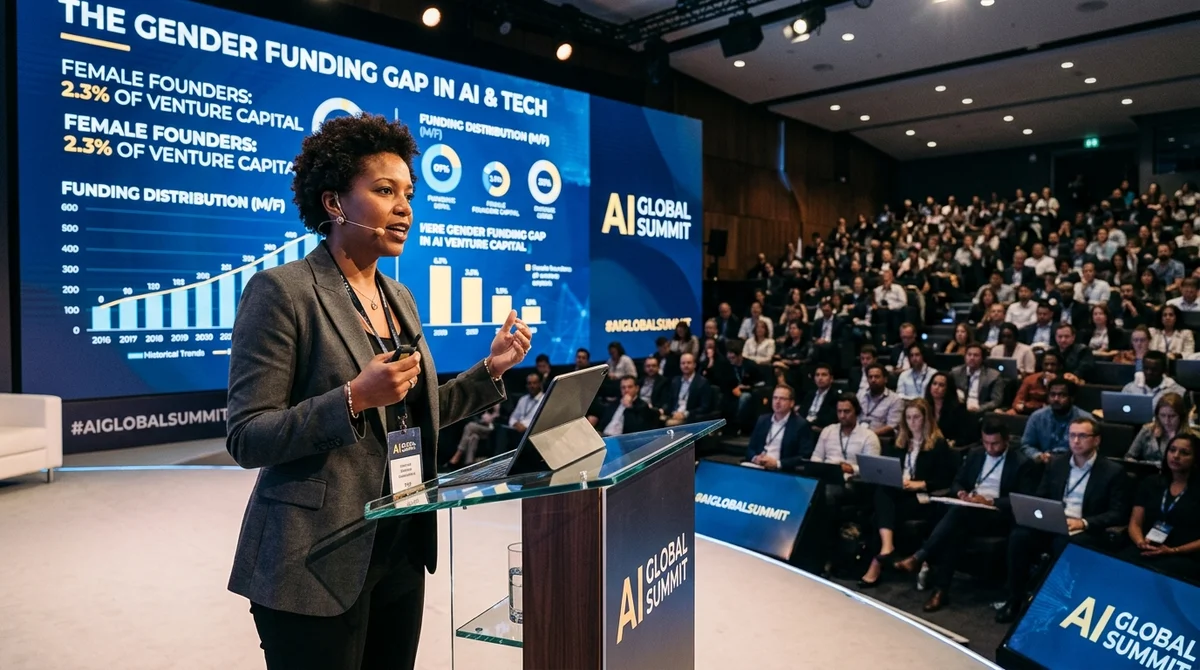
Rana el Kaliouby is one of the few women in a prominent position in the global AI industry. As co-founder of Affectiva and an active venture investor, she sees the situation from the inside. Her warning is unambiguous: if women stay on the sidelines of AI funding and leadership, the gender wealth gap will not just persist but grow with every year the tech economy expands. In her assessment, the consequences will be catastrophic.
The industry that el Kaliouby calls a "boys' club" shows a persistent structural skew. The biggest AI players, including OpenAI, Anthropic, Mistral and xAI, were founded and are run mostly by men. Most venture funds that back AI startups are also led by men. The result is a closed loop: those who control the capital decide who gets it, and as a rule they choose people like themselves.
The numbers point to a systemic problem. According to PitchBook, teams of women founders receive about 2% of all venture funding in the US. In AI, where rounds often run to hundreds of millions of dollars, that share is even lower. Among private AI companies valued at more than a billion dollars, women CEOs are practically absent. Founders and early employees of these companies build the wealth that, in the next generation, turns into new investments, board seats and the next wave of startups.
The problem starts even before investment decisions. Women make up about 26% of computer science professionals in the US, and an even smaller share of research teams at leading AI labs. When the talent pool is limited and industry culture adds further barriers, women leave faster. Underrepresentation takes shape long before anyone talks about a funding round.
This is where the main danger lies. AI today is not just a technology; it is the infrastructure of the future economy. The companies setting its rules now will collect rent from it for decades. If women are largely shut out at the start of the industry's formation, the gap in accumulated wealth, already significant by every measure, risks becoming permanent.
El Kaliouby herself is a rare exception to this pattern. Egyptian by origin, she earned a PhD at Oxford, founded Affectiva, a pioneer in emotion recognition, and sold the company to Sweden's Smart Eye in 2021. She then moved into venture capital, joining the small number of women who make real investment decisions in AI. This combination of experience, as both founder and investor, gives her position weight: she speaks not as an outside observer but as someone who has gone through the system.
The solutions she proposes go beyond symbolic quotas. They call for structural changes: targeted funding programs for women founders in AI, more diverse investment committees, and deliberate searches for technical and leadership candidates among underrepresented groups. The goal is not to lower the bar but to remove the barriers that keep competent people from reaching it.
The parallel with the past is worrying. The internet boom of the 1990s created colossal fortunes concentrated in a limited circle of people. Those who were shut out then never managed to catch up, and the gap became permanent. AI is following the same trajectory, only faster and with a higher initial concentration of capital. If nothing changes now, in ten years this conversation will be moot, not because the problem has been solved but because the window of opportunity will have closed.
- Nov 2, 2026Meta's Muse assistant keeps dossiers on loved ones and gets root on Ubuntu by default
- Nov 1, 2026Local models lose to Opus and Codex: 0.21 on a MacBook versus 1.00 for Codex
- Nov 1, 2026Kimi scores 96.2% on a 1C database analytics test and emerges as a fallback if Claude access is blocked
- Nov 1, 2026OpenAI Rewrites GPT Behavior Rules: Five Values and a Chain of Command
Ship AI Faster with Founders, Engineers & Weekly Architecture Reviews
Inside Vibe Club (hamidun.com/club) — weekly live masterminds with Zhemal Khamidun, Tech Radar, full LMS access, and 370+ production Claude Code skills.
The AI world, distilled — once a week
Seven stories that actually mattered, hand-picked. No noise, no reposts, no press releases.
Done! Check your inbox for a confirmation.