Google rolls out Personal Intelligence to all US users
Google is opening its Personal Intelligence feature to all users in the US. The company's AI assistant gets access to the Google ecosystem, including Gmail, Google Photos and other services, and uses that data to personalize its answers. Until now, the feature had limited availability. Every US user will now be able to choose exactly which data the assistant may analyze.
AI-processed from TechCrunch; edited by Hamidun News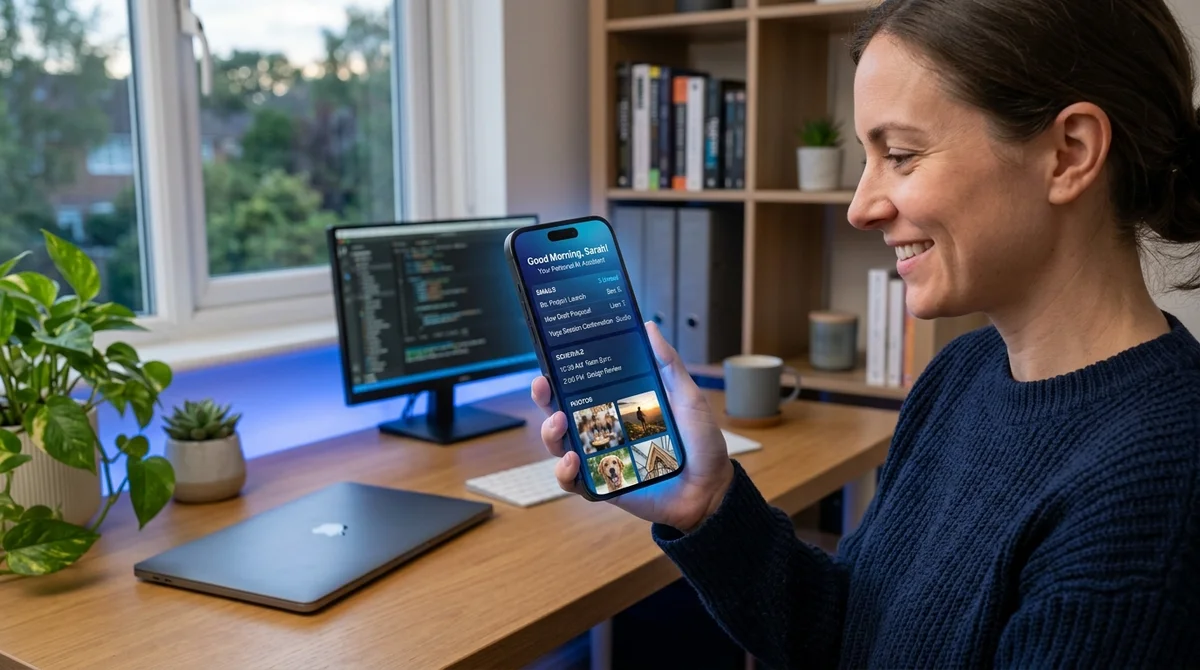
Google is rolling out Personal Intelligence to all users in the US, a step that marks the shift from an experimental AI assistant to a real personal helper that can work with an individual's own data.
Personal Intelligence is a feature built into Google's AI assistant that lets it draw on the contents of your Google account. The assistant can read emails in Gmail, analyze photos in Google Photos and use other data from the ecosystem to give answers that reflect your specific situation rather than an abstract one. In essence, the idea is to turn a generic AI into a personal secretary that knows the context of your life.
The difference between an AI with access to personal data and one without is fundamental. Without access, the assistant answers the question "When is my next flight?" with a boilerplate explanation of how to check a ticket on the airline's website. With Personal Intelligence turned on, it will open Gmail, find the booking confirmation and give you the exact date, time, flight number and terminal. The same goes for photos: instead of explaining how to find a picture, an assistant with access to Google Photos answers right away, or helps you find a document you photographed months ago and lost track of long since.
Until now, Personal Intelligence was available only to some US users, apparently as part of a phased rollout. Expanding to the entire US audience suggests Google considers the technology technically mature. That is an important signal: the feature is not merely launched, and the company is taking responsibility for keeping it stable at scale.
Privacy is the central and unavoidable question here. Google positions Personal Intelligence as an opt-in feature with granular controls: users choose which services the assistant can access. According to the company, the data is not used to train general models and is not shared with third parties. Even so, deciding to let an AI read your email is a psychologically nontrivial step. Judging by its step-by-step permission confirmation flow, Google is betting on gradual trust rather than forced activation.
In a broader context, the expansion of Personal Intelligence is Google's response to what its competitors are doing. Apple Intelligence is integrated with mail, notes and photos in iOS. Microsoft Copilot is built into Outlook, Teams and OneDrive.
OpenAI is pushing the concept of memory for ChatGPT, which keeps user context between sessions. The race among personal AI assistants has shifted for good: the winner is no longer determined by the power of the base model, but by how deeply the assistant is integrated into an individual's daily life. Google holds a strong position in this race.
Its ecosystem spans mail, file storage, calendar, photos, browser, search and a mobile operating system. That is potentially the fullest picture of a user that any tech giant has. The question is how skillfully the company can use it.
If you have long lived in the Google ecosystem, Personal Intelligence is worth trying, especially for tasks like searching old correspondence, drafting replies that take earlier conversations into account, or working with large photo archives. It is not a revolution, but it is a real step toward an AI assistant that is not just smart but knows exactly who it is talking to.
- Nov 2, 2026Bun creator uses Claude Code to port 750K lines from Zig to Rust in 11 days
- Nov 2, 2026The Verge reviewer builds a $50 Meta Muse Charm alternative with Claude Code
- Nov 1, 202616 models tested on 7 search tools: Exa averaged 10.5 out of 14, SearXNG about 3
- Nov 1, 2026Google's StreamVibe video agent beats other models by 10.7% on response timing and quality
Ship AI Faster with Founders, Engineers & Weekly Architecture Reviews
Inside Vibe Club (hamidun.com/club) — weekly live masterminds with Zhemal Khamidun, Tech Radar, full LMS access, and 370+ production Claude Code skills.
The AI world, distilled — once a week
Seven stories that actually mattered, hand-picked. No noise, no reposts, no press releases.
Done! Check your inbox for a confirmation.