Nvidia GTC as 'AI Super Bowl,' Tesla disappoints fans, Meta shuts down Horizon Worlds
Nvidia GTC once again drew thousands of developers and became the de facto major event of the year in the AI world. Jensen Huang revealed where the company is heading. Meanwhile: Tesla disappoints fans with the pace of delivering on its promises, and Meta quietly winds down the VR metaverse Horizon Worlds, which it promoted for years as the future of the internet.
AI-processed from Wired; edited by Hamidun News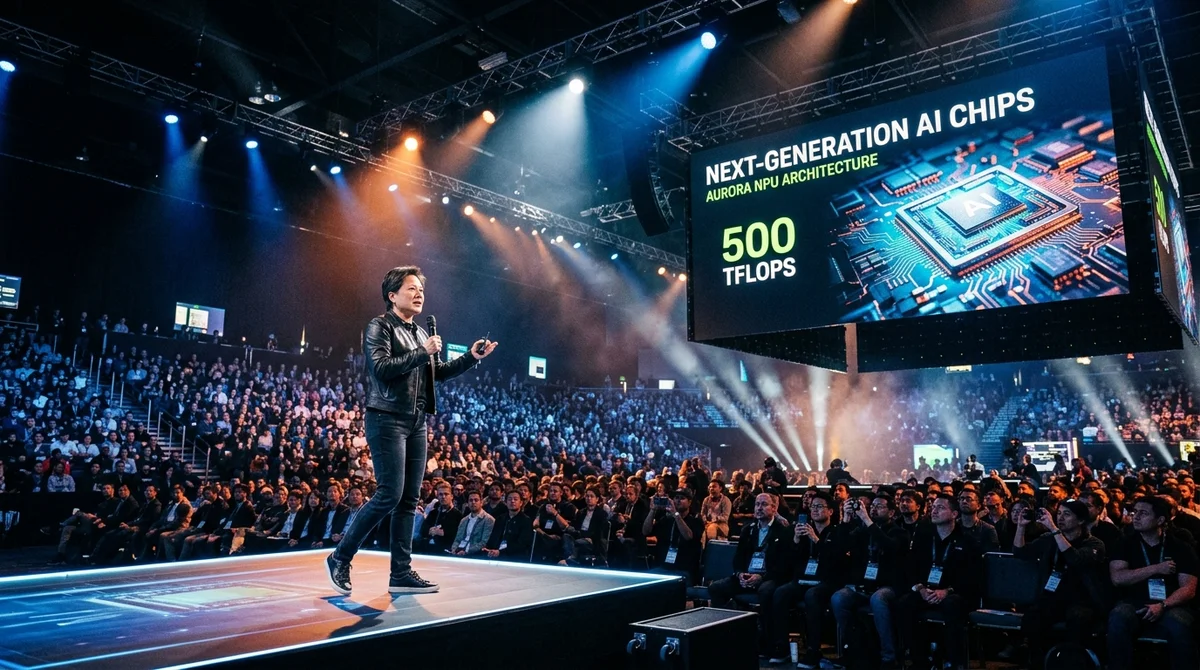
Nvidia once again held what the press calls the "Super Bowl of AI" — the annual GTC developer conference, where CEO Jensen Huang traditionally takes the stage in his signature leather jacket and sets the tone for the industry for the next year. GTC has long ceased to be a routine industry conference. Thousands of engineers, leaders of major tech companies, and journalists gather there to hear how Huang sees the future of computing.
This year, the main topics were the Blackwell architecture — the next generation of GPU accelerators for neural network training — and the concept of physical AI: systems capable of interacting with the real world through robots and autonomous vehicles. Nvidia positions itself no longer simply as a chip manufacturer, but as a platform for building the "era of intelligent systems." Huang doesn't hold back on predictions.
According to him, demand for AI computing infrastructure will grow faster than the industry's ability to build it. Blackwell systems are sold out months in advance. Microsoft, Google, Amazon, and Meta have invested hundreds of billions in them as part of capital programs for the next two years.
Against this backdrop, Tesla is experiencing a public crisis of expectations. The company and its fan community have lived for years waiting for specific milestones: robotaxis, Full Self-Driving Level 5, Cybertruck without technical issues, next-generation Roadster. Each of these promised milestones was either postponed or reinterpreted.
Pilot launches took place in limited form and did not produce the effect the company expected. Investors and fans are divided: some believe in the long-term trajectory, others are tired of waiting. The situation is compounded by reputational context.
The brand that was synonymous with the future, for part of the audience, is now associated with political contradictions. Sales in several regions have declined. Tesla remains the electric vehicle market leader, but its aura of infallibility has noticeably faded.
The third story is Meta and its Horizon Worlds. The metaverse, in which the company invested tens of billions and for which it renamed its entire corporation, never became a mass product. In recent years, Meta has significantly cut teams working on VR content and platform development.
Horizon Worlds is not officially closed, but has only a handful of active users. The project has become an expensive symbol of a misguided trend. This does not mean Meta has given up on the VR market.
Meta Ray-Ban glasses and Quest 3 headsets are selling better than forecast. But the bet on a "social metaverse" — virtual offices, avatars, and VR events as a replacement for face-to-face interaction — turned out to be premature. Users were not ready to spend hours in headsets chatting with colleagues.
The three stories of the week form one narrative: AI infrastructure is experiencing a gold rush, and Nvidia is its only "shovel seller." Tesla and Meta are a reminder of how easy it is to confuse hype with real demand. Real products require not only beautiful presentations, but also market readiness.
Need AI working inside your business — not just in your newsfeed?
I build production AI for companies — custom CRM, internal tools, autonomous agents, workflow automation. Owned by you, shaped to your process, no per-seat tax. Built by Zhemal Khamidun, CPO of AlpinaGPT (AI platform, 6,000+ users).
The AI world, distilled — once a week
Seven stories that actually mattered, hand-picked. No noise, no reposts, no press releases.
Done! Check your inbox for a confirmation.