Musk Plans Terafab Chip Plant in Texas for Robots, AI and Orbital Data Centers
Elon Musk has announced plans to build Terafab, a chip plant in Austin, Texas, as a joint Tesla and SpaceX project. The goal is to produce chips at industrial scale for Optimus robots, the Grok language model and SpaceX's orbital data centers. Experts are skeptical. Musk has no experience in semiconductor manufacturing, and building a fab costs tens of billions of dollars and takes many years.
AI-processed from The Verge; edited by Hamidun News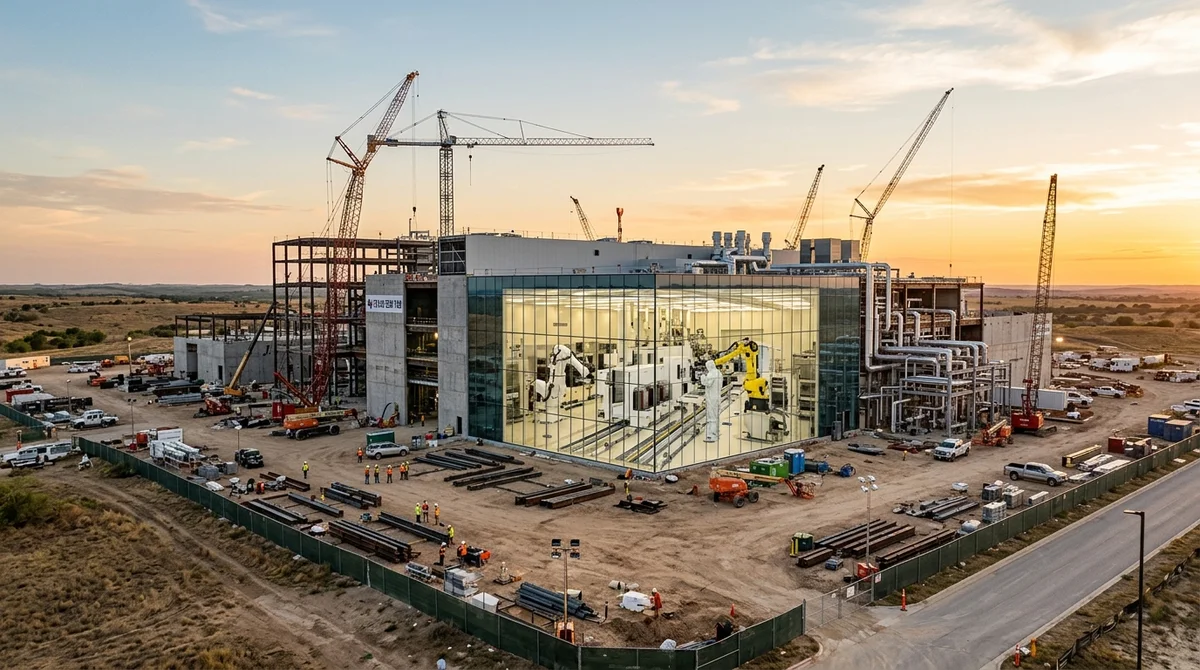
Elon Musk has announced plans to build a chip plant called Terafab in Austin, Texas. Tesla and SpaceX will jointly run the facility, which is meant for mass production of semiconductors for robotics, artificial intelligence and orbital data centers. The announcement has already drawn a wave of skepticism from industry experts.
The chip shortage has become one of the tech industry's key pain points. As AI grows, demand for specialized semiconductors is sharply outpacing production capacity: NVIDIA can't keep up with orders, memory prices are hitting multi-year records, and cloud providers are queuing up at Taiwan's TSMC. Musk has repeatedly raised the problem in public, and now he is offering his own answer: a vertically integrated plant.
As Musk envisions it, Terafab would supply chips to several of his companies at once. Tesla needs semiconductors for its Optimus humanoid robots and self-driving systems. xAI requires computing power to train and run the Grok language model. SpaceX sees the plant as a supplier of chips for rocket onboard systems and for its ambitious orbital data center project: solar power stations on low-orbit satellites. Terafab is thus supposed to close the critical dependence of Musk's entire ecosystem on outside suppliers.
Delivering on these plans will be extremely difficult. Building a modern fab takes an investment of from ten to several tens of billions of dollars, takes four to seven years, and depends directly on deliveries of specialized equipment. The key link in that chain is the EUV lithography machines from the Netherlands' ASML: without them, producing chips on process nodes below 7 nm is essentially impossible, and each machine costs more than $200 million. For comparison, TSMC has invested over $40 billion in its Arizona fabs, and even with large-scale government support under the CHIPS Act, the launch of the first phase was marked by years of delays.
Bloomberg specifically pointed to Musk's lack of experience in semiconductor manufacturing, one of the most technologically complex industries in the world. Another reason for skepticism is his record on announced timelines: promised dates for Tesla's full self-driving have repeatedly slipped, mass production of the Optimus robot is being postponed, and the schedule for the first crewed Starship flight has also shifted.
The technical parameters of the future plant have not been disclosed. Competitive AI chips today are made on 3-5 nm process nodes, which only TSMC and Samsung have mastered. Building comparable capacity from scratch means entering a segment where decades have produced hundreds of billions of dollars in infrastructure and unique know-how. The plan likely involves a less advanced process node, or a model with in-house chip design and contract manufacturing, similar to how Apple or Google operate.
Terafab fits Musk's long-standing strategy of full vertical integration. If the plant comes online, Tesla and xAI could reduce their reliance on outside suppliers and speed up their development cycle for specific tasks. If the project follows the fate of other high-profile announcements, the market, judging by its reaction, is already factoring that into its expectations.
- Nov 2, 2026The Verge reviewer builds a $50 Meta Muse Charm alternative with Claude Code
- Nov 1, 202616 models tested on 7 search tools: Exa averaged 10.5 out of 14, SearXNG about 3
- Nov 1, 2026Google's StreamVibe video agent beats other models by 10.7% on response timing and quality
- Nov 1, 2026OpenAI Rewrites GPT Behavior Rules: Five Values and a Chain of Command
Test Frontier LLMs & Autonomous Agents in One Workspace
Run Claude Opus 5.5, GPT-6, Gemini 3.1, and DeepSeek side-by-side in Nomad AI (nomadnet.ai) — unified model routing, deep research, and multimodal workflows under one subscription.
The AI world, distilled — once a week
Seven stories that actually mattered, hand-picked. No noise, no reposts, no press releases.
Done! Check your inbox for a confirmation.