AI boom strains Europe's power grids as operators look for unconventional fixes
Data center developers have filled grid connection queues across Europe, as the AI boom puts unprecedented strain on energy infrastructure. Grid operators are experimenting with unconventional solutions: flexible contracts that cut consumption at peak hours, real-time demand management and virtual power plants. The Netherlands, Ireland and several regions of the UK have imposed moratoria on new connections, and in some areas the queue has stretched to ten years.
AI-processed from Wired; edited by Hamidun News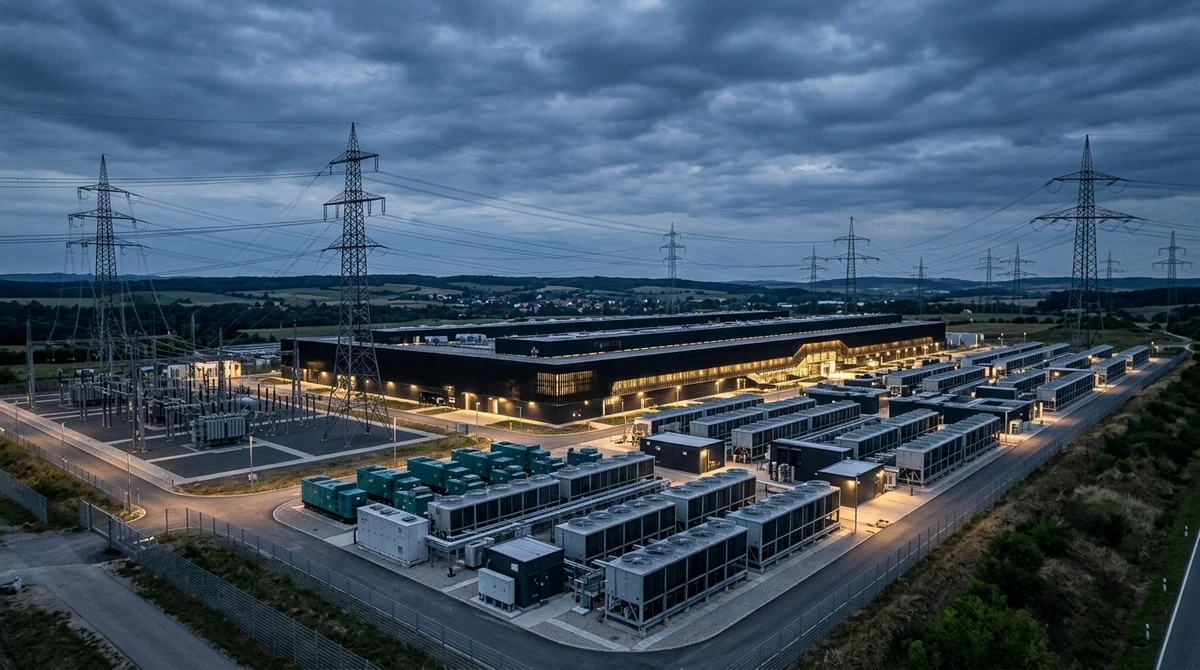
The race for AI computing capacity has hit an unexpected obstacle: a plain shortage of electricity. Across Europe, data center developers are lining up in multi-year queues for grid connections, and infrastructure operators are scrambling to find unconventional ways to free up capacity.
The problem grows every quarter. The biggest tech companies — Microsoft, Google, Amazon, Meta* — are aggressively expanding their European infrastructure, driven by EU data localization rules and fast-growing demand for cloud AI services. In 2023–2024 alone, confirmed investment in European data centers exceeded 40 billion euros. Each large facility draws hundreds of megawatts, comparable to the consumption of a small city.
Grid operators were not ready for this. The Netherlands, Ireland and several regions of the UK have introduced temporary moratoria on new tech connections. In some cases the queue has stretched to 5–10 years. The problem is not only electricity itself: the grid infrastructure — transformers, high-voltage cables, distribution substations — needs large-scale modernization, which physically takes years even when funding and political will are in place.
In response, operators are starting to test fundamentally new connection models. One is the flexible contract: a data center gets access to the grid but commits to reducing consumption during peak load hours. In practice, this means server capacity may be temporarily cut in the most strained periods, such as cold winter evenings or when renewable generation falls short. For workloads that do not need instant response, above all training large language models, this mode is entirely workable.
Another tool is real-time demand management. Modern algorithms can automatically redistribute load among several facilities based on current congestion on grid segments and wholesale electricity prices.
Some operators are studying virtual power plants: aggregated systems that combine large consumers, energy storage and renewable generation into a single managed structure. In theory, this smooths consumption peaks without building new lines and substations.
Energy is becoming a strategic issue for the entire AI industry. Analysts forecast that by 2030 data centers will consume 8 to 15% of all electricity in Europe, versus 2–3% today. At the same time, the EU is tightening decarbonization requirements: new facilities must run mainly on renewable sources, which without large-scale backup cannot yet provide stable round-the-clock supply.
The situation exposes a structural contradiction. Governments compete for AI infrastructure investment by offering subsidies and tax breaks, but the physical limits of power systems prevent them from delivering on those commitments within acceptable timeframes. In the race for capacity, the winners are those who locked in long-term energy contracts early or are considering building their own generation. It is no coincidence that several large tech companies are already negotiating to site small nuclear reactors near their data centers.
*Meta has been designated an extremist organization and banned in Russia.
- Nov 2, 2026Bun creator uses Claude Code to port 750K lines from Zig to Rust in 11 days
- Nov 2, 2026The Verge reviewer builds a $50 Meta Muse Charm alternative with Claude Code
- Nov 1, 202616 models tested on 7 search tools: Exa averaged 10.5 out of 14, SearXNG about 3
- Nov 1, 2026Google's StreamVibe video agent beats other models by 10.7% on response timing and quality
Test Frontier LLMs & Autonomous Agents in One Workspace
Run Claude Opus 5.5, GPT-6, Gemini 3.1, and DeepSeek side-by-side in Nomad AI (nomadnet.ai) — unified model routing, deep research, and multimodal workflows under one subscription.
The AI world, distilled — once a week
Seven stories that actually mattered, hand-picked. No noise, no reposts, no press releases.
Done! Check your inbox for a confirmation.