Anthropic gives Claude Code an auto mode: more independence, with built-in limits
Anthropic has launched auto mode for Claude Code. The AI agent now carries out tasks on its own, without asking for approval at every step. Destructive and irreversible actions, such as deploys and file deletion, still require explicit permission. Anthropic describes this as a balance between speed and safety in the era of agentic AI tools.
AI-processed from TechCrunch; edited by Hamidun News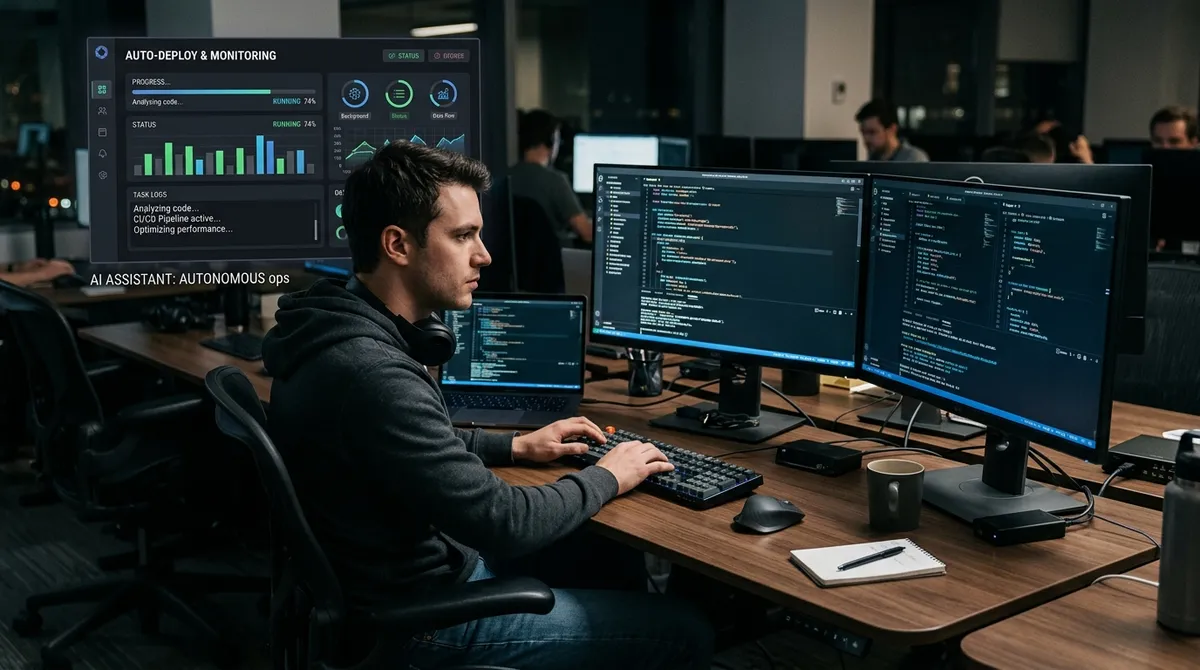
Anthropic has launched auto mode for Claude Code, its AI-based development tool. The change is simple: the agent now carries out tasks without stopping at every step to ask the developer for approval. It is one of the most noticeable shifts in the product's behavior since its release.
Previously, Claude Code worked in a strictly interactive format. Before every significant action, such as writing a file, running a terminal command or calling an external tool, the AI asked for permission. That gave the developer full control, but on long tasks it became a nuisance: dozens of interruptions demanded constant presence at the screen and broke the workflow.
Auto mode changes that balance. Claude Code gains the right to make decisions on its own within a task and turns to the user only where it is truly necessary. By Anthropic's design, this brings working with the agent closer to working with an experienced colleague: you hand over a task and trust them to finish it, without controlling every move.
Anthropic has deliberately kept the key limits in place. Destructive and irreversible actions, such as deleting files, deploying to production and changing the configuration of critical systems, still require the user's explicit permission. The built-in guardrails stay in place. More autonomy does not mean removing control entirely.
This fits the company's core philosophy. Since its founding, Anthropic has positioned itself as a safe-AI lab and holds that usefulness and safety should develop together. Auto mode is a practical test of that thesis: how autonomous can an agent be made without sacrificing reliability?
For developers, the change has a very concrete meaning. Long sessions, such as refactoring a large codebase, writing tests to increase coverage, or automating routine operations, previously required constant presence at the screen. Now you can start a task and come back to the result.
Competing systems have long offered exactly this approach: Devin from Cognition AI and similar tools were built for full agentic operation from the start. Anthropic enters this race with a more cautious stance. GitHub Copilot, Cursor, Devin and dozens of other tools are actively moving toward agentic modes in which the AI takes on entire tasks. The market is voting for autonomy, and companies have to respond. Anthropic does so in its own style: safety first, speed second.
The key question facing the whole industry is how far to go. Where is the line between an AI that helps a developer and one that works in the developer's place? For now, Anthropic answers conservatively: more freedom, with limits retained. Whether this balance proves durable as agentic systems grow more capable will be shown by practice.
- Nov 2, 2026LLM Agent Built a Gearbox in KOMPAS-3D, but Scored Only 50 out of 100 on the Specification
- Nov 2, 2026Agents ignored the prompt to read memory in 7 of 7 sessions: an analysis of 13 thousand logs
- Nov 2, 2026Karpathy Built HackerTube, a Catalog of 6,454 Videos, in Two Hours with Claude Code
- Nov 2, 2026Корпоративное обучение ИИ и вайбкодингу в России в 2026 году: сколько стоит, почему лекции больше не работают и кого зовут компании
Build & Ship Production AI Agents Without Boilerplate Code
Start your free 72-hour trial at Hamidun Academy (academy.hamidun.com) — interactive lessons on Claude Code & Cursor, live Tech Radar, and production agent templates.
The AI world, distilled — once a week
Seven stories that actually mattered, hand-picked. No noise, no reposts, no press releases.
Done! Check your inbox for a confirmation.