Anthropic adds an auto mode to Claude Code: more autonomy with built-in limits
Anthropic has launched an auto mode for Claude Code. The AI agent now performs tasks on its own, without constant requests for approval at every step. Destructive and irreversible actions — deployments, file deletions — still require explicit permission. Anthropic describes this as a balance between speed and safety in the era of agentic AI tools.
AI-processed from TechCrunch; edited by Hamidun News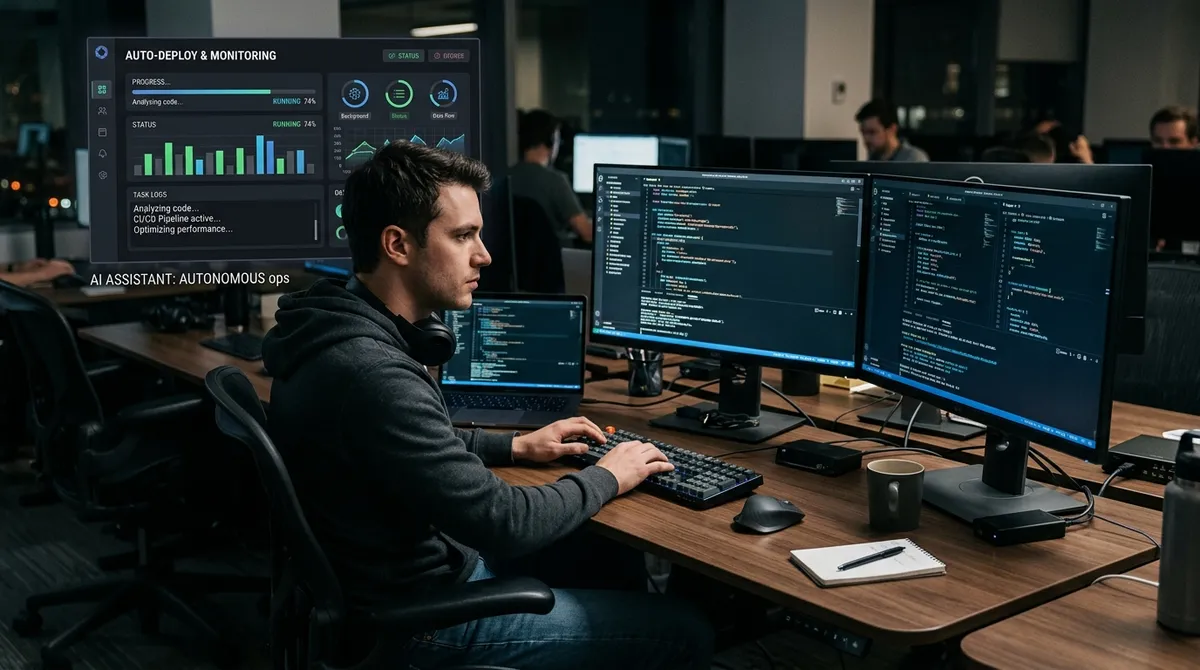
Anthropic has launched an auto mode for Claude Code — its AI-powered development tool. The essence of the change is simple: the agent now completes tasks without interrupting at each step to ask for the developer's approval. This is one of the most tangible shifts in the product's behavior since its launch.
Previously, Claude Code operated in a strictly interactive format. Before each significant action — writing a file, executing a command in the terminal, calling an external tool — the AI requested permission. This gave the developer complete control, but on long tasks it became a hindrance: dozens of interruptions required constant presence at the screen and broke the workflow.
The auto mode changes this balance. Claude Code gains the right to make decisions independently within a task and turns to the user only where it's truly necessary. By Anthropic's design, this makes working with the agent more like interaction with an experienced colleague: you give them a task and trust them to complete it without controlling every move.
At the same time, Anthropic deliberately preserved key limitations. Destructive and irreversible actions — deleting files, deploying to production, changing critical system configurations — still require explicit user permission. Built-in safety barriers remain in place.
More autonomy does not mean removing all controls. This aligns with the company's basic philosophy. Since its founding, Anthropic has positioned itself as a safe AI laboratory and proceeds from the idea that usefulness and safety should develop together.
Auto mode is a practical test of this thesis: how autonomous can an agent be made without sacrificing reliability. For developers, the change has quite concrete significance. Long sessions — refactoring a large codebase, writing comprehensive tests, automating routine operations — previously required constant presence at the screen.
Now you can start a task and return to the result. This approach has long been suggested by competing systems: Devin from Cognition AI and similar tools were built with the goal of full agency from the start. Anthropic enters this race from a more cautious position.
GitHub Copilot, Cursor, Devin, and dozens of other tools are actively moving toward agent modes where AI takes on entire tasks. The market votes for autonomy — and companies are forced to respond. Anthropic does this in its own style: security first, then speed.
The key question facing the entire industry is: how far can you go? Where is the boundary between AI that helps a developer and AI that works instead of them? For now, Anthropic answers this conservatively — more freedom while preserving limitations.
How stable this balance will prove to be as the capabilities of agent systems grow will be shown by practice.
Want to stop reading about AI and start using it?
AI News is a curated feed of AI/tech news. Hamidun Academy teaches you to use AI systematically in your work.
The AI world, distilled — once a week
Seven stories that actually mattered, hand-picked. No noise, no reposts, no press releases.
Done! Check your inbox for a confirmation.