Arm unveils its first in-house processor, with Meta as its first customer
For the first time in its history, Arm is releasing its own processor: the Arm AGI CPU, built for AI inference in data centers. For decades the company only licensed its architectures to other chipmakers. Now it is entering the server hardware market itself. Meta is the first customer and co-developer. It has long struggled to get its own AI chip, MTIA, into shape. The two companies plan to work together on several generations of data-center CPUs. *Meta is designated an extremist organization and banned in the Russian Federation.
AI-processed from The Verge; edited by Hamidun News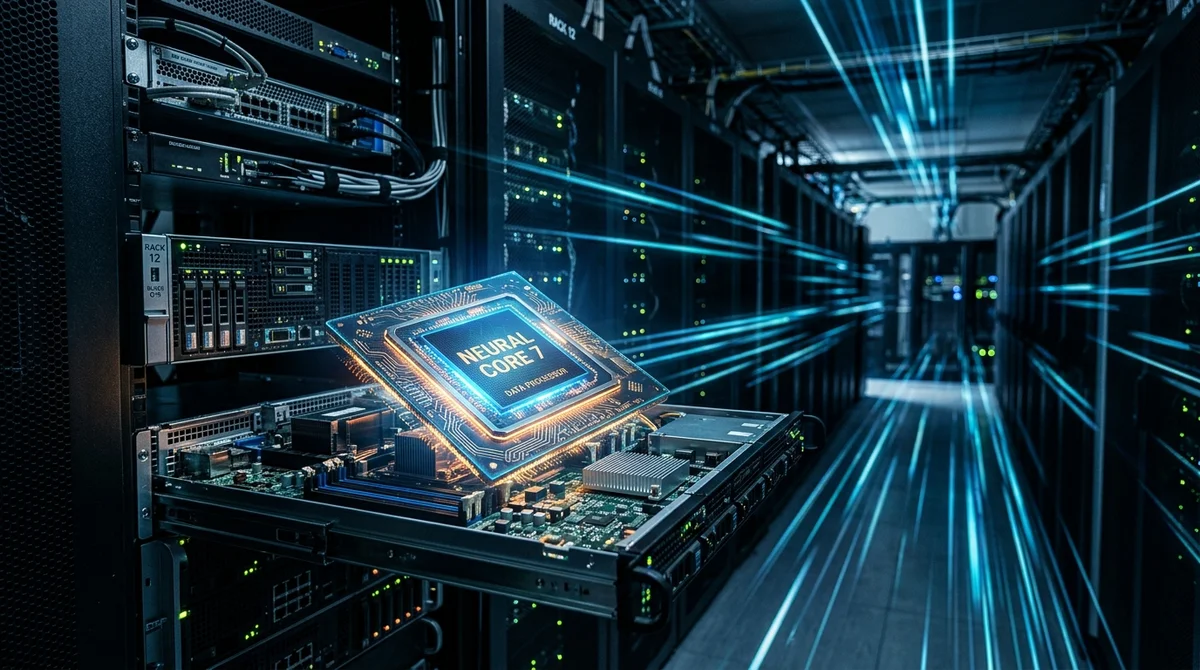
Arm has released its own processor for the first time in its history, and it named the first buyer right away: Meta. The new chip, called the Arm AGI CPU, is designed for inference: the computation that powers cloud AI services, including agentic systems that can spawn ever more chains of parallel tasks.
It is a fundamental shift for Arm. The British company was founded in 1990 and over more than three decades became one of the most influential, yet least visible to the general public, players in semiconductors. In all that time Arm never manufactured chips itself; its business was built exclusively on licensing its architecture. Companies such as Apple, Qualcomm, Samsung, Nvidia and Amazon paid for the right to design their own processors based on it. Most smartphones and tablets on the planet run on Arm architecture, as does a huge share of cloud infrastructure. But the company never had server hardware of its own. Now that is changing.
The Arm AGI CPU targets data centers and AI inference, meaning not the training of models but running them in production in real services. The chip is built specifically for agentic workloads, where a single AI agent can spawn dozens of parallel subtasks and demands a high degree of parallelism from the infrastructure. This is where the main demand is concentrated right now: companies are building giant clusters to handle billions of user requests to language models and multimodal systems. The volume of inference workloads is growing exponentially as AI applications reach the mass market.
In this partnership Meta is not just the first customer but a full co-developer. The company said it is the lead partner on the project and expects to work with Arm on several generations of data-center CPUs. The new processors will take their place in Meta's heterogeneous infrastructure alongside GPUs from Nvidia and AMD, complementing the familiar hardware rather than displacing it.
The collaboration with Arm is explained not only by interest in the new chip but also by Meta's accumulated difficulties with its own designs. The company has long been working on its in-house MTIA AI accelerator, but deadlines have slipped several times, and the chip has yet to take a significant share of internal infrastructure. The partnership with Arm is a pragmatic way out: instead of building full chip expertise from scratch, Meta gets access to a proven architectural school with decades of engineering experience.
For Arm, moving into its own hardware is also a strategic step, and one long overdue. The company is steadily heading toward an IPO and wants to justify a higher market valuation. Its own products fundamentally change the revenue structure: instead of license royalties, direct hardware sales with higher margins. Analysts have long pointed out that the licensing model caps absolute revenue growth. If the AGI CPU proves in demand, Arm will go from an unseen architectural backend to a full-fledged server hardware maker.
The name itself deserves a note. AGI stands for Artificial General Intelligence, and although today's systems do not have real general intelligence yet, the acronym has long since stuck as a label for the most advanced work. Arm is clearly counting on the name to tie the chip to infrastructure for next-generation AI systems.
First shipments of the Arm AGI CPU are planned for 2026. If the collaboration with Meta goes well, the next buyers could well include Amazon, Microsoft and Google, all three of which already build their own data-center CPUs on Arm architecture and have long known its capabilities.
*Meta is designated an extremist organization and banned in the Russian Federation.
- Nov 1, 2026MoneyGate safety layer blocked all 42 fraudulent requests to local AI models
- Oct 31, 2026Open-source LLM gateway KTMS 1.0 plugs your own GPUs into the cloud and survives outages
- Oct 31, 202622B-Parameter LTX-2.5 Runs on a 10 GB RTX 3080, but Takes 5 Minutes per Shot
- Oct 29, 2026T-Tech Introduces LIMe, a Method That Trains Language Models With 15% Less Compute
Test Frontier LLMs & Autonomous Agents in One Workspace
Run Claude Opus 5.5, GPT-6, Gemini 3.1, and DeepSeek side-by-side in Nomad AI (nomadnet.ai) — unified model routing, deep research, and multimodal workflows under one subscription.
The AI world, distilled — once a week
Seven stories that actually mattered, hand-picked. No noise, no reposts, no press releases.
Done! Check your inbox for a confirmation.