A Kentucky grandmother turned down an AI company: the real world is pushing back on data center expansion
An 82-year-old Kentucky woman turned down an AI company that offered her $26 million for her land to build a data center. The company is still trying to rezone 2,000 acres nearby. Meanwhile, OpenAI is shutting down Sora, and Meta has lost in court. The real world is starting to push back on AI expansion in earnest. *Meta has been designated an extremist organization and is banned in the Russian Federation.
AI-processed from TechCrunch; edited by Hamidun News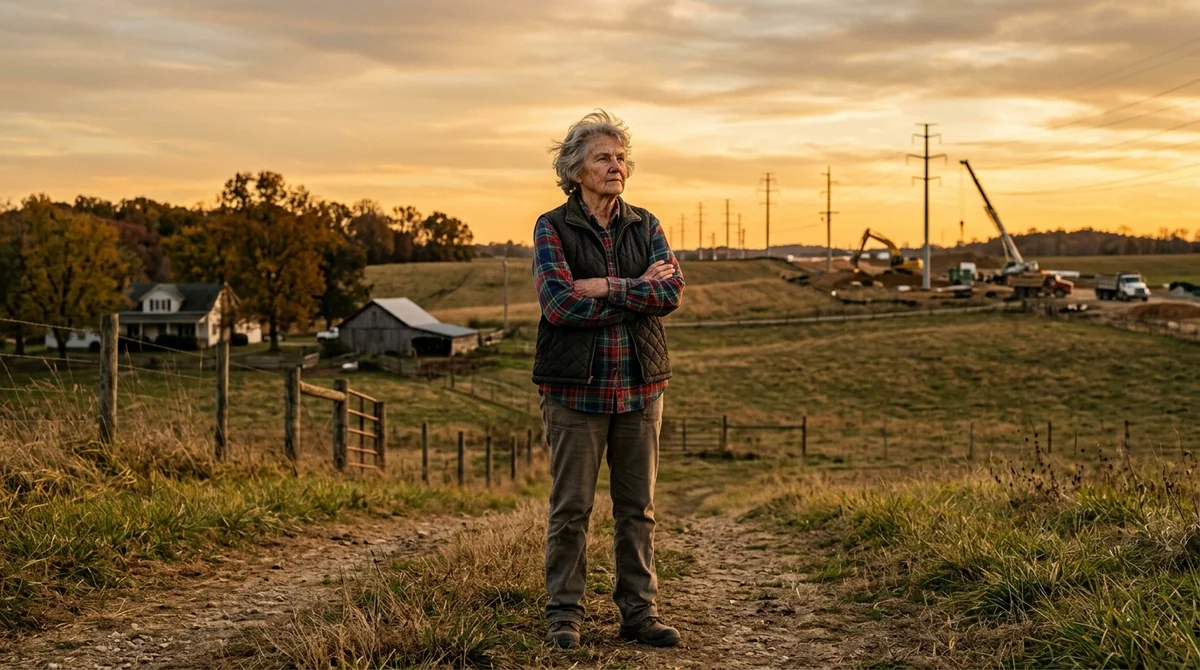
Tech companies are used to solving problems with money. But an 82-year-old Kentucky resident has shown that $26 million isn't always a persuasive enough argument. When an unnamed AI company offered to buy her land to build a data center, she said no.
She didn't refuse out of ignorance or confusion. She made a deliberate choice, and the land stayed hers. The company didn't back down, though: it is now seeking to rezone about 2,000 acres in the same area so it can build its infrastructure nearby.
This story isn't a curiosity. It's a symptom of a broader trend: the rapid expansion of AI infrastructure has run into resistance from the real world. Data centers consume enormous amounts of water and electricity, take over farmland and residential land, and reshape entire regions.
Local residents, farmers, and courts are increasingly asking uncomfortable questions: who decided this spot should host servers instead of fields? Against this backdrop, news arrived from two of the market's biggest players. OpenAI is shutting down Sora, its text-to-video generation service.
The company unveiled the project with great fanfare in early 2024, and it sparked a wave of debate about the future of visual content. Now it is being wound down, at least in its current form. The reasons haven't been officially disclosed, but the shutdown shows that even the loudest announcements in AI don't guarantee a viable product.
Meta, meanwhile, lost a court ruling in a case the company clearly expected to win. The brief report doesn't disclose the details of the lawsuit, but the outcome itself is telling: regulators and courts in the US and Europe keep imposing restrictions on big tech platforms. The gap between how fast AI companies build and ship products and how fast legal systems can respond is gradually narrowing.
All three stories share the same logic. The early years of the AI boom ran on a "grab the market now, sort it out later" approach. Companies bought up land, launched products, and courted investors, and it seemed there were no external brakes.
Now the brakes are appearing. It's an elderly woman saying "no" to $26 million. It's a court saying "no" to Meta.
It's users and regulators asking questions about Sora. This pressure doesn't necessarily mean the AI industry will slow down. If anything, it signals that the industry is growing up: moving from an "anything is possible" phase to a "prove it's necessary and safe" phase.
Companies that learn to work with this resistance — through dialogue, transparency, and compromise — will win in the long run. Those that keep pushing with money and political leverage will lose in court and damage their reputations.
*Meta has been designated an extremist organization and is banned in the Russian Federation.
- Nov 1, 2026Local models lose to Opus and Codex: 0.21 on a MacBook versus 1.00 for Codex
- Nov 1, 2026Kimi scores 96.2% on a 1C database analytics test and emerges as a fallback if Claude access is blocked
- Nov 1, 2026OpenAI Rewrites GPT Behavior Rules: Five Values and a Chain of Command
- Nov 1, 2026Google admits AI Mode cuts search revenue, shares fall 15%
Test Frontier LLMs & Autonomous Agents in One Workspace
Run Claude Opus 5.5, GPT-6, Gemini 3.1, and DeepSeek side-by-side in Nomad AI (nomadnet.ai) — unified model routing, deep research, and multimodal workflows under one subscription.
The AI world, distilled — once a week
Seven stories that actually mattered, hand-picked. No noise, no reposts, no press releases.
Done! Check your inbox for a confirmation.