"It's not just X — it's Y" has become a telltale marker of AI-written text
Researchers have flagged a new telltale marker of AI-generated text: the "it's not just X — it's Y" construction shows up in synthetic material so often that it has become a near-guarantee of its origin. Language models picked the phrasing up from their training data as a sign of "smart writing" and reproduce it reflexively. For authors who work with AI, the message is clear: a final edit is mandatory.
AI-processed from TechCrunch; edited by Hamidun News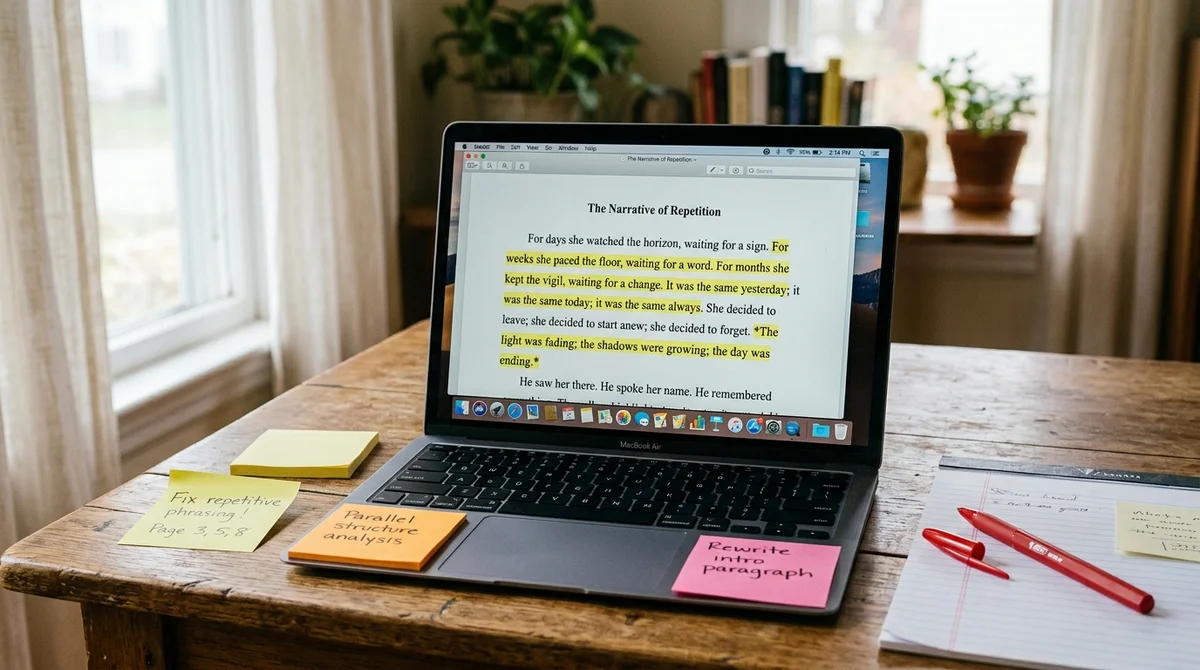
There is a simple way to check whether a text was written by AI: look for the construction "it's not just X — it's also Y." If it appears even once, the probability of synthetic authorship approaches one hundred percent. That is the conclusion that follows from observations TechCrunch summarized in April 2026. The "not only... but also..." contrast has become such a characteristic feature of AI-generated material that it is no longer merely circumstantial evidence — it is now close to a guarantee.
Why this one? Language models were trained on billions of texts, including long-form journalism, analytical reviews and marketing copy. In those genres the device is common — it creates an impression of depth and nuance. The model absorbed it as a signal of "smart writing" and now reproduces it automatically whenever it needs to strengthen an argument or show that a topic has been examined from every side.
The problem is dosage. In human writing, the construction appears rarely and in the right place. When a language model uses it several times in a row in a single piece, that is no longer style — it is a malfunction that jumps out at any editor.
This is neither the first nor the last such "tell." Earlier, researchers recorded other AI markers: the word "delve" in contexts where it doesn't belong, openers such as "Certainly!" and "Great question!", tidy lists of exactly five items, and endings along the lines of "this opens new horizons for future research." Each pattern follows the same trajectory: editors notice it first, then it lands on detectors' lists, then developers try to remove it — and the cycle repeats.
The scale of the problem is significant. By some estimates, in certain niches — marketing blogs, corporate news, content farms — the share of AI-generated material already exceeds 60-70%. These patterns have spread across the internet, and readers are starting to recognize them intuitively, even without being able to say what exactly bothers them.
For companies and authors who use language models in their work, this is a practical signal on several levels.
First: final editing is not optional. Running a text through a model and publishing it immediately puts your reputation at risk. A reader who spots a formulaic phrase draws conclusions not only about the quality of that piece, but about the author's attitude toward the audience.
Second: prompt tuning works. An explicit ban on clichés in the system prompt — "don't use construction X," "avoid symmetrical contrasts" — sharply reduces how often they appear. It is not a guarantee, but it is a substantial improvement.
Third: the list of markers needs updating. Patterns change along with the models. What worked as a detector a year ago may already be fixed in newer versions. Conversely, new models bring new clichés that nobody has noticed yet.
The story of "it's not just X — it's Y" illustrates the nature of the race between language models and the people who edit them. Models quickly pick up stylistic devices that look convincing at a statistical level — but that is exactly why they use them too often and too predictably. A good editor can still outmaneuver the algorithm. For now.
Test Frontier LLMs & Autonomous Agents in One Workspace
Run Claude Opus 5.5, GPT-6, Gemini 3.1, and DeepSeek side-by-side in Nomad AI (nomadnet.ai) — unified model routing, deep research, and multimodal workflows under one subscription.
The AI world, distilled — once a week
Seven stories that actually mattered, hand-picked. No noise, no reposts, no press releases.
Done! Check your inbox for a confirmation.