Intel bets on chip packaging, and it could be worth billions
While everyone watches nanometers, the real race has heated up around chip packaging. Intel is betting billions on it: its EMIB and Foveros technologies let engineers stitch several dies into a single package, which is critical for next-generation AI accelerators. Intel lost its lead in leading-edge manufacturing to TSMC, but packaging is a separate skill set, and one where it has decades of experience and infrastructure that is not easy to copy. Skeptics point out that Intel has repeatedly promised breakthroughs that arrived late or fell short. If the bet pays off, it would be one of the most unexpected turnarounds in semiconductor history. If not, Intel risks becoming a niche player.
AI-processed from Wired; edited by Hamidun News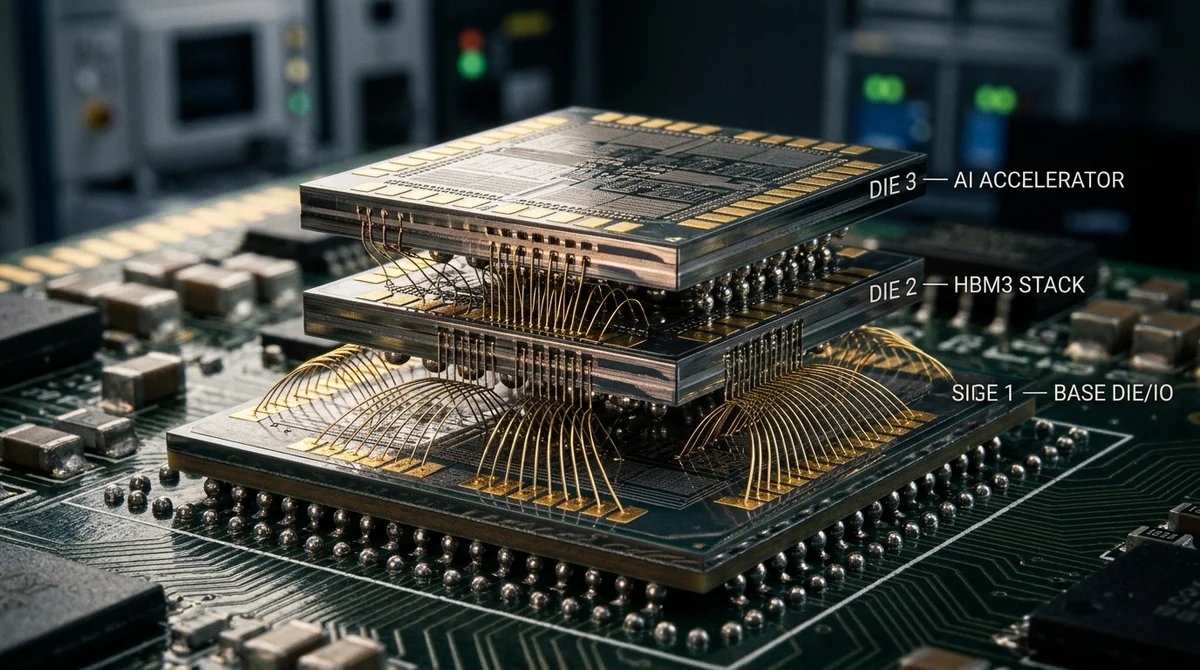
While the public debate about AI chips revolves around nanometers and transistor counts, the real fight has moved somewhere less visible but far more practical: die packaging technology. And Intel, a company many wrote off long ago in the performance race, has unexpectedly ended up at the center of this new contest.
Advanced chip packaging is a way to combine several separate dies in one package so that they work as a single unit. Instead of building ever more complex monolithic dies (which gets more expensive and harder as Moore's law runs out), engineers have learned to "stitch together" specialized blocks, such as processor cores, memory and accelerators, with minimal signal delay between them.
For AI, this changes everything. Modern neural network accelerators, such as NVIDIA's GPUs, consume enormous amounts of memory and need extremely high bandwidth between compute blocks and memory. This is where TSMC's CoWoS technology, which NVIDIA uses in its H100 and H200, delivers a competitive edge, not through a finer process node but through dense packaging.
Intel is heading the same way, but with its own strengths. The company is developing two key technologies: EMIB (Embedded Multi-die Interconnect Bridge), a flat 2.5D connection between dies through silicon bridges, and Foveros, 3D stacked packaging in which dies are literally placed on top of one another. The combination of the two in the Intel Foundry Services lineup opens up possibilities that competitors do not yet have at this scale.
The context matters: Intel lost its leadership in leading-edge chip manufacturing long ago, ceding it to TSMC. But packaging is a separate competence. Intel has accumulated decades of experience and infrastructure here that are not easy to copy. That is why the bet on packaging looks strategically sound: it is a way back into the game without chasing TSMC on nanometers.
The market has noticed. The biggest tech companies, Microsoft, Google and Amazon, are building their own AI chips through custom designs. All of them need advanced packaging. Intel Foundry offers them an alternative to TSMC on American soil, which is especially valuable given the geopolitical risks around Taiwan and US subsidies under the CHIPS Act.
There are skeptics too. Intel has repeatedly promised technological breakthroughs that arrived late or failed to meet expectations. Foveros has existed for several years, yet it has not achieved mass commercial success in the foundry segment so far. Competitors are not standing still: TSMC is investing in SoIC and CoWoS, and Samsung is developing X-Cube.
Still, the timing looks right. The AI boom has created an insatiable demand for performance that can no longer be obtained simply by shrinking transistors. Packaging has become the point where engineering exotica turns into an industry standard. And Intel, despite all its problems over the past decade, stands at that point with real technology and real infrastructure.
If the bet pays off, it will be one of the most unexpected turnarounds in the history of the semiconductor industry. If not, Intel will finally become a niche player. The stakes are high, and that is exactly why the story of "chip packaging" matters far beyond nerd circles.
- Nov 2, 2026Karpathy builds a YouTube clone with 6454 videos from Hacker News recommendations in two hours
- Nov 2, 2026Karpathy used Claude to build HackerTube from 6,454 videos recommended on Hacker News
- Nov 2, 2026Anthropic needs to grow revenue 32% a year to cover $850 billion in contracts
- Nov 2, 2026Bun creator uses Claude Code to port 750K lines from Zig to Rust in 11 days
Build & Ship Production AI Agents Without Boilerplate Code
Start your free 72-hour trial at Hamidun Academy (academy.hamidun.com) — interactive lessons on Claude Code & Cursor, live Tech Radar, and production agent templates.
The AI world, distilled — once a week
Seven stories that actually mattered, hand-picked. No noise, no reposts, no press releases.
Done! Check your inbox for a confirmation.