Astropad launches Workbench, a control panel for AI agents on Mac Mini
Astropad has released Workbench, a remote-access tool for Mac Mini redesigned for AI agents. Users can watch their agents work and control them from an iPhone or iPad through a low-latency stream. The product targets developers who run AI on their own hardware, not IT departments.
AI-processed from TechCrunch; edited by Hamidun News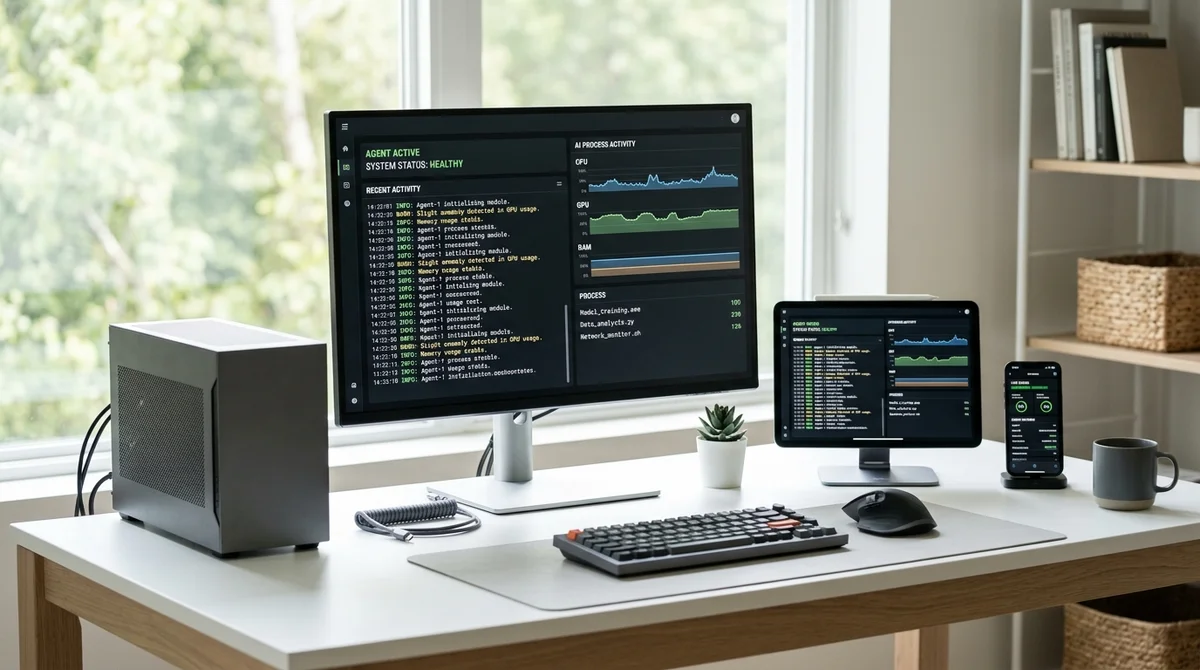
Astropad, known for Luna Display, one of the best ways to turn an iPad into a second monitor for a Mac, has released a new product called Workbench. At first glance it looks like one more remote desktop tool. In practice it is built for a very different era and a different audience. Workbench lets you remotely watch AI agents running on a Mac Mini and control them from an iPhone or iPad. A low-latency screen stream, a mobile interface and optimization specifically for touchscreens set Workbench apart from older solutions, which were built for emergency IT access from a browser or a heavy desktop client.
Why a Mac Mini? Over the past two years, this computer has become the de facto standard for people who want to run language models and AI agents locally. The M4 and M4 Pro chips deliver good performance at modest power draw: a Mac Mini running LLM workloads consumes 10–20 W, compared with 250–400 W for a GPU server of comparable power. The starting price is $599. For tasks involving private data, or for anyone who doesn't want to pay for cloud tokens, it is a convincing alternative. These machines now run 24/7 as personal AI servers: they run agents, process documents and carry out automations.
The problem is that you can't physically be next to a Mac Mini all the time. Workbench fills that gap: the user sees the screen in real time and, when needed, can step in to correct an agent's task, start a new process or simply confirm that everything is going right.
The difference from traditional tools is fundamental. AnyDesk, TeamViewer and Microsoft Remote Desktop were designed for an IT specialist who needs to urgently help a user or fix a fault. Their entire UX is tuned for rare emergencies. Workbench is designed for everyday monitoring: a developer wants to glance at what their agent is doing from time to time and quietly step in if something goes wrong. These are different usage patterns, and Astropad is right to separate them.
There is little concrete data on pricing and full technical specifications so far. What is known is that the product supports iPhone and iPad, offers low latency and was built specifically for AI scenarios. Astropad positions Workbench as a tool for developers and technical enthusiasts working with local AI models and agents: Claude, GPT wrappers, open-source pipelines.
The arrival of Workbench is another sign that the infrastructure around local AI is starting to form its own market. After models and agent frameworks come tools for managing and monitoring edge-AI nodes. Astropad has years of experience with the iPad ecosystem and the Mac, a good starting position for claiming this niche before the big players arrive.
- Nov 2, 2026LLM Agent Built a Gearbox in KOMPAS-3D, but Scored Only 50 out of 100 on the Specification
- Nov 2, 2026Agents ignored the prompt to read memory in 7 of 7 sessions: an analysis of 13 thousand logs
- Nov 2, 2026Karpathy Built HackerTube, a Catalog of 6,454 Videos, in Two Hours with Claude Code
- Nov 2, 2026Корпоративное обучение ИИ и вайбкодингу в России в 2026 году: сколько стоит, почему лекции больше не работают и кого зовут компании
Test Frontier LLMs & Autonomous Agents in One Workspace
Run Claude Opus 5.5, GPT-6, Gemini 3.1, and DeepSeek side-by-side in Nomad AI (nomadnet.ai) — unified model routing, deep research, and multimodal workflows under one subscription.
The AI world, distilled — once a week
Seven stories that actually mattered, hand-picked. No noise, no reposts, no press releases.
Done! Check your inbox for a confirmation.