Meta's new AI asks for users' medical data and hands out harmful advice
Meta has launched Muse Spark, an AI model that can analyze personal medical data, down to lab test results. A Wired journalist tried it out: the system actively asked for raw health data and in return gave advice that specialists would consider dangerous. Beyond the obvious privacy risks, the model is clearly not ready to replace a doctor. *Meta has been designated an extremist organization and is banned in Russia.
AI-processed from Wired; edited by Hamidun News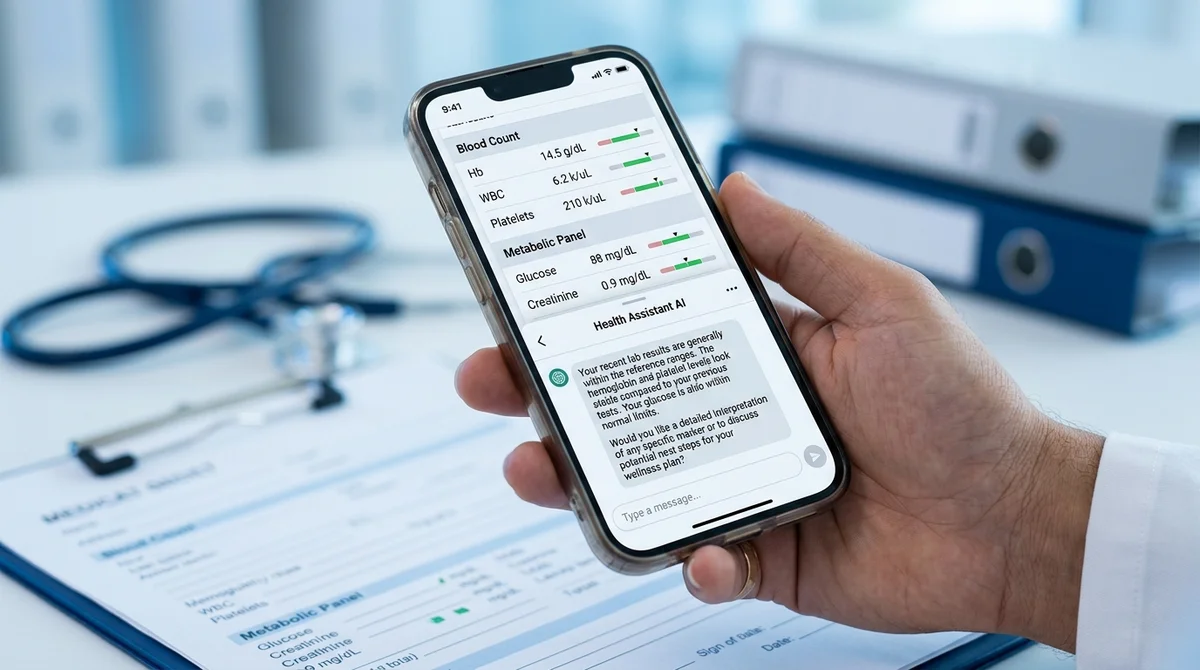
Meta has unveiled Muse Spark, a model that can analyze users' medical data, including laboratory test results. A journalist from Wired tested the AI and got an alarming outcome: the system not only actively requested raw personal health data, but also gave advice that qualified doctors would call harmful. The feature works like this: the user uploads medical examination data — blood tests, test results, biomarker readings — and Muse Spark interprets them and makes recommendations.
At first glance it looks like a handy tool for people who struggle to make sense of medical paperwork without a specialist. In practice, the picture is different. During the test, the model asked follow-up questions that called for handing over highly sensitive health information.
Meta, meanwhile, does not give users a comprehensive answer on exactly how this data is stored, processed and used afterward. Given that the company makes its money from targeted advertising, this opacity raises entirely justified concerns. An even more serious problem is the quality of the advice itself.
The AI interpreted medical indicators superficially, ignored the patient's individual context and in some cases drew conclusions that contradict current clinical guidelines. Inaccurate health advice is not just a bad user experience; it is potential harm to a specific person. The Muse Spark case fits a broader trend: big tech companies are moving ever more aggressively into medicine.
Apple is adding monitoring features to the Watch, Google is developing Med-PaLM, and startups promise diagnosis from a photo. Demand for accessible medical consultations is enormous, especially where a doctor's appointment takes weeks and a private visit is expensive. Still, the gap between what today's language models can do and what a medical adviser must do remains significant.
A doctor does not simply read the numbers in a test: they take into account medical history, medications, lifestyle, and see the patient over time. A language model working from a single uploaded document has none of that context. Regulation is not keeping pace with the technology.
In the US, medical software falls under FDA oversight, but language models offering "general recommendations" currently sit in a legal gray area. Meta, apparently, deliberately positions Muse Spark as an information tool rather than a diagnostic one, which lets it avoid strict clinical testing requirements. The Wired test is another reminder that being able to do something and being ready to take responsibility for it are different things.
Whether Meta can handle medical data responsibly is a big question, and it still has no convincing answer.
*Meta has been designated an extremist organization and is banned in Russia.
- Nov 2, 2026The Verge reviewer builds a $50 Meta Muse Charm alternative with Claude Code
- Nov 1, 2026MoneyGate safety layer blocked all 42 fraudulent requests to local AI models
- Oct 31, 2026Open-source LLM gateway KTMS 1.0 plugs your own GPUs into the cloud and survives outages
- Oct 31, 202622B-Parameter LTX-2.5 Runs on a 10 GB RTX 3080, but Takes 5 Minutes per Shot
Test Frontier LLMs & Autonomous Agents in One Workspace
Run Claude Opus 5.5, GPT-6, Gemini 3.1, and DeepSeek side-by-side in Nomad AI (nomadnet.ai) — unified model routing, deep research, and multimodal workflows under one subscription.
The AI world, distilled — once a week
Seven stories that actually mattered, hand-picked. No noise, no reposts, no press releases.
Done! Check your inbox for a confirmation.