How the Internet Broke Our Ability to Tell Truth from Fake
Content verification systems on the internet can't keep up with the growth of AI fakes and restricted data. The tools journalists and researchers have used to check photos and videos fail more and more often, while new methods of deception appear faster than the defenses against them. The result is a widening gap between those who produce fakes and those who try to expose them.
AI-processed from Wired; edited by Hamidun News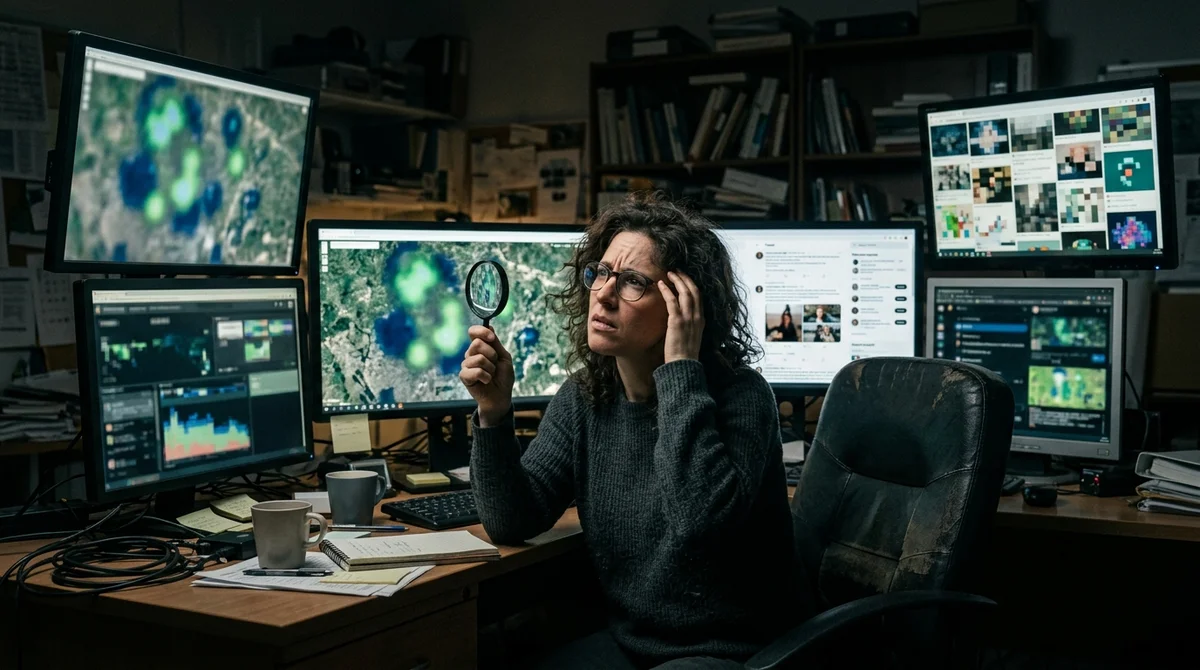
The tools that made it possible to tell real photos from staged ones, document war crimes and check videos circulating on social media are now under threat. Online content verification is in a systemic crisis, and there are several causes at once.
Over the past two years, artificial intelligence has radically changed the disinformation landscape. Generative models have learned to produce images and video of such quality that even media literacy specialists cannot reliably tell them from real ones. AI-content detectors exist, but they are unreliable: they regularly err in both directions, falsely flagging authentic photos and letting generated ones through.
Another problem is growing in parallel: the closing of satellite data. Commercial providers that once openly supplied imagery for independent investigations, from analyzing concentration camps to tracking military equipment, increasingly restrict access under government pressure or for commercial reasons. Journalists and NGOs that used satellite photos as a key documentation tool are losing a vital source.
The speed at which content spreads makes things worse. By the time verification is finished, millions have already seen the fake. Social media algorithms are optimized for engagement, not for accuracy, so emotionally charged but false content spreads far faster than debunkings. Studies show that false news spreads six times faster than true news.
As a result, the average user comes away feeling that nothing can be trusted: not photos, not videos, not text. This itself becomes a tool of manipulation. When people lose trust in everything, they either slide into information nihilism or believe only the sources that confirm what they already think.
What this means in practice: the race between the tools that create fakes and the tools that detect them will continue, but the distance between them is growing. The solution requires more than technology. It also takes investment in media literacy, pressure on platforms and openness from satellite providers. Until that happens, verifying reality remains the privilege of specialists rather than the norm.
- Nov 2, 2026The Verge reviewer builds a $50 Meta Muse Charm alternative with Claude Code
- Nov 2, 20268 Skills for video in Claude Code: from 244 pixel effects to rough-cut editing
- Nov 1, 2026Pika Labs releases open video model H3 Flex: 6 steps instead of 50
- Nov 1, 2026Google's StreamVibe video agent beats other models by 10.7% on response timing and quality
Test Frontier LLMs & Autonomous Agents in One Workspace
Run Claude Opus 5.5, GPT-6, Gemini 3.1, and DeepSeek side-by-side in Nomad AI (nomadnet.ai) — unified model routing, deep research, and multimodal workflows under one subscription.
The AI world, distilled — once a week
Seven stories that actually mattered, hand-picked. No noise, no reposts, no press releases.
Done! Check your inbox for a confirmation.