Trump Administration Nudges Banks to Test Anthropic's Mythos Model
Officials in President Trump's circle are informally encouraging American banks to test Anthropic's new language model Mythos, according to TechCrunch. The situation is paradoxical: the US Department of Defense only recently designated Anthropic a supply-chain risk. The financial sector now sits at the center of a sharp contradiction, with different branches of the same administration promoting and restricting the same technology at once.
AI-processed from TechCrunch; edited by Hamidun News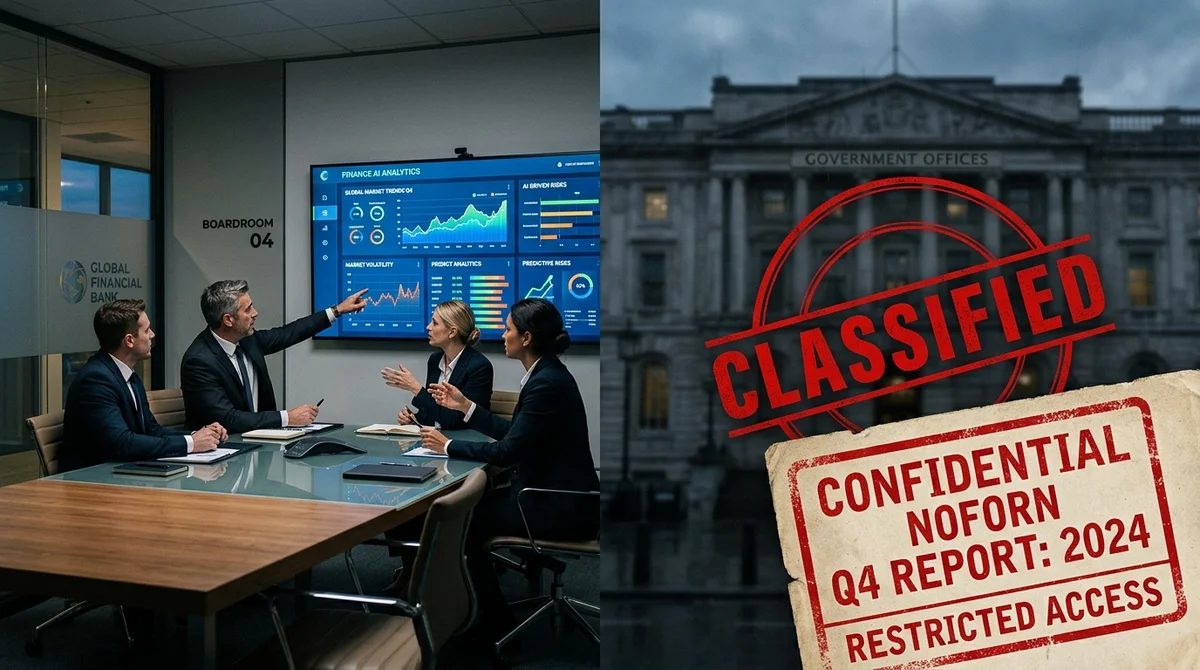
Officials in President Donald Trump's circle are informally encouraging American banks to consider testing Mythos, a new language model from Anthropic, according to TechCrunch. The news surprised the industry immediately: shortly before it, the US Department of Defense had formally put Anthropic on its list of companies posing a supply-chain risk. Two contradictory signals coming almost simultaneously from different parts of the same administration have left the market baffled.
Anthropic is one of the key players in generative AI and the maker of the Claude family of models. Former OpenAI employees led by Dario and Daniela Amodei founded the company in 2021. Anthropic is actively building its enterprise business and has consistently positioned itself as a developer of safe, predictable artificial intelligence. Mythos appears to have been built with the financial sector in mind, where tasks demand high reliability, traceable decisions and compliance with regulatory standards.
The supply-chain risk status the Department of Defense assigned to Anthropic carries serious connotations. Historically, such designations were applied mainly to Chinese technology companies, such as Huawei, ZTE and others, when US authorities had concerns about data security, foreign influence or vulnerabilities in the hardware supply chain. Extending the practice to an American private AI developer is an extraordinary step and has raised many questions. The Pentagon has not provided any specific public grounds for putting Anthropic on the list, which in itself adds to the unease.
That is why the parallel informal promotion of Mythos among banks by officials close to the White House is seen as an extremely contradictory signal. Formally, the two decisions come from fundamentally different agencies with different priorities. Financial regulators view the market through the lens of US competitiveness and technological leadership, while the defense department views it through national security and supply-chain risk management. These priorities often collide directly.
For banks that must make long-term strategic decisions about AI adoption, this uncertainty creates a real problem: it is unclear which signals to trust, and whether today's encouragement will turn into tomorrow's restrictions.
Meanwhile, the American banking sector is moving actively toward broad use of AI. JPMorgan Chase, Bank of America, Goldman Sachs and other large financial institutions are already deploying language models to automate analytics, customer service, risk management and compliance checks. In this context, choosing an AI infrastructure provider is not just a technical decision but a deeply political one. Data leaks, model failures or undesirable behavior in a banking context can have catastrophic regulatory and reputational consequences.
The episode reflects a deeper systemic contradiction in American technology policy. On one side is the drive to secure US leadership in AI, stimulate commercial adoption and not cede the market to competitors. On the other is growing concern over security and the strategic dependence of government and critical institutions on private companies. Anthropic has landed at the epicenter of this conflict.
For the company itself, the situation sends a double signal. Informal backing from Trump's officials could significantly speed its penetration of the financial sector and strengthen its commercial position. But supply-chain risk status at the Pentagon may complicate or entirely block access to government and defense contracts, traditionally an important revenue source for large American technology companies.
Whether banks will follow the officials' informal recommendations and take on the regulatory risk associated with Anthropic will become clear soon. But the very fact of this public split in signals within one administration shows that the regulatory landscape around AI remains deeply unstable, and that any large investment in a specific vendor now inevitably carries a political risk that, until recently, was customarily ignored.
- Nov 2, 2026Karpathy builds a YouTube clone with 6454 videos from Hacker News recommendations in two hours
- Nov 2, 2026Karpathy used Claude to build HackerTube from 6,454 videos recommended on Hacker News
- Nov 2, 2026Arca gives AI agents finance tasks lasting up to 10 days, but leaves the trades to humans
- Nov 2, 2026Anthropic needs to grow revenue 32% a year to cover $850 billion in contracts
Test Frontier LLMs & Autonomous Agents in One Workspace
Run Claude Opus 5.5, GPT-6, Gemini 3.1, and DeepSeek side-by-side in Nomad AI (nomadnet.ai) — unified model routing, deep research, and multimodal workflows under one subscription.
The AI world, distilled — once a week
Seven stories that actually mattered, hand-picked. No noise, no reposts, no press releases.
Done! Check your inbox for a confirmation.