Silicon Valley bankrolls opponents of Alex Bores, author of a tough AI law
Alex Bores, a former Palantir employee, co-authored one of New York's toughest AI laws, and he is now running for Congress. Silicon Valley's answer: millions of dollars backing his opponents. A man who knows the industry from the inside has proved more dangerous to it than any outside critic.
AI-processed from Wired; edited by Hamidun News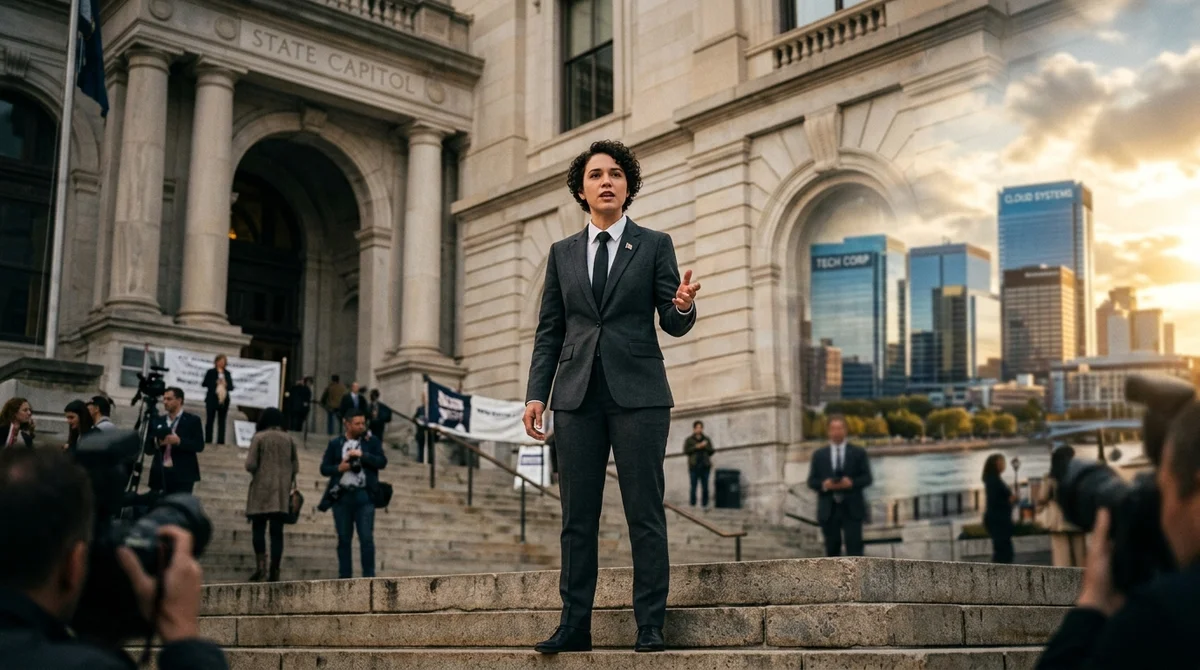
Alex Bores is not a typical politician. A former analyst at Palantir, one of the world's most influential technology companies, he arrived in the New York State legislature with a specific goal: to regulate the industry he had worked in. The result is one of the strictest AI laws in the US. Now Silicon Valley is pouring millions of dollars into keeping him out of Congress.
Bores's story is one of conflict between Silicon Valley and attempts by the state to rein it in. Unlike most legislators, he understands the industry from the inside: he knows how algorithms work, how decisions about automation are made, and which risks are real rather than invented for political speeches. That knowledge helped him push through a law that many large players consider too harsh.
The New York AI law, which Bores helped shape, requires companies to disclose information about algorithms involved in significant decisions, such as hiring, lending and housing rentals. The law sets up audit mechanisms and introduces real liability for violations. This is not a declaration of intent: the penalties are spelled out specifically.
The industry's reaction was predictable, and large in scale. Major technology companies and lobbying groups tied to them began funding campaigns against Bores, who is now running for the US House of Representatives. According to Wired, the donors include people from the very core of Silicon Valley. The logic is simple: if Bores reaches Congress with the same approach that worked in New York, the threat spreads across the whole country.
Notably, Bores is not an opponent of technology. He does not call for banning AI and does not play on fear of robots. His position is subtler: technology should be accountable to society, not only to shareholders. That is exactly why the argument is so inconvenient: it comes from someone who speaks the industry's language.
The Bores situation exposes a systemic problem in American politics: a catastrophic shortage of legislators who understand how modern technology works. Most members of Congress see AI as an abstraction, not as a system with a concrete architecture and concrete consequences. Bores is a rare exception, which makes him a valuable resource to some and a dangerous threat to others.
Silicon Valley's opposition speaks for itself: when an industry spends millions to block a particular candidate, it suggests he has touched on something that really matters. If Bores wins, he will bring to Washington not just ideas but practical experience. If he loses, the industry will have confirmation that money in politics still decides outcomes. Either way, this story has already become a marker: the battle over the rules of the game in the AI era will be tough, and insiders are the most dangerous players in it.
Test Frontier LLMs & Autonomous Agents in One Workspace
Run Claude Opus 5.5, GPT-6, Gemini 3.1, and DeepSeek side-by-side in Nomad AI (nomadnet.ai) — unified model routing, deep research, and multimodal workflows under one subscription.
The AI world, distilled — once a week
Seven stories that actually mattered, hand-picked. No noise, no reposts, no press releases.
Done! Check your inbox for a confirmation.