Antioch raises $8.5M: startup wants to become Cursor for robot developers
Startup Antioch has raised $8.5M in seed funding to build simulation tools for robot developers. The company wants to become Cursor for physical AI by embedding AI directly into the design and training process for robotic systems. The analogy holds: Cursor radically changed software development, and Antioch intends to do the same for the world of physical machines. Its potential audience is hundreds of thousands of engineers worldwide.
AI-processed from TechCrunch; edited by Hamidun News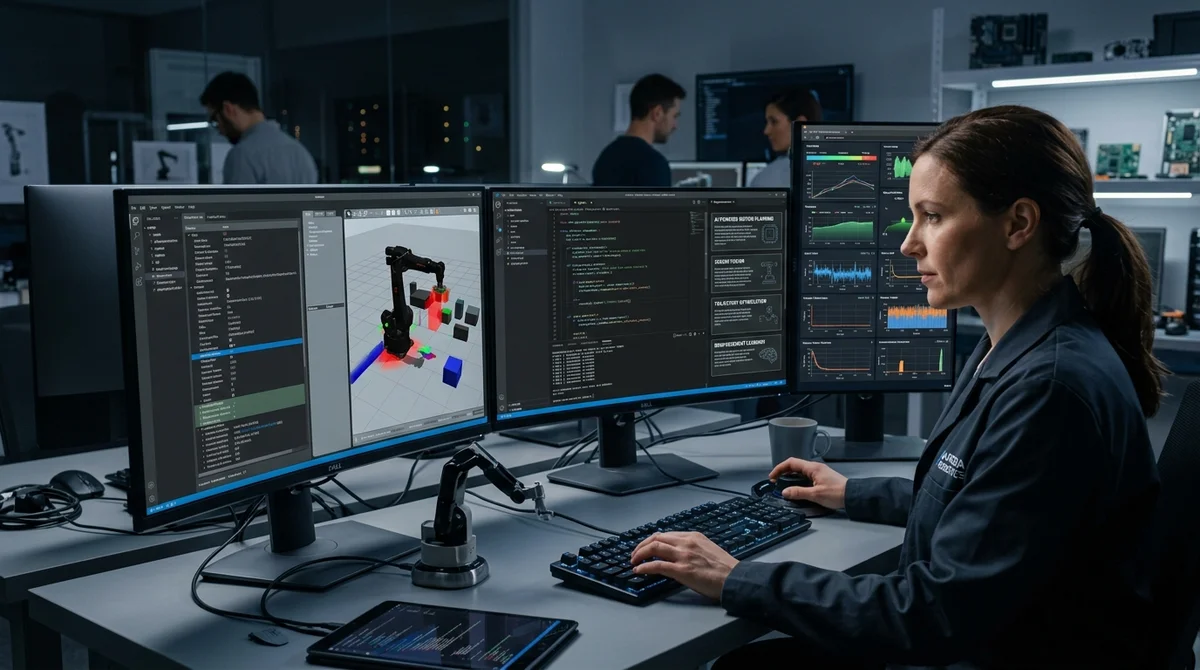
Antioch has raised $8.5 million in a seed round — the funds will go toward creating simulation tools for a new generation of robot developers. The company positions itself as Cursor for physical AI: the same principle of transforming a working tool through embedded AI, only not for programmers writing code, but for engineers building physical machines.
The analogy with Cursor is intentional and precise. Over several years, Cursor has transformed from an obscure code editor into one of the fastest-growing tools in the history of the technology industry. Its secret is simple: AI is built directly into the workflow, not as an optional add-on.
A developer doesn't switch between tabs and tools — context, suggestions, code generation, and refactoring happen right where the work is being done. Antioch sets out to reproduce this effect for the world of physical machines: to rethink how engineers design, test, and train robotic systems. Physical AI is one of the hottest directions of 2026.
After the rise of language models, venture capital and large technology companies shifted their attention to systems that operate in the real world: industrial robots, autonomous vehicles, humanoid platforms, and smart warehouses. Figure AI, Physical Intelligence, Boston Dynamics, and dozens of other companies have attracted several billion dollars collectively over the past two years. The market is hot — but the infrastructure layer of tools for robot developers is still only being formed.
The key problem when creating robotic systems is the gap between simulation and reality, the so-called sim-to-real gap. A model that works flawlessly in a virtual environment often behaves unpredictably when exposed to the physical world — different materials, different lighting, unexpected vibration. It is this gap that Antioch intends to narrow.
Next-generation tools should allow developers to iterate faster, more accurately reproduce the physics of the real world, and reduce the overall cost of developing robotic systems. Traditional simulation environments — Gazebo, NVIDIA Isaac Sim, MuJoCo, PyBullet — are powerful and well-developed, but require significant expertise and time to master. An engineer transitioning from an academic setting to a startup often spends weeks on setup and configuration instead of developing the system itself.
Antioch is betting on accessibility and speed: if their tool works as intended, developers will be able to focus on what really matters. A seed round of $8.5 million is a solid starting amount for a niche with high infrastructure requirements.
Real-time physics simulation, integration with modern ML frameworks, support for different robot form factors — all of this requires serious investment in team and technology. NVIDIA has been actively investing in the segment for several years through its Isaac platform, Google DeepMind is working on simulation for reinforcement learning. Space for independent developer tools remains open.
Antioch is a sign that the infrastructure layer of physical AI is beginning to form in earnest. Language AI got its Cursor, GitHub Copilot, and LangChain — and this radically accelerated the pace of development. Physical AI doesn't have such tools yet.
Whoever creates the standard working tool for robot developers before everyone else will gain a structural advantage in the market that is just beginning to open up.
Need AI working inside your business — not just in your newsfeed?
I build production AI for companies — custom CRM, internal tools, autonomous agents, workflow automation. Owned by you, shaped to your process, no per-seat tax. Built by Zhemal Khamidun, CPO of AlpinaGPT (AI platform, 6,000+ users).
The AI world, distilled — once a week
Seven stories that actually mattered, hand-picked. No noise, no reposts, no press releases.
Done! Check your inbox for a confirmation.