Schematik, the "Cursor for hardware": Anthropic weighs an investment in the startup
Schematik aims to do for electronics engineers what Cursor did for programmers: it lets people design physical devices by talking to an AI, without deep knowledge of circuit design. You describe the task, and the model generates the schematic, the firmware, and the board layout. The approach has been dubbed "vibe coding for hardware." Anthropic is considering an investment in the startup.
AI-processed from Wired; edited by Hamidun News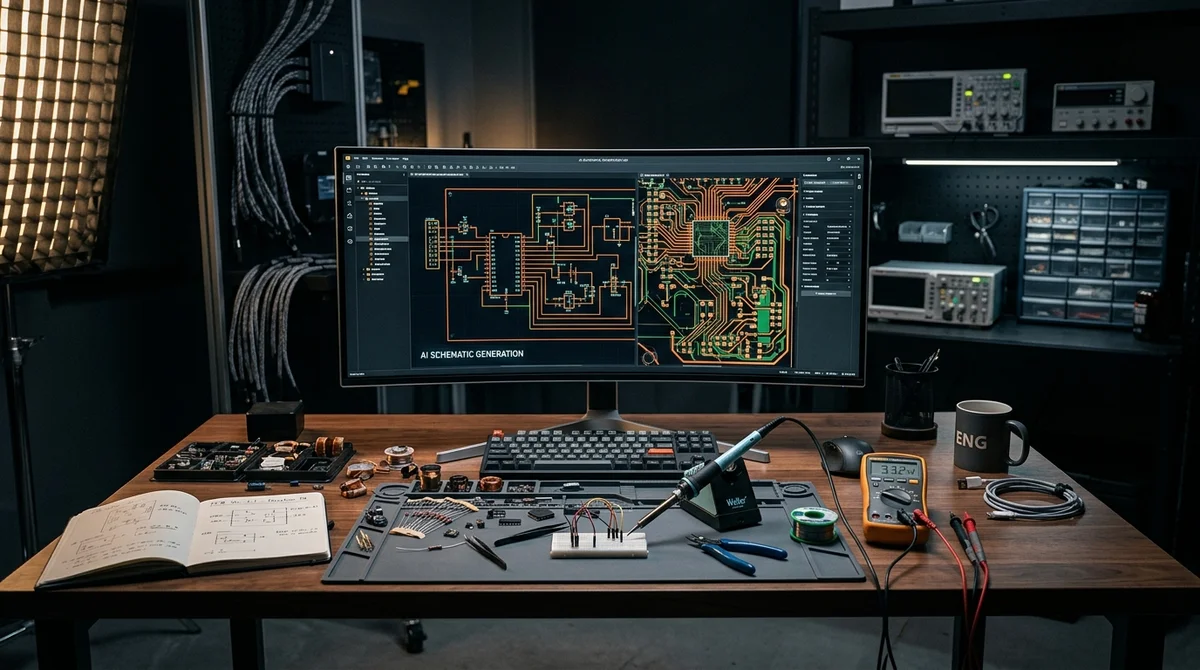
Programmers are still getting used to AI writing their code, and the startup Schematik is already pushing further. Its tool lets users design physical devices in "vibe coding" mode: they describe the result they want in natural language instead of working through the circuit design by hand. According to Wired, Anthropic is interested in investing in the company, which would make it one of the first major bets on AI tools for hardware development.
The Cursor comparison is deliberate. Cursor has become the defining symbol of AI-assisted software development: the developer describes a task, the editor proposes a solution, and the code changes in real time. Schematik applies the same model to electronics, covering board design, firmware, and schematics. The founders' goal is to make all of this, which used to require an engineering degree and specialized tools like KiCad or Altium, accessible through a conversation with an AI model. In practice, that means someone without specialized knowledge could describe the device they need and get a finished design.
The term "vibe coding" was coined by researcher Andrej Karpathy in early 2025. It describes a workflow where a person doesn't write code line by line but states an intent instead: "make the LED blink every second" or "add a temperature sensor with output over UART." The AI generates a technical solution, and the developer reviews and adjusts it. In software, this is already standard practice. For hardware, it is a fundamentally new step: the stakes are higher, and mistakes have physical consequences.
Hardware development has traditionally been seen as far more complex and risky than writing software. A bug in code can be fixed with an update. A mistake in a schematic or firmware can mean a fried controller, a smoking inductor, or a device that has to be physically rebuilt from scratch. That is why the question of whether Schematik will "blow up" a device, a caveat the Wired authors raised themselves, is a serious one. Reliability is critical for a hardware AI assistant: generating working circuits is harder than generating a working Python script.
Anthropic's interest in the startup fits a broader company strategy. Anthropic has been aggressively pushing Claude into developer tools: IDE integrations, the MCP protocol for connecting AI to external systems, and agentic workflows for complex tasks. Backing Schematik would give Claude a presence in the hardware developer ecosystem, a niche that none of the major AI players has claimed yet. OpenAI is betting on programming and content, Google on enterprise solutions. The hardware development world remains open.
The market for AI tools aimed at electronics engineers is still in its infancy. Today, startups are trying to automate individual parts of the process: generating C/C++ firmware, selecting components from catalogs, and automatically checking schematics for errors. Judging by its positioning, Schematik is aiming higher: making the full device design cycle accessible without deep specialization. If it works, the potential audience is huge: makers, hardware startups, DIY enthusiasts, researchers, and engineering students.
Schematik's arrival and Anthropic's interest signal that the line between software and hardware keeps blurring. AI is steadily moving into increasingly physical layers of the tech stack: from code to circuits, and from circuits to devices. How quickly this shift will reach mass production remains an open question, but the direction is clear.
- Nov 1, 2026Local models lose to Opus and Codex: 0.21 on a MacBook versus 1.00 for Codex
- Nov 1, 2026Kimi scores 96.2% on a 1C database analytics test and emerges as a fallback if Claude access is blocked
- Nov 1, 2026OpenAI Rewrites GPT Behavior Rules: Five Values and a Chain of Command
- Nov 1, 2026Google admits AI Mode cuts search revenue, shares fall 15%
Build & Ship Production AI Agents Without Boilerplate Code
Start your free 72-hour trial at Hamidun Academy (academy.hamidun.com) — interactive lessons on Claude Code & Cursor, live Tech Radar, and production agent templates.
The AI world, distilled — once a week
Seven stories that actually mattered, hand-picked. No noise, no reposts, no press releases.
Done! Check your inbox for a confirmation.