Vibecoding and Valera: How a Developer Tried to Bypass Code
Valera's story is a story familiar to many developers who are tired of routine and searching for new, more efficient ways to work. Valera, an ordinary programmer, once heard about vibe coding – a concept promising the creation of interfaces, APIs, and even databases without writing a single line of code. Intrigued by this prospect, he decided to give it a try, armed with a tool called Cursor. Vibe coding, at its core, represents the use of AI to generate code based on text requests (prompts). The idea seems simple and attractive: instead of manually writing hundreds of lines of code, it is enough to describe the desired result, and the AI will generate everything needed. However, like many other automation promises, reality proved to be somewhat more complex. Valera's first attempts were unsuccessful.
AI-processed from Habr AI; edited by Hamidun News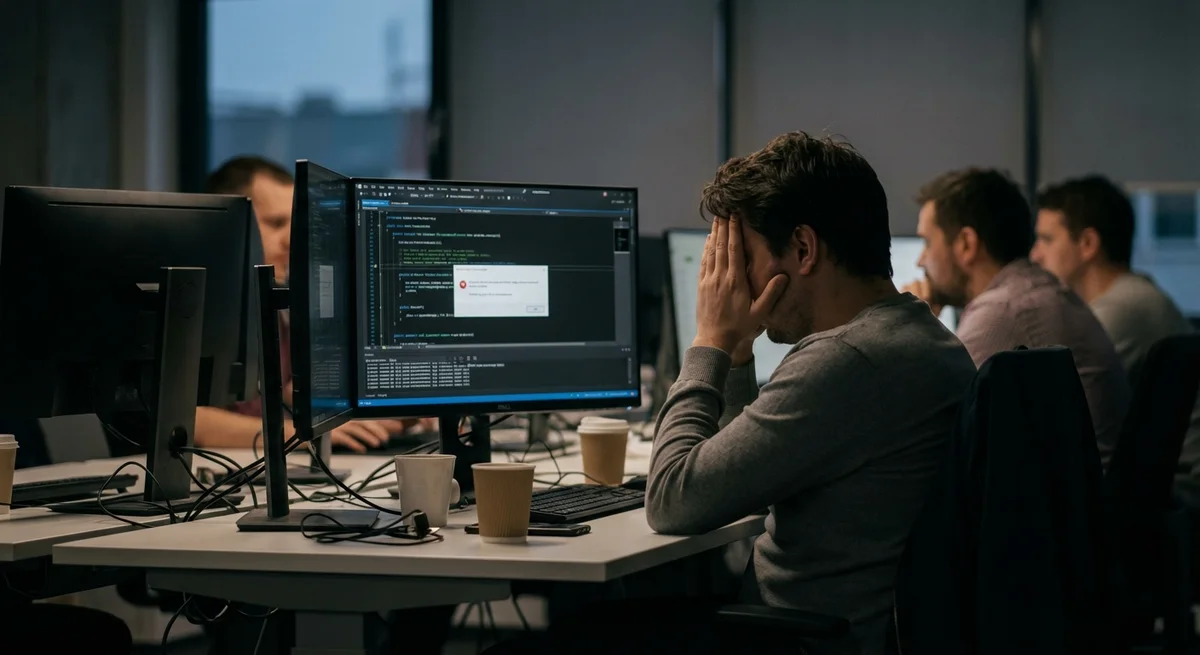
Valera's story is a story familiar to many developers who are tired of routine and searching for new, more efficient ways to work. Valera, an ordinary programmer, once heard about vibe coding – a concept promising the creation of interfaces, APIs, and even databases without writing a single line of code. Intrigued by this prospect, he decided to give it a try, armed with a tool called Cursor.
Vibe coding, at its core, represents the use of AI to generate code based on text requests (prompts). The idea seems simple and attractive: instead of manually writing hundreds of lines of code, it is enough to describe the desired result, and the AI will generate everything needed. However, like many other automation promises, reality proved to be somewhat more complex.
Valera's first attempts were unsuccessful. Prompt after prompt produced errors or generated code that required significant manual refinement. Cursor, instead of simplifying the task, only added new levels of complexity. Valera began to become disappointed, realizing that vibe coding is not a magic wand, but rather another tool that requires deep understanding and skillful application.
When Valera was already ready to give up and return to the familiar approach to development, an ancient Cursor appeared to him – Lucius Papirius Cursor. This metaphorical encounter symbolizes the realization that behind any new tool stand fundamental principles and knowledge that must be mastered. Valera understood that vibe coding is not simply code generation, but rather a new way of thinking that requires the ability to clearly formulate tasks and understand the logic of how programs work.
Valera's story emphasizes the importance of a critical approach to new technologies. Vibe coding, like any other AI-based tool, can be a powerful assistant, but it will not replace the fundamental knowledge and skills of a developer. Successful application of vibe coding requires deep understanding of programming principles, the ability to analyze and debug code, and the ability to clearly formulate tasks for the AI.
In conclusion, Valera's story is not only an amusing account of an attempt to master a new technology, but also a reminder that behind any progress stands knowledge, experience, and perseverance. Vibe coding may change the way development is done, but it does not eliminate the need for qualified and experienced programmers.
Want to stop reading about AI and start using it?
AI News is a curated feed of AI/tech news. Hamidun Academy teaches you to use AI systematically in your work.
The AI world, distilled — once a week
Seven stories that actually mattered, hand-picked. No noise, no reposts, no press releases.
Done! Check your inbox for a confirmation.