AI and Trump Dominate the Agenda at Davos
At the World Economic Forum in Davos, artificial intelligence and the prospect of Donald Trump returning to big-time politics were the main topics. Attendees are debating AI's impact on the economy and its geopolitical consequences. The two themes, seemingly unrelated, set the tone of discussions on the sidelines and shaped expectations for the near future.
AI-processed from MIT Technology Review; edited by Hamidun News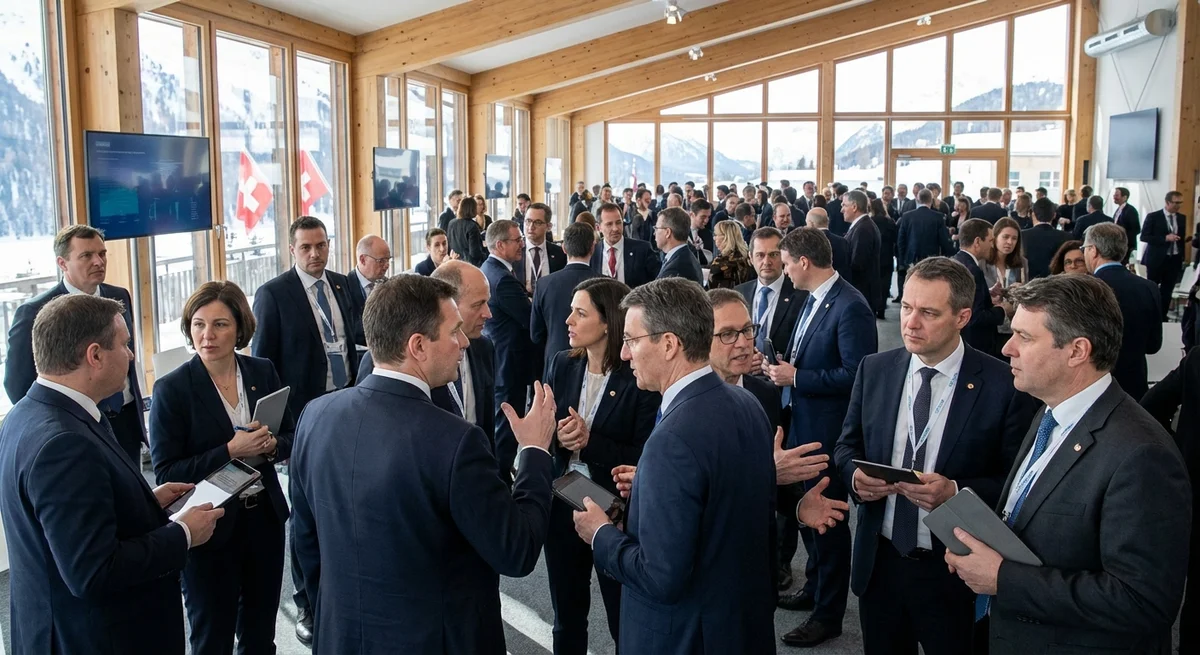
The World Economic Forum in Davos, the traditional meeting place of world leaders, came under a double influence this year: artificial intelligence and the prospect of Donald Trump's return. These two seemingly unrelated topics dominated the forum's corridors, setting the tone of discussions and shaping expectations for the near future.
Davos has always been a barometer of global trends, reflecting the most pressing challenges and opportunities facing humanity. Last year, energy security and inflation were the focus. This year, however, artificial intelligence took center stage, eclipsing many other topics. That is hardly surprising given the rapid development of AI technologies and their potential impact on every sphere of life, from the economy and business to education and healthcare.
The AI discussions in Davos had many sides. On one hand, there was optimism about using AI to tackle global problems such as climate change, poverty and the development of new drugs. On the other, participants voiced concern about the potential risks of uncontrolled AI development, including job losses, deepening inequality and even existential threats to humanity. Particular attention went to AI ethics and regulation, and to the need for international standards and agreements in this area.
Alongside AI, the prospect of Donald Trump's return to big-time politics was actively discussed in Davos. The question drew a mixed reaction from participants. Some hoped that Trump's return could bring stability and predictability to international relations. Others, by contrast, feared it could lead to more protectionism, trade wars and further destabilization of the global order.
The influence of these two factors, AI and Trump, on the global economy and politics is hard to overstate. Artificial intelligence is already reshaping the business landscape, creating new opportunities and challenges for companies of all sizes. Trump's return could lead to a revision of trade agreements, shifts in geopolitical alliances and sharper competition between countries. In this situation, it is critical that world leaders find common ground and develop effective strategies for managing these complex, interconnected processes.
In conclusion, the World Economic Forum in Davos once again confirmed its role as a platform for discussing the most important global problems. Artificial intelligence and the prospect of Donald Trump's return were the main topics of the year, reflecting the deep changes taking place in the world. Managing these challenges successfully will require wisdom, foresight and a willingness to cooperate from world leaders.
- Oct 31, 2026Author puts his script before an AI jury: the verdict cost 850 thousand tokens
- Oct 31, 2026SciGame Tests Five LLM Agents: Familiar Formulas Get in the Way of Finding Altered Laws
- Oct 30, 2026Agent traffic on Zocdoc is up 30x since July, and ChatGPT faces two health lawsuits
- Oct 29, 2026OvisOCR3: an 0.8B-parameter model that reads documents better than specialized systems
Test Frontier LLMs & Autonomous Agents in One Workspace
Run Claude Opus 5.5, GPT-6, Gemini 3.1, and DeepSeek side-by-side in Nomad AI (nomadnet.ai) — unified model routing, deep research, and multimodal workflows under one subscription.
The AI world, distilled — once a week
Seven stories that actually mattered, hand-picked. No noise, no reposts, no press releases.
Done! Check your inbox for a confirmation.