Descript and OpenAI: Scaling Multilingual Video Dubbing
Descript has integrated OpenAI models to power multilingual video dubbing at scale. The system tackles one of the hardest problems in localization: rather than simply translating text, it optimizes the translation to fit the timing and rhythm of the original speech. The result is dubbed audio that sounds natural in any language, without the usual sync drift or awkward pauses. The technology could dramatically cut the cost of professional video localization and open global markets to content creators.
AI-processed from OpenAI Blog; edited by Hamidun News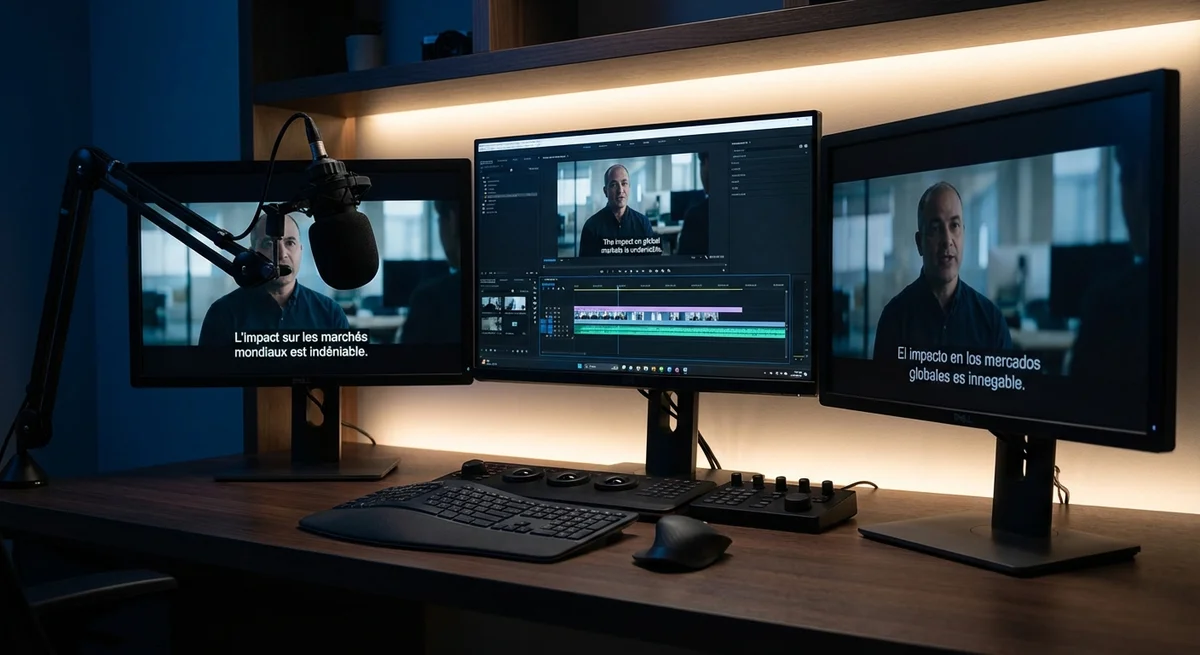
The language barrier remains one of the biggest obstacles to distributing video content globally. Professionally dubbing a single hour of video into one language can cost thousands of dollars and take weeks. Descript, known for its innovative video editor, has unveiled a solution that promises to upend those economics: multilingual dubbing at scale, powered by OpenAI models.
Descript has long been one of the most technically advanced tools for working with video and podcasts. The platform lets you edit video through text: cut words from the transcript, and the matching footage disappears from the video. Now the company has taken the next logical step. If you can edit speech like text, why not translate it just as easily? The OpenAI integration lets Descript automatically dub videos into many languages, at a quality level that until recently seemed out of reach for machine translation.
The core technical challenge in multilingual dubbing isn't the translation itself. Modern language models handle translation reasonably well. The problem is that phrase length varies fundamentally between languages.
A simple English sentence might run twice as long in German or a third as long in Chinese. Translate the text and voice it as-is, and the result falls badly out of sync with the video: the speaker's lips keep moving after the audio has ended, or the audio spills over into the next scene. That's why professional dubbing has always required manual script adaptation, with translators trading accuracy for timing.
Descript solves this algorithmically: the OpenAI-based system optimizes the translation for two parameters at once — semantic accuracy and timing alignment with the original. In effect, the model searches for a phrasing that conveys the meaning as accurately as possible while still fitting the required duration.
For the content creation industry, this could be a turning point. YouTubers, education platforms, corporate training departments, and marketing teams all need localization, but far from all of them can afford a professional dubbing studio. Descript's automated solution democratizes access to multilingual localization. A creator in Russia will be able to get English, Spanish, or Japanese versions of a video in minutes. It works the other way too: English-language content will become more accessible to Russian-speaking audiences without waiting for enthusiasts to produce amateur translations.
It's important to understand the context of this partnership. OpenAI is actively building out an ecosystem of B2B applications for its models, and Descript is a telling example of how foundation language models turn into specialized products. OpenAI provides the foundation — powerful models for generating and understanding text — while partners like Descript build targeted tools on top, backed by deep domain expertise. This collaboration model is becoming the industry standard, and it explains why OpenAI's valuation keeps climbing: the company monetizes not only ChatGPT subscriptions but also API access for thousands of integrations like this one.
Of course, the technology has its limits. Automated dubbing can't yet capture every nuance of an actor's performance, emotional intonation, or cultural references that require a human grasp of context. For Hollywood blockbusters and premium content, professional voice actors will remain irreplaceable for a long time. But for a huge swath of content — training videos, webinars, podcasts, corporate presentations — automated dubbing is already good enough to be useful.
We're watching a new standard take shape: video content will be created once and instantly adapted for a global audience. If Descript and OpenAI manage to bring quality up to a level indistinguishable from professional dubbing — and the pace of progress in language models suggests that's a matter of the next few years — the very idea of a language barrier in digital content may become a thing of the past. And that is arguably one of the most tangible examples of AI changing not some abstract future, but the everyday work of millions of content creators today.
- Nov 2, 2026NC State's AICG Framework Cuts MAE by 50.3% on Math Answer Grading
- Nov 2, 2026We Audited 929 Automations at Alpina: What Corporate AI Training Should Look Like in 2026
- Nov 2, 2026I Interrogated 6 AI Models About Myself Through a Procurement Manager's Eyes: Amazon, Esoterica, 'Telo Hudelo' and 5 Holes We Closed in a Day
- Nov 2, 2026TJ Digital: 23% of AI-cited pages open with a direct answer, versus 14% of uncited ones
Test Frontier LLMs & Autonomous Agents in One Workspace
Run Claude Opus 5.5, GPT-6, Gemini 3.1, and DeepSeek side-by-side in Nomad AI (nomadnet.ai) — unified model routing, deep research, and multimodal workflows under one subscription.
The AI world, distilled — once a week
Seven stories that actually mattered, hand-picked. No noise, no reposts, no press releases.
Done! Check your inbox for a confirmation.