SoftBank Takes On Record $40 Billion Loan for Stake in OpenAI
SoftBank Group is raising a record loan of up to $40 billion to finance its stake in OpenAI. It is the largest dollar-denominated loan in the Japanese conglomerate's history. The deal shows the scale of Masayoshi Son's bet on artificial intelligence. After the setbacks at Vision Fund, he is making an unprecedented financial wager on the maker of ChatGPT. Details of the loan agreement have not been disclosed, but Bloomberg's sources confirm that most of the money is earmarked for the OpenAI investment.
AI-processed from Bloomberg Tech; edited by Hamidun News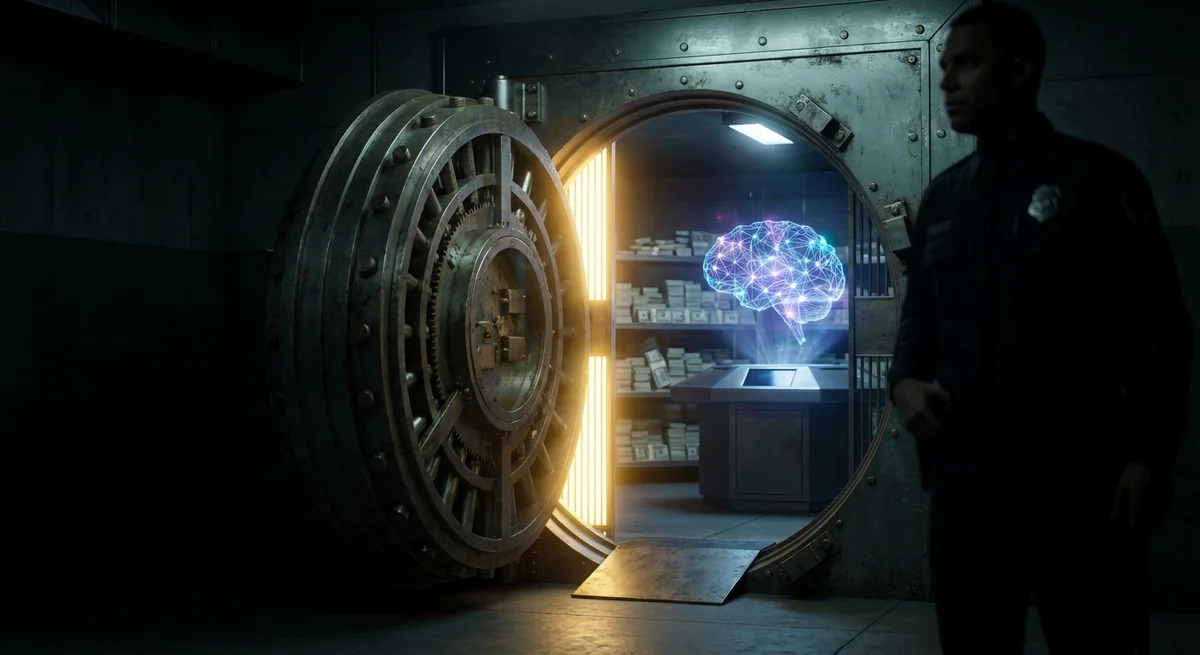
Forty billion dollars. That is how much SoftBank Group is prepared to borrow to take a stake in OpenAI. It is not a typo: it is the largest dollar loan in the history of the Japanese technology conglomerate. Bloomberg reported the news, citing sources familiar with the negotiations. According to those insiders, nearly the entire sum will go toward financing SoftBank's stake in the company behind ChatGPT.
The context helps explain the scale. Under Masayoshi Son, SoftBank has spent years building its strategy around artificial intelligence. The first Vision Fund, at about $100 billion and launched in 2017, was meant to be the largest technology investment fund in history. It was, but its results were far from triumphant. Losses on WeWork, failures among several portfolio companies and market volatility led many analysts to doubt Son's investing instincts. The second Vision Fund effectively stopped active investing altogether. But the generative AI boom, which began with the release of ChatGPT in late 2022, breathed new life into SoftBank's ambitions, and Son is now making a bet that could determine the future of his empire.
A $40 billion loan is striking even by the standards of the world's biggest deals. For comparison, it is on par with the annual GDP of a small European country and exceeds the market capitalization of most companies in the S&P 500. The fact that the loan is denominated exclusively in dollars says a lot: SoftBank evidently expects dollar returns from the investment and wants to minimize currency risk. The details of the agreement, including the makeup of the bank syndicate, interest rates, terms and covenants, have not been disclosed. But the lenders' willingness to consider a sum of this size points to serious intent and a certain level of confidence in SoftBank's collateral base.
The target of the investment deserves separate attention. In recent years OpenAI has gone from a nonprofit research lab to one of the most valuable private companies in the world. By the latest estimates, its value is approaching $300 billion, and some funding rounds have been priced at even more aggressive multiples. The company is restructuring, moving from a "capped-profit" model to a more traditional commercial form, which opens the door to large institutional investors. SoftBank is operating in precisely that window of opportunity.
The risks of the deal, however, are as large as its scale. For all its technological strength, OpenAI remains a company with enormous spending on computing power and research. Competition among large language models intensifies every quarter: Google with Gemini, Anthropic with Claude, Meta with its open Llama models, and Chinese players such as DeepSeek all want a share of a market that is still taking shape. Monetizing generative AI is far from a solved problem, and even OpenAI's leadership does not guarantee that the company can generate profit sufficient to justify a valuation in the hundreds of billions of dollars.
For SoftBank, the OpenAI bet is not just a financial investment but an existential choice. Masayoshi Son has repeatedly said he believes the era of "superintelligence" is coming and wants his company at the center of that transformation. Borrowing on this scale means SoftBank is quite literally pledging its financial future to that vision. If OpenAI meets expectations and becomes a platform company on the level of Google or Microsoft, Son will go down as the most farsighted investor of his generation. If not, the consequences for SoftBank and its lenders will be catastrophic.
The deal sets a new standard for the whole industry. When one of the world's largest technology investors is ready to borrow $40 billion for a stake in an AI company, it signals to the market that the race for AI leadership is entering a phase where the stakes are sums that recently seemed unthinkable. The only question is whether this bet proves brilliant or becomes the most expensive lesson in the history of corporate finance.
*Meta has been designated an extremist organization and is banned in Russia.
- Nov 2, 2026Meta's Muse assistant keeps dossiers on loved ones and gets root on Ubuntu by default
- Nov 1, 2026Local models lose to Opus and Codex: 0.21 on a MacBook versus 1.00 for Codex
- Nov 1, 2026Kimi scores 96.2% on a 1C database analytics test and emerges as a fallback if Claude access is blocked
- Nov 1, 2026OpenAI Rewrites GPT Behavior Rules: Five Values and a Chain of Command
Ship AI Faster with Founders, Engineers & Weekly Architecture Reviews
Inside Vibe Club (hamidun.com/club) — weekly live masterminds with Zhemal Khamidun, Tech Radar, full LMS access, and 370+ production Claude Code skills.
The AI world, distilled — once a week
Seven stories that actually mattered, hand-picked. No noise, no reposts, no press releases.
Done! Check your inbox for a confirmation.