Antiverse raises $9.3M for AI antibody discovery out of Cardiff
Cardiff-based biotech startup Antiverse has raised $9.3M in a Series A round led by Soulmates Ventures. The company is building an AI platform to speed up the discovery of therapeutic antibodies, a key component of modern drugs for cancer, autoimmune diseases and infections. The funds will go toward expanding its computing platform and moving its lead programs to preclinical in vivo studies. Innovation Investment Capital, DOMiNO Ventures and several existing investors also took part in the round.
AI-processed from TNW; edited by Hamidun News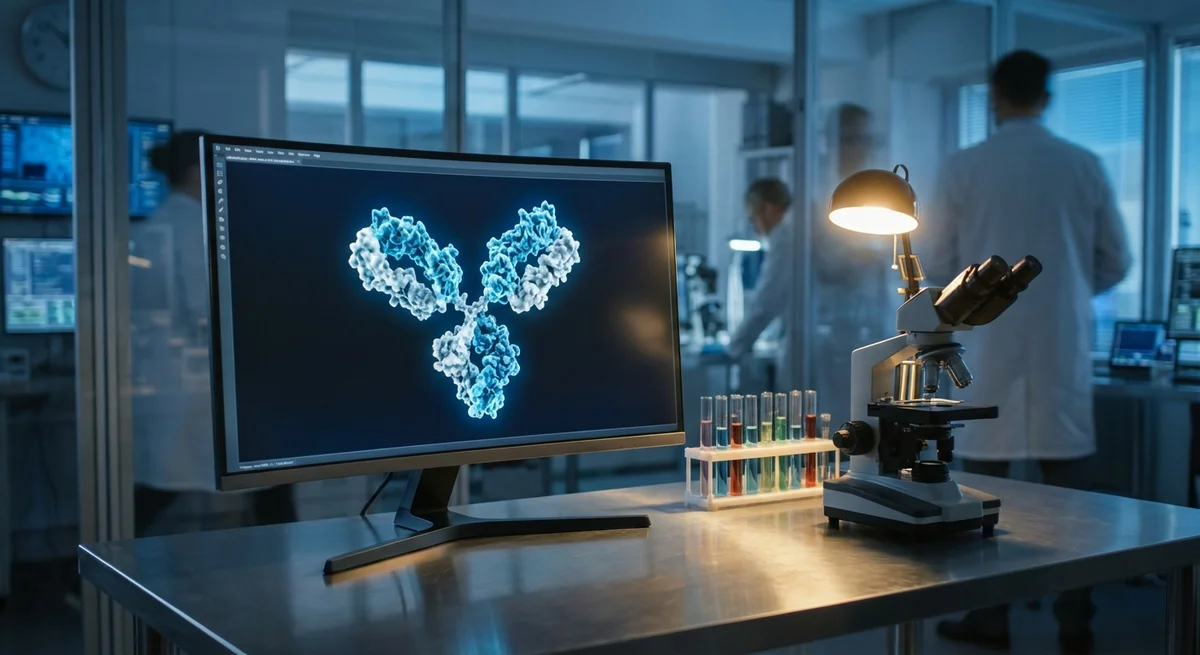
Cardiff is not the first city that comes to mind when people talk about cutting-edge biotech. London, Cambridge and Boston are the usual dots on the map of pharmaceutical innovation. But it is from the Welsh capital that a small company, Antiverse, intends to overhaul one of the most expensive and slowest processes in modern medicine: the development of therapeutic antibodies. This week the startup announced the close of a $9.3M Series A, giving it the resources to move from promising technology to real preclinical programs.
The round was led by Soulmates Ventures, joined by Innovation Investment Capital and DOMiNO Ventures, as well as existing investors DBW and Kadmos Capital. For a company founded in Cardiff and working at the intersection of machine learning and molecular biology, it is an important milestone: the funds will let it scale its computing platform and take its lead candidate molecules to in vivo testing, that is, testing in living organisms.
To see why Antiverse's work matters, it helps to remember that antibodies underpin a huge segment of modern pharmaceuticals. Monoclonal antibodies are used to treat cancer, autoimmune diseases, infections and many other conditions. The global market for therapeutic antibodies is estimated at more than $200B and keeps growing. Yet the traditional development process remains painfully slow and expensive. Finding an antibody that binds precisely to the right target while also being safe and stable can take years of lab work, and the early stages cost tens of millions of dollars.
This is where artificial intelligence comes in. Antiverse's platform uses generative machine learning models to design antibodies de novo, that is, from scratch, without having to sift through billions of variants in a test tube. The company's algorithms are trained on datasets of protein structures and antigen-antibody interactions, which lets them predict which amino acid sequences are most likely to yield a molecule with the desired properties. In effect, the AI takes over the work that once required endless cycles of experimental screening and compresses it into a computational problem.
Antiverse is far from the only player in this field. Over the past two to three years, AI-driven design of biological molecules has seen a real boom. Companies such as Absci, Generate Biomedicines and BigHat Biosciences have raised hundreds of millions of dollars for similar tasks. Google DeepMind's AlphaFold radically changed the understanding of protein structure, and large pharmaceutical companies, from Sanofi to Amgen, are actively striking partnerships with AI startups. Against that backdrop, $9.3M looks modest, but for the Cardiff company it signals serious intent and, more importantly, validation of the technology's viability by professional investors.
The geographic context deserves separate attention. The UK has been consistently building itself up as a leading hub at the intersection of AI and life sciences. London's Francis Crick Institute, the Cambridge cluster and now Welsh startups: the ecosystem is expanding beyond its traditional centers. For Cardiff, Antiverse's success could act as a catalyst: attracting venture capital to the region sets a precedent and builds infrastructure for the next companies.
Still, the main question remains open. Computational antibody design is an elegant idea, but the real test comes only when the designed molecules work in a living organism. The leap from a computer model to successful preclinical trials is precisely the barrier that separates a promising technology from an actual drug. Antiverse now has the funding for that critical step, and it is the in vivo results that will show how accurate its AI platform's predictions are.
If all goes well, the Cardiff company could become one more piece of evidence that the future of pharmaceuticals is built not only in labs with pipettes but also on servers with GPUs. And for the industry as a whole, each successful case of AI-driven antibody design brings closer the moment when creating a new biologic drug will take not a decade but a handful of years.
- Nov 2, 2026Bun creator uses Claude Code to port 750K lines from Zig to Rust in 11 days
- Nov 2, 2026The Verge reviewer builds a $50 Meta Muse Charm alternative with Claude Code
- Nov 1, 202616 models tested on 7 search tools: Exa averaged 10.5 out of 14, SearXNG about 3
- Nov 1, 2026Google's StreamVibe video agent beats other models by 10.7% on response timing and quality
Ship AI Faster with Founders, Engineers & Weekly Architecture Reviews
Inside Vibe Club (hamidun.com/club) — weekly live masterminds with Zhemal Khamidun, Tech Radar, full LMS access, and 370+ production Claude Code skills.
The AI world, distilled — once a week
Seven stories that actually mattered, hand-picked. No noise, no reposts, no press releases.
Done! Check your inbox for a confirmation.