Google teaches Circle to Search to recognize multiple objects in a single image
Google has updated its visual search feature Circle to Search to recognize and explore several objects in a single image at once. Previously, users could circle only one item at a time; now the system identifies all the key elements in a photo on its own. The change is especially useful for finding clothing, furniture and other products: open any image, and Circle to Search offers information on every visible item. The update is available on Android devices that support the feature.
AI-processed from Google AI Blog; edited by Hamidun News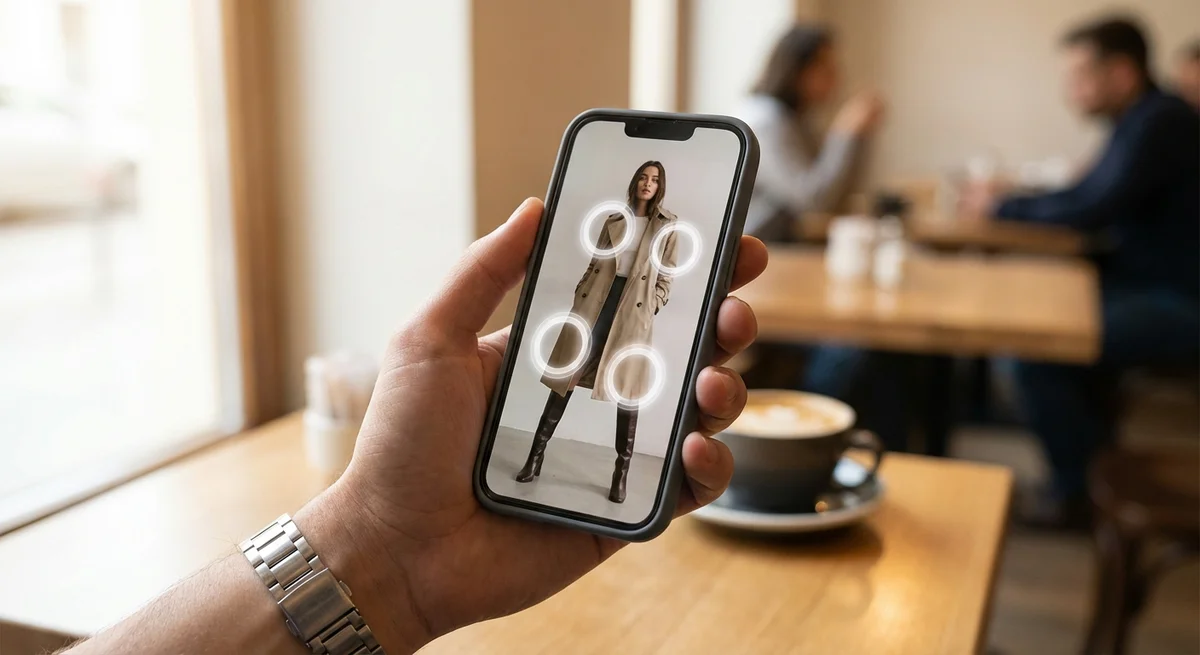
When Google first introduced Circle to Search in early 2024, the idea seemed deceptively simple: circle anything on your smartphone screen and instantly get search results. Two years later, the company is still developing the concept, and the latest update makes the feature considerably smarter. It can now analyze several objects in a single image at once, so users no longer have to circle each item separately.
To see why this matters, it helps to recall how visual search has worked until now. The classic model was sequential: see something interesting, circle it, get a result. If you liked a model's jacket, her sneakers and the bag in the background in an Instagram photo, you had to repeat the procedure three times. That created real friction, especially when someone is browsing inspirational content and wants to quickly identify everything that caught their eye. The updated Circle to Search tackles the problem at its root: the system recognizes all significant objects in the frame and offers information on each of them.
Technically, this reflects the evolution of Google's multimodal models. The company does not disclose details of the architecture, but the logic is clear: instead of processing a single selected fragment of an image, the system now segments the entire scene, identifies individual objects, classifies them and runs a search query for each one. That demands substantially more computing resources, but Google has evidently optimized the process enough to keep it fast on users' devices. Part of the processing probably happens on the server and part locally, using the neural processors of modern chips.
The most obvious use case is shopping. Google effectively turns any photograph into a store window. Spot a stylishly furnished room on Pinterest, and Circle to Search shows where to buy each piece of furniture. Come across a street-style photo, and you get links to similar clothing, shoes and accessories. This is not just a convenience; it is direct monetization of visual content through Google's Shopping ad ecosystem. The company is building the shortest path from inspiration to purchase, and each such transition can potentially generate ad revenue.
For the e-commerce industry, the consequences are serious. Platforms like Pinterest and Instagram have spent years building their own visual shopping tools, integrating product tags and affiliate links. Google offers a universal solution that works on top of any app at the operating system level. That undermines the social platforms' monopoly on visual commerce and redirects shoppers' attention back to Google's search ecosystem. For brands, it means high-quality visual content matters even more: if your product looks good in photos, Google will find it on its own and offer it to buyers.
There is also a broader context. Circle to Search is part of Google's strategy to rethink search in the era of generative AI. The company understands that the text search box is no longer the only interface. People increasingly want to interact with information naturally, by pointing at things, asking questions by voice and combining modalities. Each Circle to Search update brings us closer to a world where search becomes invisible, built into the very act of interacting with the screen.
Still, the question of privacy remains. When a system analyzes everything on the screen and sends data to servers for processing, the volume of information collected about user preferences grows exponentially. Google knows not just what you searched for, but what caught your attention in every image you browse. That is a gold mine for targeted advertising and, at the same time, a cause for concern among regulators.
The Circle to Search update looks like a small, incremental step, but it actually reflects a fundamental shift in how we interact with visual information. Google is methodically building a bridge between sight and action, between what we see and what we can do about it. With each update, that bridge gets shorter.
*Meta has been designated an extremist organization and is banned in Russia.
- Nov 2, 2026LLM Agent Built a Gearbox in KOMPAS-3D, but Scored Only 50 out of 100 on the Specification
- Nov 2, 2026Karpathy Built HackerTube, a Catalog of 6,454 Videos, in Two Hours with Claude Code
- Nov 2, 2026Я устроил допрос 6 нейросетям про себя и своё ИП глазами заказчика: как ИИ выдумал мне бизнес на Amazon в США и слил смету из закрытого КП
- Nov 2, 2026NVIDIA releases Nemotron 3.5 Bolt E4B: 4 GB and 133 tokens per second on an RTX 5070
Test Frontier LLMs & Autonomous Agents in One Workspace
Run Claude Opus 5.5, GPT-6, Gemini 3.1, and DeepSeek side-by-side in Nomad AI (nomadnet.ai) — unified model routing, deep research, and multimodal workflows under one subscription.
The AI world, distilled — once a week
Seven stories that actually mattered, hand-picked. No noise, no reposts, no press releases.
Done! Check your inbox for a confirmation.