Game of Life as a Path to AGI: A New Take on the Nature of Mind
A provocative article on the road to AGI has appeared on Habr. The author built a neural network that approximates the rules of Conway's Game of Life by observing the system's dynamics from the inside rather than the outside. Building on this experiment, he develops a theory of the mathematical-informational nature of mind and introduces his own terminology, "infurs," framed within the computable universe hypothesis. The approach is controversial, but it raises important questions about whether a system's self-observation could be the key to real intelligence.
AI-processed from Habr AI; edited by Hamidun News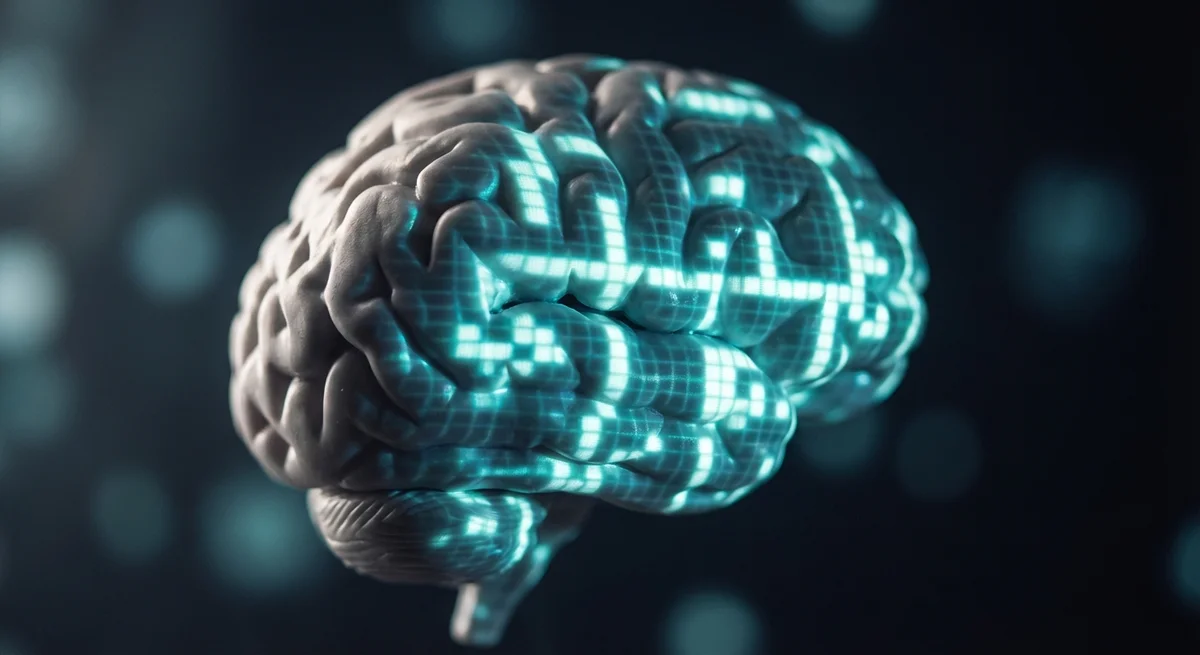
How exactly to build true artificial general intelligence remains the industry's biggest unsolved puzzle. While giants like OpenAI, Google DeepMind and Anthropic keep scaling up language models in the hope that quantity will turn into quality, independent researchers are looking for fundamentally different paths. One such attempt has appeared on Habr. For all its ambition, it deserves attention, if only because it asks the right questions.
The author ran a curious experiment: he built a neural network tasked with recovering the rules of Conway's Game of Life cellular automaton. There is a deliberate catch, though. The network observes the system's dynamics from the inside, with no access to the full picture. It cannot see all the cells at once and does not know the rules in advance. Instead, it has to build a model of the world from limited observations, much as a biological organism perceives reality through its senses without direct access to the "source code" of physical laws.
This differs fundamentally from standard machine learning, where models usually get a bird's-eye view of the data. A network trained to classify images sees every pixel. A language model processes entire texts. Here, by contrast, the agent is embedded in its environment and has to approximate its patterns from local, incomplete information. That, the author argues, is how the human brain works, and this principle may turn out to be key to building AGI.
From this experiment, the researcher builds a broader theoretical framework. He introduces his own set of terms, chief among them "infurs," and describes the mathematical-informational nature of mind in the context of the computable universe hypothesis. The hypothesis goes back to Konrad Zuse and was later developed by Stephen Wolfram. It holds that all of physical reality can be described as a computational process. If that is true, consciousness is not a mystical property of biological matter but the natural result of a certain kind of information processing, one that can in principle be reproduced.
To be fair, the Habr article reads more like an independent thinker's manifesto than peer-reviewed research. Coined terminology with no link to established scientific vocabulary, sweeping generalizations from a single experiment and direct parallels between a cellular automaton and the human brain invite well-founded skepticism. Neuroscience and cognitive science have gathered plenty of evidence that the architecture of biological intelligence is far more complex than any model you could describe by watching a grid of black and white cells.
Still, beneath the ambitious packaging lies an idea that can't simply be dismissed. The role of embodied experience — embodied cognition — in shaping intelligence has been debated in academia for decades. François Chollet, creator of Keras and author of the ARC test for measuring general intelligence, has repeatedly argued that scaling transformers alone will not lead to AGI, because these models lack precisely that interaction with an environment. Similar arguments come from Meta's Yann LeCun, who champions world models: internal models of the world that an agent builds through experience rather than by ingesting text.
Seen this way, the Game of Life experiment is a simplified but clear demonstration of how an agent can infer the structural patterns of its environment from an observer's position. It is not AGI, and not even a direct path to it. But it is an attempt to formalize the intuition that real intelligence starts not with data but with experience. Not with answers, but with the questions an agent learns to ask.
In 2026, the AI industry has reached a point where scaling is starting to yield diminishing returns, and no new architectural breakthroughs are in sight yet. In that situation, any fresh idea has value, even if it comes from Habr rather than a Google lab. The road to AGI, if it exists at all, is unlikely to be straight. And it is entirely possible that one of its turns really will pass through cellular automata, embodied experience and the question of how a system can come to know the world while being inside it.
*Meta is designated an extremist organization and banned in the Russian Federation.
- Nov 1, 2026Local models lose to Opus and Codex: 0.21 on a MacBook versus 1.00 for Codex
- Nov 1, 2026Kimi scores 96.2% on a 1C database analytics test and emerges as a fallback if Claude access is blocked
- Nov 1, 2026OpenAI Rewrites GPT Behavior Rules: Five Values and a Chain of Command
- Nov 1, 2026Google admits AI Mode cuts search revenue, shares fall 15%
Test Frontier LLMs & Autonomous Agents in One Workspace
Run Claude Opus 5.5, GPT-6, Gemini 3.1, and DeepSeek side-by-side in Nomad AI (nomadnet.ai) — unified model routing, deep research, and multimodal workflows under one subscription.
The AI world, distilled — once a week
Seven stories that actually mattered, hand-picked. No noise, no reposts, no press releases.
Done! Check your inbox for a confirmation.