Apple bets on visual intelligence as the foundation of its wearables
Apple is preparing a major shift in its AI strategy. Tim Cook called Visual Intelligence, a technology that recognizes and understands the surrounding world visually, the key feature of the company's future wearables. The first product announcements of 2026 are expected the week of March 2, including details on the iPhone 18 Pro and the iOS 26.4 update. Apple clearly intends to compete not with chatbots alone, but by building AI into everyday perception of reality through the cameras and sensors of its devices.
AI-processed from Bloomberg Tech; edited by Hamidun News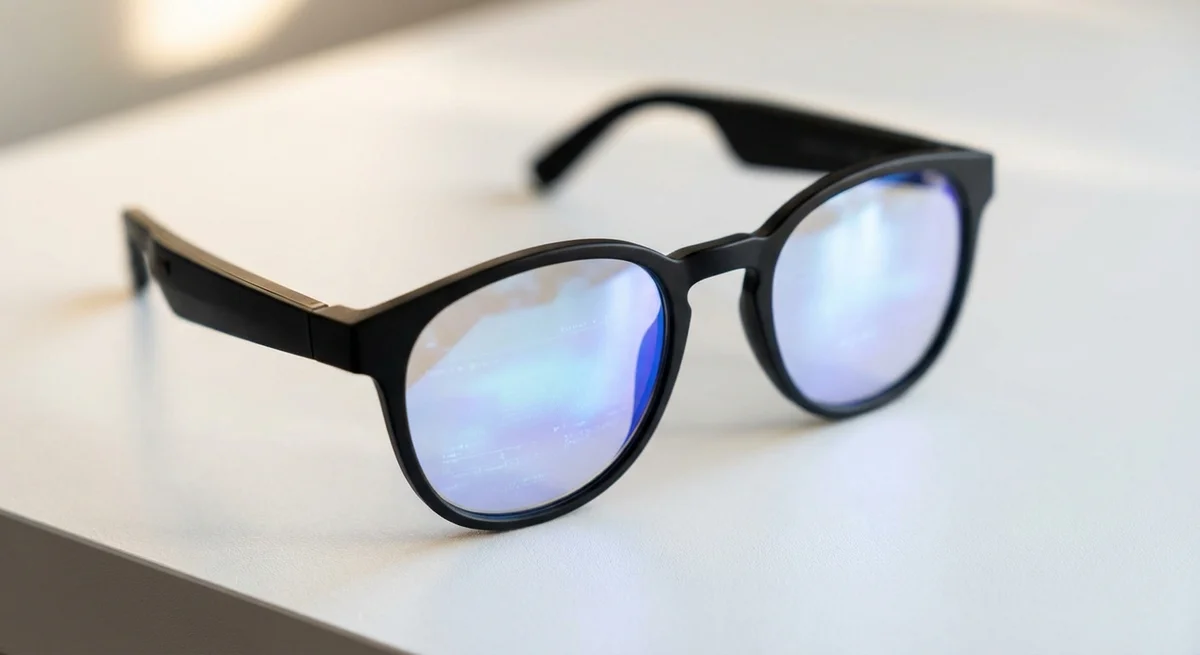
Tim Cook rarely makes bold statements about Apple's product lineup ahead of official launches. But when the head of the world's most valuable company starts setting priorities in public, the industry listens. And his message right now is unmistakable: Visual Intelligence will be the defining technology of Apple's next generation of wearables.
In Cupertino, Visual Intelligence means more than recognizing objects in photos. It is a comprehensive system that analyzes, in real time, what a device's camera sees, whether that device is an iPhone, a next-generation Apple Watch or the long-awaited mixed-reality glasses. The technology debuted in the iPhone 16 as a relatively modest feature: point the camera at a restaurant to get reviews, photograph a plant to learn its name. But what Cook describes goes far beyond those demos. It is AI that continuously perceives the surrounding world and helps the user interact with it at a completely new level.
The context of the statement matters as much as its content. Apple has long been seen as a company that missed the generative AI train. While OpenAI, Google and Microsoft raced to build ever more powerful language models, Apple methodically built its own strategy, one that differs fundamentally from its rivals'. Instead of chasing chatbots and text generation, the company focused on what it does best: integrating software with hardware. Visual Intelligence is exactly that kind of integration: neural network models optimized for Apple's own chips, working with data from its own cameras and sensors, inside its own device ecosystem.
Technically, this means a huge load on edge computing, meaning processing data directly on the device, without a constant connection to the cloud. Apple has been investing in the Neural Engine inside its A- and M-series processors for several years, and Visual Intelligence may become the first truly mass-market use of that power. For wearables this is especially critical: glasses or a watch cannot afford a delay of several seconds to query a server when the user expects an instant reaction to what is happening right in front of them.
Cook's statement coincides with preparations for the first wave of 2026 product announcements, scheduled for the week of March 2. Among the expected news are details on the iPhone 18 Pro, including new color options, and the iOS 26.4 update, which will likely expand Visual Intelligence capabilities on current devices. But the main intrigue concerns wearables. Rumors about Apple smart glasses have persisted for several years, and Vision Pro, for all its technological ambition, never became a mass-market product. Visual Intelligence as a key feature may turn out to be the missing element that turns an experimental gadget into an everyday tool.
Apple's pivot toward visual AI has serious implications for the industry as a whole. First, it legitimizes a whole category that until now was associated mainly with niche projects like Ray-Ban Meta* or the failed Google Glass. When Apple enters a segment, it stops being experimental.
Second, it puts pressure on competitors such as Google, Samsung and Meta*, which will have to respond not only with model quality but with depth of hardware integration. Third, and this is perhaps the most important point, it raises acute privacy questions. A device that constantly "sees" and analyzes the world around it is a dream and a nightmare at once.
Apple traditionally builds its marketing on protecting user data, but Visual Intelligence in wearables will test those promises more than ever before.
Apple's strategy is becoming easier to read: the company is not trying to build the best chatbot or the most powerful language model. It is building AI that blends unobtrusively into physical reality through devices people wear every day. If Cook is right and Visual Intelligence does become the defining feature of Apple's next generation of products, we are watching not just another product cycle but a fundamental shift in how the world's largest tech company understands the future of artificial intelligence. Not in the cloud, not in a chat, but right in front of the user's eyes, quite literally.
*Meta is designated an extremist organization and banned in Russia.
- Nov 2, 2026TensorFold 1.2.0 boosts Qwen3.8-27B throughput on M3 Ultra by 44.2% at 16 streams
- Nov 1, 2026Local models lose to Opus and Codex: 0.21 on a MacBook versus 1.00 for Codex
- Oct 29, 2026Claude Code Edits Video From a Transcript: How the video-use Skill With 30 000 Stars Works
- Oct 29, 2026Stanford AI tool verifies part of Signal's code in half a day for under $500, versus five months of expert work
Ship AI Faster with Founders, Engineers & Weekly Architecture Reviews
Inside Vibe Club (hamidun.com/club) — weekly live masterminds with Zhemal Khamidun, Tech Radar, full LMS access, and 370+ production Claude Code skills.
The AI world, distilled — once a week
Seven stories that actually mattered, hand-picked. No noise, no reposts, no press releases.
Done! Check your inbox for a confirmation.