Google's Veo 3.1 Learns to Turn Portrait Photos into Vertical Video
Google has released an update to its Veo 3.1 video generation model. The key changes: the "Ingredients to Video" tool now reproduces reference images more accurately, and the model gains native support for vertical video and an upscaling feature. Users can upload up to three reference images, such as characters, backgrounds and textures, and get a more consistent result. The update is clearly aimed at content creators working for TikTok, Reels and Shorts, where vertical is the standard format.
AI-processed from The Verge; edited by Hamidun News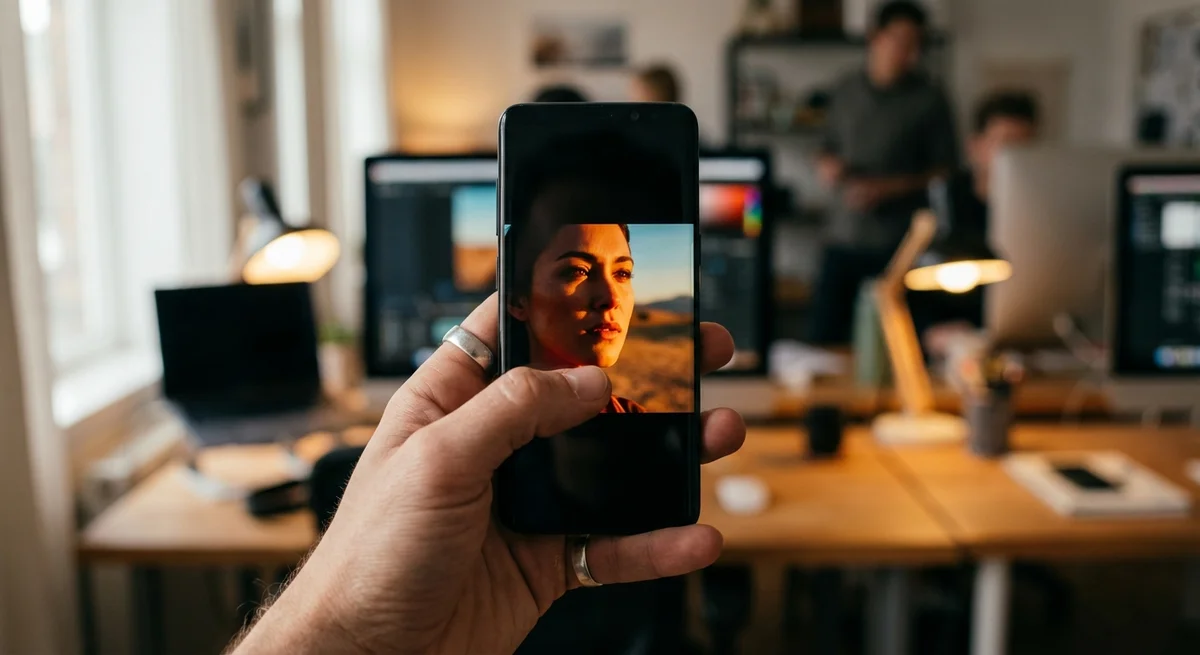
Vertical video has finally stopped being a second-class format. Google has updated its Veo 3.1 video generation model, adding native support for vertical clips, the kind that dominate TikTok, Instagram Reels and YouTube Shorts. But this is not just a matter of rotating the frame by 90 degrees: the company has substantially reworked the mechanism that determines how closely generated video matches the source images.
The "Ingredients to Video" tool, first introduced last year, lets users upload up to three reference images and build video clips from them. These can be character portraits, background textures or environmental elements: in essence, visual "ingredients" from which the neural network assembles the final clip. The problem with the previous version was that the model often "filled in" details on its own, drifting away from the uploaded references. The update is meant to fix that: Google promises "more expressive and creative" results with a "rich" rendering of the source material.
Why vertical video became the focus of this update is not a hard question to answer. Short vertical clips generate billions of views every day. Content creators, marketers and social media managers have long needed tools that can quickly produce visually appealing content in exactly this format. Until now, most AI video generators were built around the horizontal, "cinematic" 16:9 format, and vertical clips had to be cropped by hand, losing quality and composition. Native support means the model composes the frame for vertical orientation from the start, with objects placed correctly and with face and background proportions taken into account.
The upscaling feature deserves separate attention. Generative video models are still limited in resolution: the computing cost of producing 4K video is astronomically high. Upscaling lets the model generate a clip at lower resolution and then intelligently scale it up while preserving detail and sharpness. It is a pragmatic compromise that makes AI video suitable for publishing on platforms that require at least Full HD.
The context of this update cannot be understood without the competitive race. OpenAI continues to develop Sora, which is already available to ChatGPT Plus subscribers. Runway keeps releasing new iterations of Gen-3 Alpha. Chinese companies, including Kling, MiniMax and ByteDance with its own model, are picking up pace at an alarming speed. In this environment Google cannot afford to fall behind, especially since Veo is integrated into the Gemini ecosystem and is potentially available to hundreds of millions of users through Google services. Each feature update is not just a technical improvement but a strategic move in the fight for the generative video market, which analysts forecast could exceed $10 billion by 2028.
It is also worth noting that better consistency with reference images addresses one of the main pain points for users of generative video models. When you upload a photo of a specific person and want a video with exactly that face, even small deviations, such as a different nose shape, a changed eye color or "floating" features, break the illusion. For commercial use, whether advertising or brand content, such errors are unacceptable. If Google has genuinely improved fidelity, that brings Veo closer to the threshold of commercial viability.
The practical consequences for users in Russia are limited for now: access to Veo through Google services in Russia is difficult, and the company offers a full API to third-party developers only selectively. Still, the trend is clear: AI video generation is moving fast from experimental toy to working tool. Vertical format, precise adherence to references and upscaling are all bricks in the foundation of a future in which a significant share of social media video will be made not by a camera but by a neural network.
Google is methodically closing the gap between what generative models can do in theory and what the real market demands of them. Vertical video from a portrait photo is not a revolution. It is engineering maturity, and that is what will determine who ends up in the dominant position in the AI video industry.
*Meta is recognized as an extremist organization and banned in the Russian Federation.
- Nov 2, 2026Bun creator uses Claude Code to port 750K lines from Zig to Rust in 11 days
- Nov 2, 2026The Verge reviewer builds a $50 Meta Muse Charm alternative with Claude Code
- Nov 1, 202616 models tested on 7 search tools: Exa averaged 10.5 out of 14, SearXNG about 3
- Nov 1, 2026Google's StreamVibe video agent beats other models by 10.7% on response timing and quality
Test Frontier LLMs & Autonomous Agents in One Workspace
Run Claude Opus 5.5, GPT-6, Gemini 3.1, and DeepSeek side-by-side in Nomad AI (nomadnet.ai) — unified model routing, deep research, and multimodal workflows under one subscription.
The AI world, distilled — once a week
Seven stories that actually mattered, hand-picked. No noise, no reposts, no press releases.
Done! Check your inbox for a confirmation.