Chinese Funds Prepare 90 Billion Yuan for AI
Chinese investment funds have lined up more than 90 billion yuan to pour into the stock market. The two main themes are "technology growth" and "Chinese superiority." Analysts are betting on the long-term potential of the artificial intelligence industry and the competitiveness of domestic manufacturing. Most of the liquidity will flow through exchange-traded funds (ETFs) and new actively managed capital instruments. Experts expect AI to become the main driver of structural economic growth, supporting technological sovereignty and the global expansion of Chinese IT giants.
AI-processed from 36Kr (36氪); edited by Hamidun News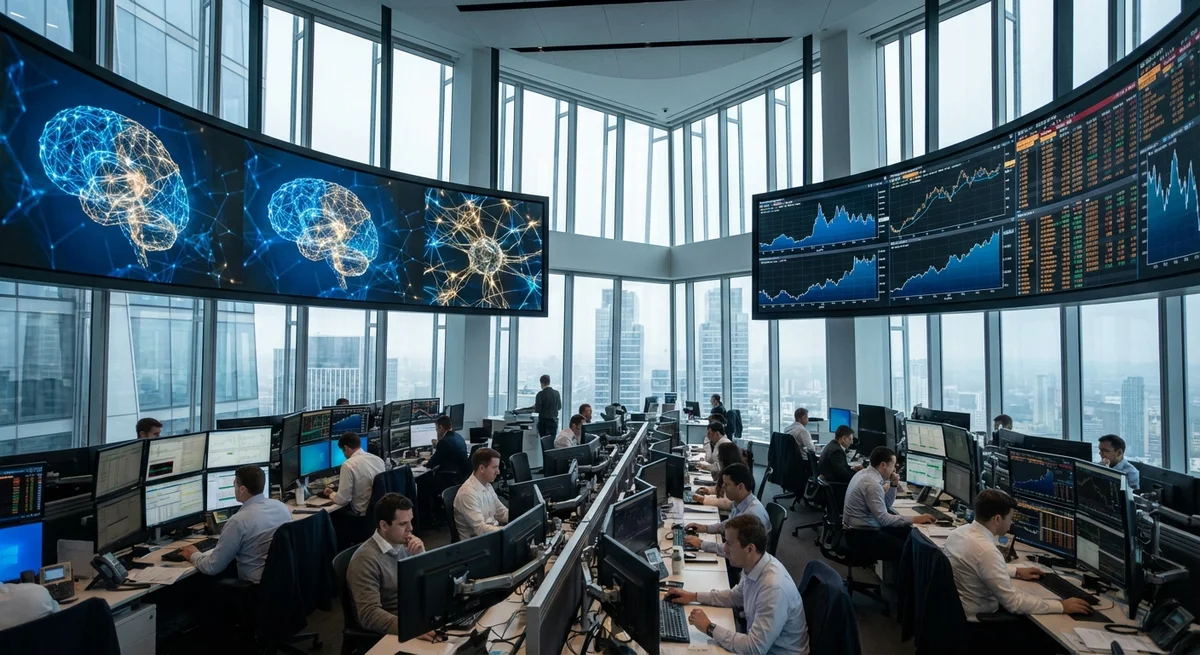
China is preparing a large-scale injection of capital into its technology sector. According to Securities Times, domestic investment funds have accumulated more than 90 billion yuan, roughly $12.5 billion, to deploy in the country's stock market at the start of the Year of the Horse. The main targets will be companies working in artificial intelligence and manufacturers with a high level of global competitiveness. The scale and focus of these investments suggest that Beijing has made a definitive bet on technological sovereignty as the main instrument of long-term economic growth.
The decision to concentrate capital right now is no accident. Over the past several years, China has steadily built its own AI ecosystem, from fundamental research to commercial applications. The success of models such as DeepSeek showed clearly that Chinese developers can compete with Western leaders not only on quality but also on cost efficiency. Inside the country, this is read as a signal to consolidate: a moment when a financial impulse can lock in technological achievements and make them durable.
Two instruments will serve as the main channels for liquidity. The first is exchange-traded funds (ETFs) focused on technology stocks, which allow large volumes of capital to be placed quickly and transparently without putting significant pressure on the share prices of individual issuers. The second is new actively managed equity funds, created before the Lunar New Year but not yet finished building their portfolios.
In essence, this money has already been raised and is waiting for its moment, and its arrival on the market could create a noticeable upward impulse in the first weeks of trading. Analysts believe the combined effect of the two capital flows will give the market a more balanced and broader character, without excessive concentration in narrow niches.
The two strategic themes named by the fund managers deserve a closer look. "Technology growth" means, above all, a bet on the whole range of companies that make up the infrastructure and application layer of AI: model developers, chip makers, cloud computing providers and enterprise software vendors. "Chinese superiority" is a concept reflecting confidence that domestic high-value-added manufacturing can hold durable positions in global markets even under trade restrictions. The two themes are linked: it is China's manufacturing capacity that allows AI hardware to be scaled at a speed most competitors cannot match.
For the industry, this means AI financing is shifting from venture logic to institutional logic. When money enters the sector through public funds rather than closed startup rounds, planning horizons and success criteria change. Companies gain access to long-term capital, but their accountability to a wider circle of investors grows as well. For users, this ultimately means faster adoption of AI solutions in real sectors of the economy: industry, logistics, healthcare and education, wherever large public companies have an operational presence.
Ninety billion yuan is not just a figure in a financial report. It is an answer to the question of how China sees the next decade of its economic development. The bet is clear and open: artificial intelligence as a system-forming technology, and domestic manufacturing as a global competitive asset. If institutional capital really does settle into these sectors for the long term, the global balance of power in the technology race could shift more than is commonly assumed today.
- Nov 2, 2026DeepSeek open-sources Super-agent prototype: p95 task completion time of 15.7 minutes vs. 29.5
- Nov 1, 202616 models tested on 7 search tools: Exa averaged 10.5 out of 14, SearXNG about 3
- Nov 1, 2026MoneyGate safety layer blocked all 42 fraudulent requests to local AI models
- Oct 31, 2026DeepSeek-V4.1-Flash cuts HBM KV cache to 890 bytes per token, down from 3514
Test Frontier LLMs & Autonomous Agents in One Workspace
Run Claude Opus 5.5, GPT-6, Gemini 3.1, and DeepSeek side-by-side in Nomad AI (nomadnet.ai) — unified model routing, deep research, and multimodal workflows under one subscription.
The AI world, distilled — once a week
Seven stories that actually mattered, hand-picked. No noise, no reposts, no press releases.
Done! Check your inbox for a confirmation.